Keratin: what it is, supplements for hair and nails, and keratin treatment side effects
The short answer
Keratin is the protein that makes up your hair, nails and the outer layer of your skin. Your body builds it from the protein you eat. In shampoos and masks, it coats the hair shaft and makes it look smoother, without “feeding” hair from the inside. As a supplement, two small placebo-controlled trials, funded by manufacturers, report stronger hair and nails after 3 months: promising, but thin evidence. The real safety issue is the keratin treatment (Brazilian blowout): keratin does not do the straightening. The products can release formaldehyde, a known carcinogen, or contain glyoxylic acid, linked to acute kidney injury.
This article is for information and does not replace medical advice. Sudden, patchy or long-lasting hair loss deserves a doctor’s visit: iron deficiency, thyroid problems, medications or alopecia need more than a supplement.
What is keratin?
Keratin is a fibrous structural protein made by skin cells called keratinocytes. It is rich in cystine, a sulfur amino acid: sulfur bridges between its chains make it tough, water-insoluble and hard to digest. It is found in hair, nails and the outer skin layer, and in animals in wool, feathers, horns and hooves.
Because native keratin is indigestible, supplements use hydrolyzed keratin: keratin broken down into small peptides or free amino acids, usually from poultry feathers or sheep wool. What you swallow is a source of sulfur amino acids, not keratin that travels straight to your hair.
What does keratin do for hair?
Hair above the scalp is dead fiber and cannot repair itself. Keratin shampoos and conditioners deposit hydrolyzed protein on the surface, filling damaged spots from heat, coloring or sun. Hair looks smoother and shinier and breaks a little less when styled. The effect is temporary and washes out; it does nothing for shedding or growth, which happen in the follicle.
Keratin treatment side effects: the formaldehyde problem
To reshape hair for weeks, salons need a chemical activated by the heat of a flat iron. Traditionally this was formaldehyde, an irritant gas the International Agency for Research on Cancer (IARC) classifies as carcinogenic to humans.
- A US salon simulation of four professional smoothing products found up to 11.5% formaldehyde in the products and up to 3.47 ppm in the air during blow-drying. Even a product labeled “formaldehyde-free” contained chemicals that release it with heat (Pierce et al., 2011);
- in a US cohort of nearly 34,000 women, use of hair straighteners and relaxers was linked to higher uterine cancer rates (1.8 times, and 2.55 times with more than 4 uses a year). This observational study mostly covered chemical relaxers, not keratin treatments specifically, and cannot prove cause (Chang et al., 2022).
Is a formaldehyde-free keratin treatment safe?
Many “formaldehyde-free” treatments use glyoxylic acid instead. French nephrologists described a woman with three episodes of acute kidney injury, each after a straightening session; in mice, glyoxylic acid crossed the skin, turned into oxalate and formed kidney crystals (Robert et al., 2024). A 2025 systematic review gathered 34 patients (36 episodes): 20 involved products labeled formaldehyde-free; symptoms began a median of 2 days later (vomiting, nausea, abdominal pain); 6 needed dialysis and all recovered (Aamir et al., 2025). An Israeli series reported kidney injury in 12 of 13 exposed patients (Rabinovich et al., 2025). An industry-funded modeling study argues exposure is too low to harm the kidneys under normal use (Hewitt et al., 2026), so the debate is open.
If you still want one
- ask for the ingredient list and avoid formaldehyde, formalin, methylene glycol and glyoxylic acid;
- choose a well-ventilated salon and skip it during pregnancy;
- space treatments out: risk rose with frequency in studies;
- vomiting, nausea, belly or back pain in the days after: see a doctor and mention the treatment so they check your kidney function.
Keratin supplements: what the research shows
| Study | Product and dose | Duration | Result |
|---|---|---|---|
| Beer et al., 2014 (50 women) | 500 mg soluble keratin (Cynatine) + vitamins and minerals | 90 days | Less hair loss, stronger and shinier hair, stronger nails vs placebo |
| Tursi et al., 2025 (women) | 500 or 1,000 mg feather keratin hydrolysate | 90 days | Better skin measures, hair and nail gloss, nail hardness |
| KerPep® trial reported by suppliers (66 people) | 300 mg wool keratin peptides | 3 months | Not found in PubMed: results not verifiable |
Small samples, short duration, partly subjective endpoints and industry ties limit these results. In the first trial, keratin came with vitamins and minerals, so the active part is unclear. No trial covers pattern hair loss (androgenetic alopecia).
If shedding comes from a deficiency (iron, protein, zinc), fix that first. See our best supplements for hair loss, our guide to biotin (it only helps if you are low), and our guides to silica and collagen. Enough protein and zinc-rich foods matter more than any capsule; an egg brings protein, sulfur amino acids and biotin.
Keratin supplement side effects and how to take it
- no notable side effects in trials, which were small and short; no data in pregnancy or breastfeeding;
- keratin comes from feathers or wool: ask first if you have a known allergy to these animal proteins;
- most formulas add biotin, which can skew some blood tests (thyroid, troponin): tell the lab;
- studied doses: 500 to 1,000 mg of keratin hydrolysate a day in published trials, 300 mg in the KerPep® trial; give it 3 months, any time of day with water.
Nutrition•pro: KerPep® keratin with biotin, made in France
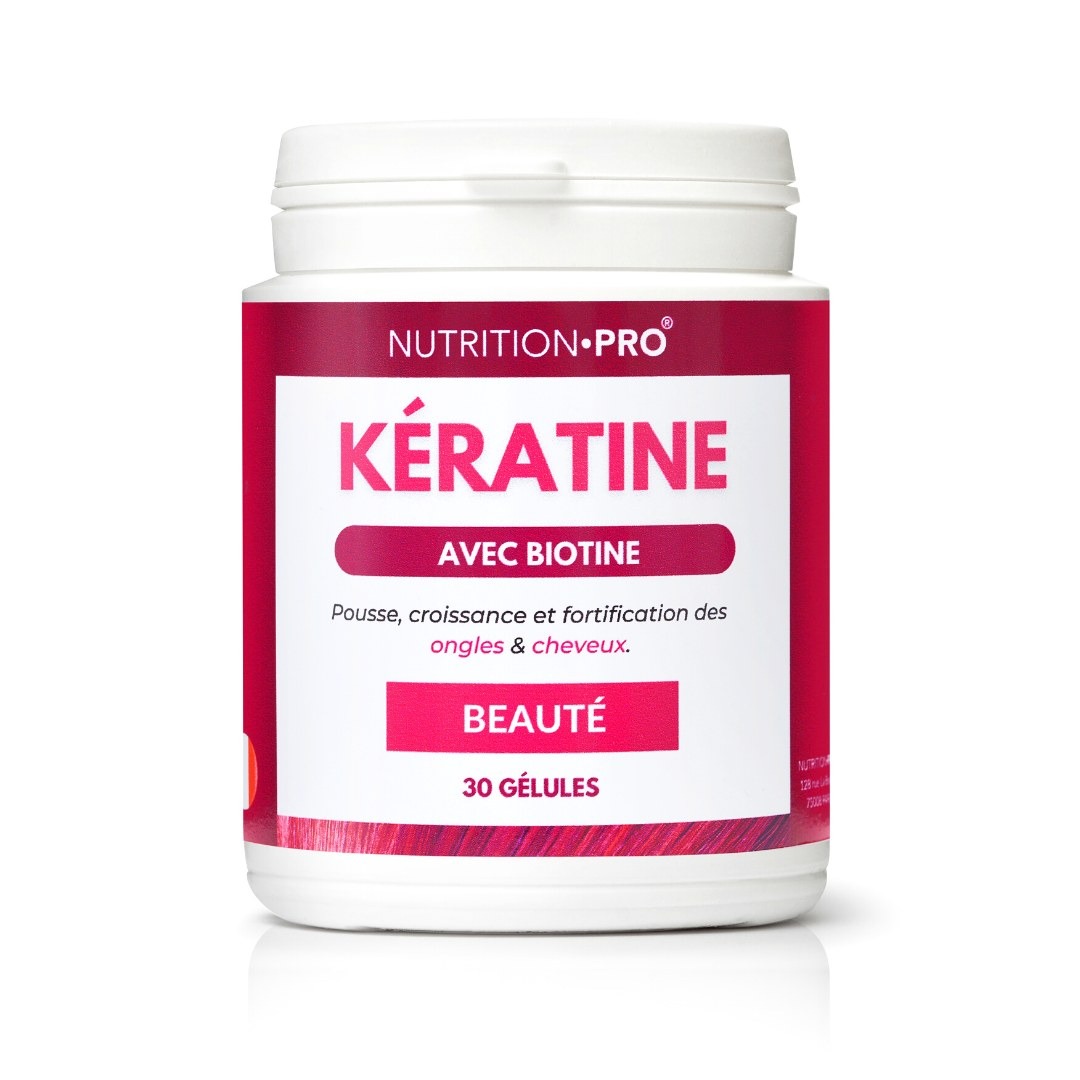
Nutrition•pro is a French brand that says it designs and makes its formulas in France, and this product page states “made in France”. Its Kératine • Biotine keeps the formula short and keratin-focused:
- 300 mg KerPep® keratin hydrolysate per capsule, including 270 mg of peptides (KerPep® is sheep wool keratin, according to its distributors);
- 50 mcg biotin (100% of the reference value) and 1.5 mg zinc bisglycinate (15%);
- 1 capsule a day with water; 30 capsules, a 30-day supply; the brand suggests a 2-month course;
- €29.99 per jar (price checked on 22/11/2026), about €1.00 a day.
How does the dose compare? 300 mg of KerPep® matches the dose of the supplier-reported trial, which we could not read. It is lower than the 500 to 1,000 mg in the two published trials, which used other keratins. Biotin stays at a nutritional dose, far from the megadoses that interfere with blood tests. Plan on at least 3 months. The product page advises against it if you take anticoagulants.
Promo code: SEOCONSULTINGSL for 10% off your order, €26.99 per jar, about €0.90 a day (as of 22/11/2026).
Partner link: we earn a commission if you order through this link, at no extra cost to you.
Frequently asked questions
What is keratin?
A tough structural protein that forms hair, nails and the outer layer of skin. Your body makes it; there is no digestible food source of keratin itself.
Do keratin supplements work?
Two industry-funded placebo-controlled trials found stronger hair and nails after 3 months. They look safe for adults, but the evidence is limited.
What are the side effects of a keratin treatment?
Eye, nose and throat irritation from formaldehyde fumes, a possible long-term cancer risk with frequent use, and acute kidney injury reported with glyoxylic acid products.
Is keratin good for nails?
Both published trials reported stronger or harder nails after 90 days, with the limits described above. Biotin or iron deficiency can also make nails brittle.
Sources
- Beer C., Wood S., Veghte R.H. A clinical trial to investigate the effect of Cynatine HNS on hair and nail parameters. ScientificWorldJournal, 2014; 2014: 641723. PubMed 25386609
- Tursi F. et al. The Effects of an Oral Supplementation of a Natural Keratin Hydrolysate on Skin Aging. J Cosmet Dermatol, 2025; 24(1): e16626. PubMed 39367631
- Pierce J.S. et al. Characterization of formaldehyde exposure resulting from the use of four professional hair straightening products. J Occup Environ Hyg, 2011; 8(11): 686-99. PubMed 22035353
- Cogliano V. et al. (IARC). Advice on formaldehyde and glycol ethers. Lancet Oncol, 2004; 5(9): 528. PubMed 15384217
- Robert T. et al. Hair-straightening cosmetics containing glyoxylic acid induce crystalline nephropathy. Kidney Int, 2024; 106(6): 1117-1123. PubMed 39197585
- Aamir A.B. et al. Acute kidney injury induced by topical hair straightening products: A systematic review. World J Nephrol, 2025; 14(4): 112796. PubMed 41479821
- Rabinovich Y. et al. Hair straightening and acute kidney injury: a case series. Clin Toxicol, 2025; 63(10): 754-759. PubMed 40875963
- Hewitt N.J. et al. Quantification of the exposure of consumers and hairdressers to formaldehyde and oxalic acid after application of hair straightening products containing glyoxylic acid. Toxicol Appl Pharmacol, 2026; 515: 117940. PubMed 42425182
- Chang C.J. et al. Use of Straighteners and Other Hair Products and Incident Uterine Cancer. J Natl Cancer Inst, 2022; 114(12): 1636-1645. PubMed 36245087