Vegetarian gimbap (Korean rolls)
Nutrition per serving
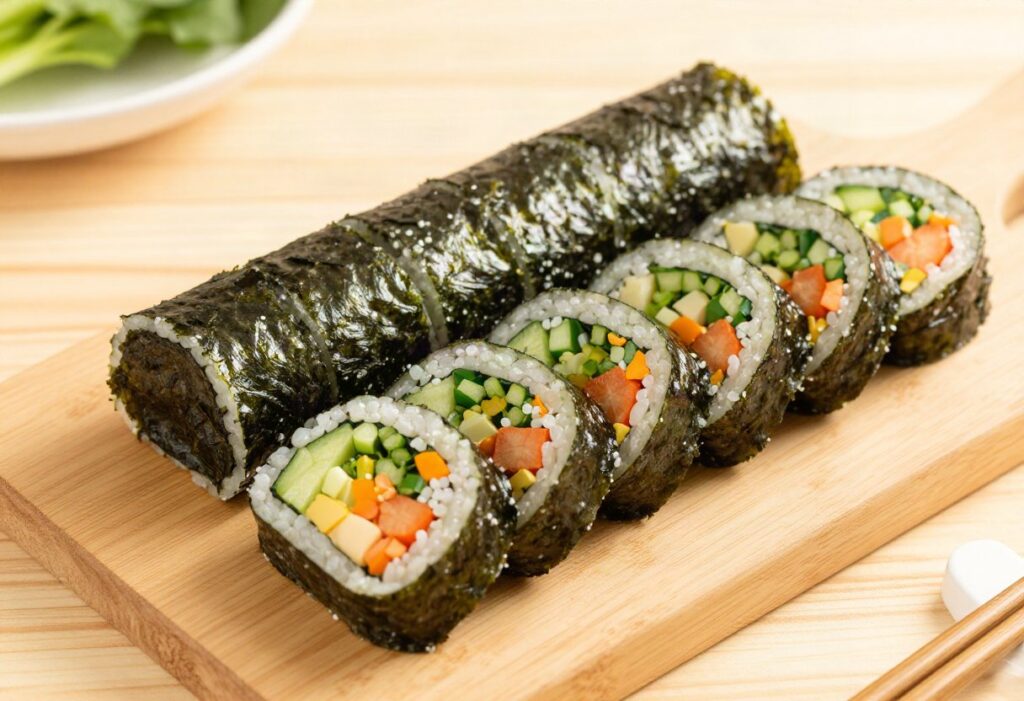
Korean rice rolls wrapped in nori seaweed and filled with colourful vegetables. Fresh, fun and portable, they make a healthy, balanced lunch or snack, a bit like reinvented maki.
Preparation: 30 min | Cooking: 15 min | Servings: 4 | Difficulty: Medium
Calculated per portion from Anses Ciqual 2025 values for each ingredient, based on the quantities listed. Household measures (spoonfuls, pieces) use average weights. 148 kcal · 4 g protein · 20 g carbohydrate · 5 g fat
Ingredients
- 4 sheets of nori
- 200 g rice
- 2 carrots
- 1/2 cucumber
- 100 g spinach
- 1 tbsp sesame oil
- 1 tbsp sesame seeds
Method
- Cook the rice and season it with the oil and sesame seeds.
- Cut the vegetables into sticks (carrot, cucumber, spinach).
- Spread the rice over the nori and lay the vegetables on top.
- Roll tightly and slice into bite-sized pieces.
Nutritional benefits
Gimbap is a balanced, portable meal: the rice provides carbohydrate, the nori seaweed minerals and iodine, and the variety of vegetables fibre and vitamins. More complete and colourful than classic maki, it is a healthy, fun lunch that is naturally dairy-free.
Variations and substitutions
- With egg or tofu for more protein.
- With surimi or tuna.
- With brown rice.
- With other vegetables: pepper, beetroot.
Storage and making ahead
Keeps for 1 day in the fridge; ideal for lunchboxes. Slice just before serving.
💡 Good to know
Roll very tightly (using a sushi mat) and wet the knife to slice cleanly without squashing the rolls.
Read also
Discover more vegetarian recipes · vegan recipes · healthy & balanced recipes · dairy-free recipes.
Foods in this recipe: nori · rice · carrots · cucumber · spinach.
You might also like these recipes: Vegetable miso soup · Stir-fried noodles with vegetables and sesame · Baked sweet potato fries.