Vegetarian bibimbap
Nutrition per serving
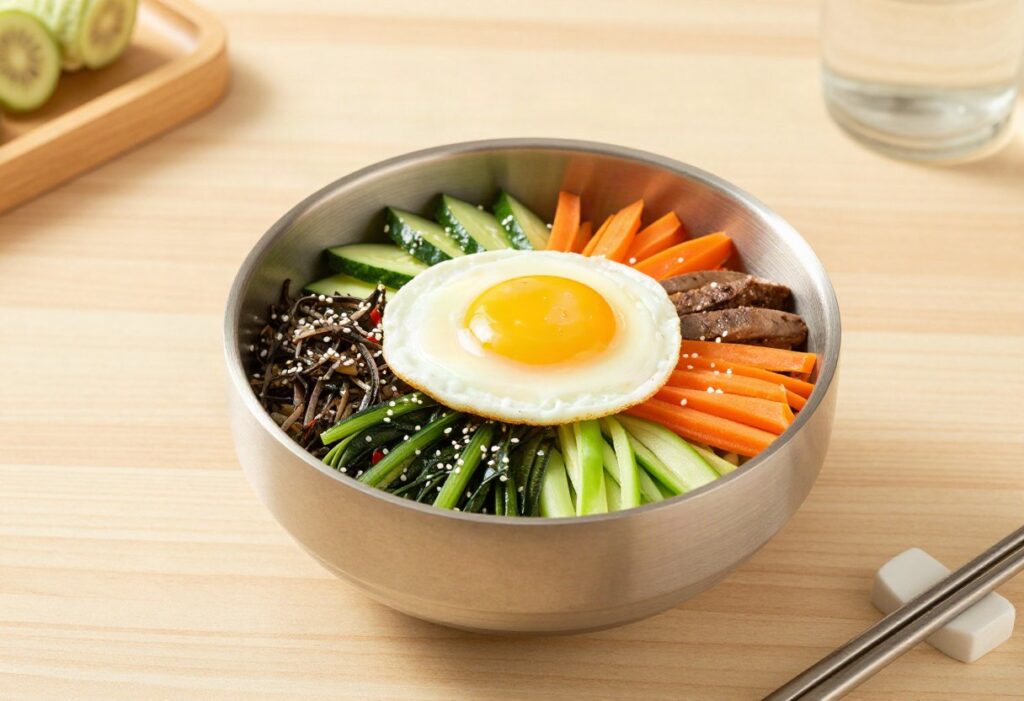
The famous Korean bowl given a vegetarian twist: rice, colourful sautéed vegetables, egg and a spicy sauce. Balanced, colourful and full of texture, it is a complete meal that looks as good as it tastes.
Prep: 25 min | Cook: 15 min | Servings: 2 | Difficulty: Medium
Calculated per serving from Anses Ciqual 2025 values for each ingredient, based on the quantities listed. Household measures (spoonfuls, items) use average weights. 251 kcal · 13 g protein · 29 g carbohydrate · 8 g fat
Ingredients
Method
- Cook the rice. Stir-fry the carrot, spinach and mushrooms separately.
- Fry the eggs.
- Put the rice in a bowl and arrange the vegetables in separate piles.
- Top with the egg, soy sauce and sesame oil.
Nutritional benefits
Bibimbap brings together carbohydrate (rice), protein (egg) and a wide variety of vegetables in one bowl, for a balanced, colourful meal. Each vegetable, sautéed separately, keeps its nutrients and texture. A complete dish, high in fibre and easy to adapt.
Variations and substitutions
- With tofu or beef for more protein.
- With soya bean sprouts, courgette, cucumber.
- Spicy: gochujang chilli paste.
- With brown rice for more fibre.
Storage and make-ahead
The components keep for 2 days when stored separately; assemble just before serving.
💡 Good to know
Cook each vegetable separately and season them one by one: this is what gives bibimbap its clean, distinct flavours.
Related reading
Discover more vegetarian recipes · healthy & balanced recipes · dairy-free recipes.
Ingredients in this recipe: rice · eggs · carrot · spinach · mushrooms.
You might also like these recipes: Vanilla chia pudding · Butter-free chocolate and almond cookies · Banana and blueberry smoothie.