Carrageenan (E407): safe or not? What EFSA and the studies say

The short answer
Carrageenans (E407) are authorised, but this is an additive under surveillance. In 2018, EFSA judged the data reassuring on carcinogenicity and genotoxicity, but it made its acceptable daily intake temporary, because it could not measure a fraction of the additive that resembles a substance toxic to the gut in animals. A French study from 2024 also linked high consumption to a higher risk of breast cancer. No cause for panic, but a good reason not to eat it every day.
What are carrageenans?
They are substances extracted from red seaweed. Used as additives, they thicken and gel: they give body to dessert creams, smoothness to plant-based drinks and hold water in some cured meats. Two codes exist on labels: E407 for carrageenans and E407a for “processed Eucheuma seaweed”.
They are found in particular in dessert creams and flans, ice creams, some plant-based drinks and desserts, hams and cured meats, and ready meals. To spot them, read the list of ingredients: see our guide to food labels.

What EFSA says
The European Food Safety Authority re-evaluated carrageenans in 2018. Its conclusions are nuanced:
- The reassuring side: the additive is not absorbed intact, chronic toxicity studies in rats showed no effect up to 7,500 mg per kilo per day, and there is no concern about carcinogenicity or genotoxicity.
- The uncertainties: a small fraction of dietary carrageenans has a size close to poligeenan, a degraded form that causes gut lesions and tumours in animals. Yet no validated method can measure this fraction in the additive.
This is why EFSA declared its acceptable daily intake of 75 mg per kilo per day temporary, asking for better data within five years. It also found that the heaviest consumers could exceed this dose by up to about ten times in its most cautious scenario, and it considers their use in infant formula from birth inadvisable.
The 2024 French study
The NutriNet-Santé cohort followed 92,000 adults for 6.7 years on average. The heaviest consumers of carrageenans had a 32% higher risk of breast cancer than the lightest consumers, and 28% for E407 alone. This is an observational study: it does not prove that the additive causes these cancers, and the authors ask for their results to be confirmed. The same study found associations for E471.
Should you avoid it?
At usual doses, nothing requires you to ban it. But between a temporary acceptable intake, uncertainties acknowledged by EFSA and an association study, the precautionary principle argues for not eating it daily. The simple levers:
- Desserts: a plain yoghurt or a homemade dessert rather than an industrial dessert cream.
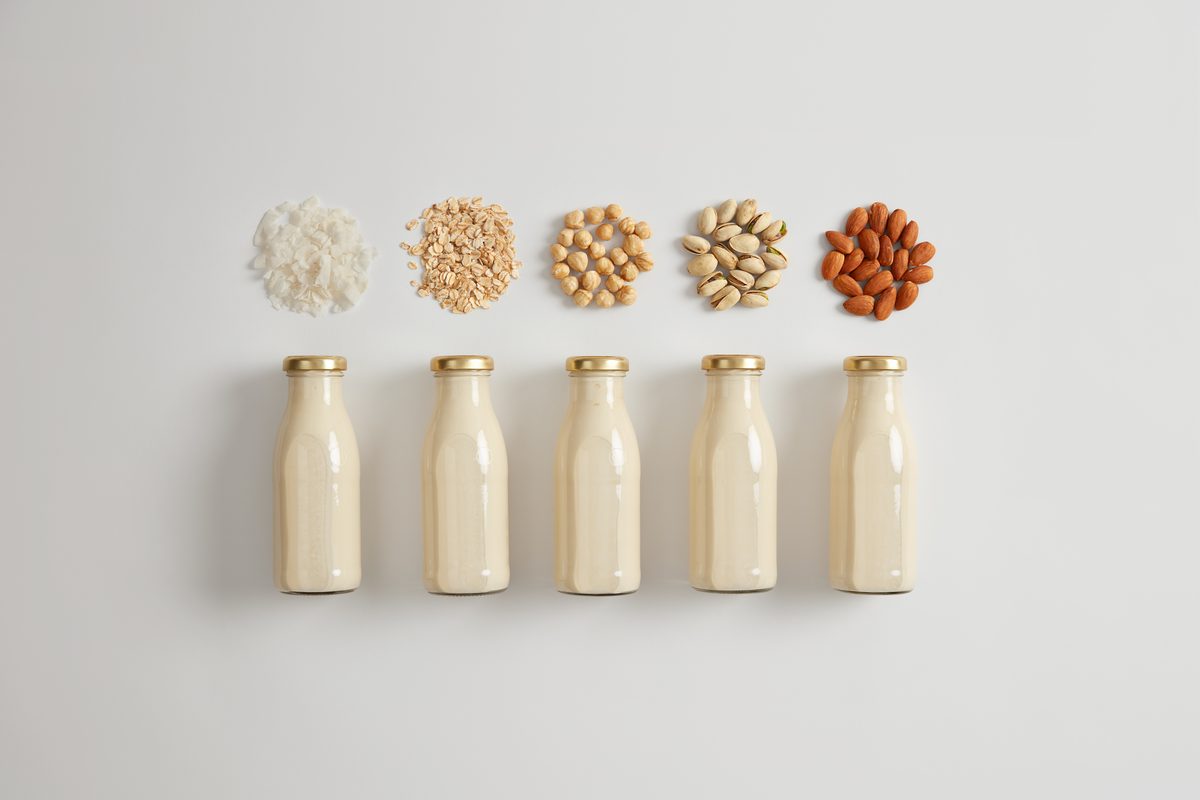
- Plant-based drinks: compare ingredient lists, some brands do not contain it.
- Cured meats: choose hams with no thickening additive.
For babies, follow your paediatrician’s recommendations on infant formula.
Frequently asked questions
Is carrageenan carcinogenic?
EFSA has no concern about the additive’s carcinogenicity. However, its degraded form, poligeenan, causes tumours in animals, and a French study from 2024 links high consumption to more breast cancers, without proof of cause.
Is carrageenan natural?
It is extracted from red seaweed, but natural does not mean beyond question: it is the processing and the size of the molecules that are debated.
What is the maximum dose?
75 mg per kilo of body weight per day, a dose that EFSA has considered temporary since 2018.
Why is it put in plant-based milk?
To thicken it and stop particles settling at the bottom. It is not systematic, which is why it is worth comparing labels.
Are E407 and E407a the same thing?
They are two similar forms, evaluated together by EFSA with a shared acceptable intake.
The other additives in the series: monosodium glutamate, stevia and maltitol.
Our sources
- EFSA, Re-evaluation of carrageenan (E 407) and processed Eucheuma seaweed (E 407a) as food additives, EFSA Journal, 2018.
- Sellem L. et al., Food additive emulsifiers and cancer risk, PLOS Medicine, 2024.