Group · Sweet foods
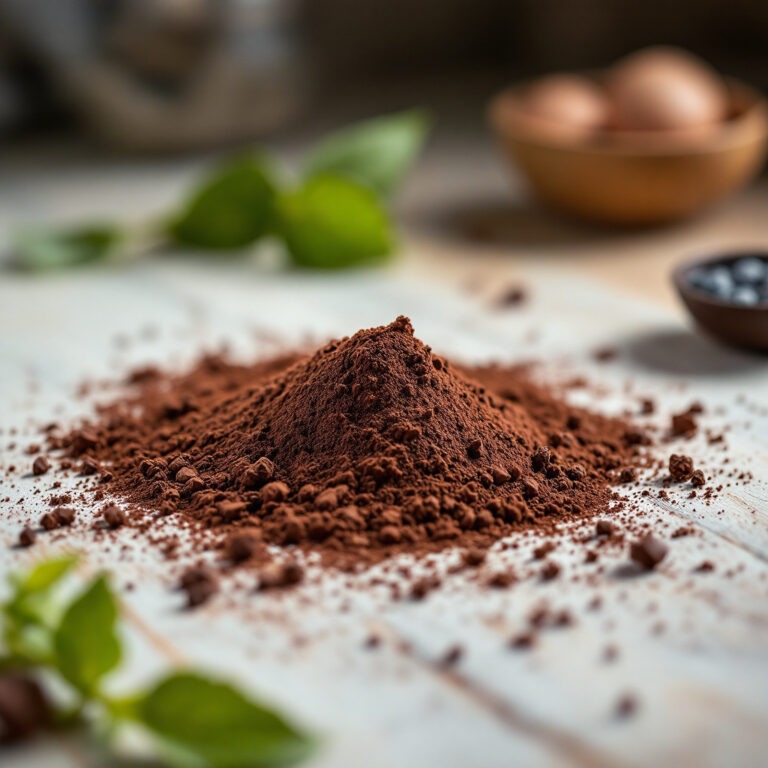
Unsweetened cocoa powder (low-fat cocoa)
Unsweetened cocoa powder is made from defatted, dried cocoa beans. Intense and bitter, it gives the taste of chocolate without the sugar. Very rich in antioxidants, fibre and magnesium, it is the ideal ingredient for healthy chocolate desserts with controlled sugar.
Macronutrient breakdown
Nutrition table per 100 g
| Calories | 387 kcal |
| Kilojoules | 1610 kJ |
| Protein | 22,4 g |
| Carbohydrate | 11,6 g |
| Fat | 20,6 g |
| Fibre | 29,5 g |
Micronutrients per 100 g
All measured nutrients, ranked by share of the daily reference intake.
- Copper3,9 mg390 %
- Iron48,5 mg346 %
- Manganese4,1 mg205 %
- Potassium3900 mg195 %
- Magnesium500 mg133 %
- Phosphorus690 mg99 %
- Zinc6,4 mg64 %
- Vitamin D2,73 µg55 %
See the other 12 nutrients
- Vitamin B9107 µg54 %
- Calcium140 mg18 %
- Vitamin B50,82 mg14 %
- Vitamin B20,12 mg9 %
- Vitamin B31,15 mg7 %
- Vitamin B10,08 mg7 %
- Omega-6 LA0,58 g6 %
- Vitamin K13,9 µg5 %
- Vitamin E0,61 mg5 %
- Total omega-30,06 g2 %
- Omega-3 ALA0,04 g2 %
- Vitamin A0,21 µg0 %
Anses Ciqual 2025. Source: Anses, 2025, Ciqual food composition table
Tips
Unsweetened cocoa flavours porridge, yoghurts, smoothies and bakes without adding sugar. It is the key to indulgent but healthy desserts such as avocado chocolate mousse, sweet potato brownies or chocolate overnight oats.
- Nutrition values: very rich in fibre, magnesium, iron and antioxidant flavonoids.
- Good to know: do not confuse it with sweetened chocolate powder (the breakfast type), which is mostly sugar. True low-fat cocoa is unsweetened.
One to two teaspoons are enough to flavour a preparation. Combined with dark chocolate, it intensifies the taste. See the Sugary foods family.
Sources
Average nutrition values per 100 g, given as a guide only (they may vary by brand and preparation).