Group · Fruit
Lime
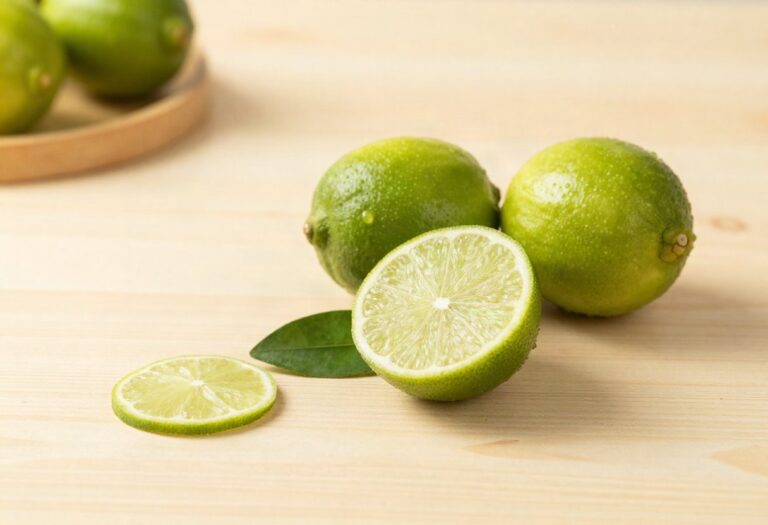
The lime is a citrus fruit that is smaller, more acidic and more fragrant than the yellow lemon. It is not an unripe lemon: it is a different species, Citrus aurantiifolia, grown in the tropics.
In terms of nutrition facts, raw flesh provides 39.3 kcal per 100 g, with 4.3 g of fibre, 3.14 g of carbohydrate and 1.13 g of protein. It provides 29.3 mg of vitamin C, 57 mg of calcium and 190 mg of potassium per 100 g.
Macronutrient breakdown
Nutrition table per 100 g
| Calories | 39 kcal |
| Kilojoules | 166 kJ |
| Protein | 1,2 g |
| Carbohydrate | 3,2 g |
| Fibre | 4,3 g |
Micronutrients per 100 g
All measured nutrients, ranked by share of the daily reference intake.
- Vitamin C29,3 mg37 %
- Potassium190 mg10 %
- Copper0,08 mg8 %
- Calcium57 mg7 %
- Manganese0,09 mg5 %
- Vitamin B50,23 mg4 %
- Vitamin E0,45 mg4 %
- Magnesium14 mg4 %
- Vitamin B9dietary folate equivalents36,5 µg
See the other 7 nutrients
- Phosphorus24 mg3 %
- Vitamin B20,02 mg2 %
- Vitamin B30,25 mg2 %
- Zinc0,15 mg2 %
- Iron0,2 mg1 %
- Vitamin B60,02 mg1 %
- Vitamin A1,03 µg0 %
Anses Ciqual 2025. Source: Anses, 2025, Ciqual food composition table
Tips
You use the juice, not the flesh. These figures are for the whole pulp; half a lime squeezed gives a tablespoon of juice, which means a handful of calories and a little vitamin C.
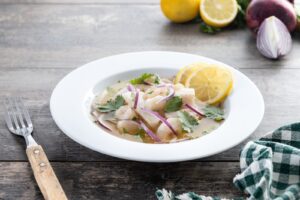
Its acidity can replace salt. This is its best nutritional use: a squeeze of juice over fish, vegetables or a Caribbean dish lifts everything and means you can leave out the salt cellar. See salt.
It improves the absorption of plant-based iron. Its vitamin C converts the iron in lentils or spinach into a better-absorbed form. Juice squeezed just before serving makes a measurable difference.
In cooking, zest is better than juice. The essential oils in the peel carry most of the aroma. Choose a fruit that is unwaxed and untreated after harvest; this is stated on the label.
Phytophotodermatitis: a real but rare risk. Lime juice on the skin followed by sun exposure can cause burns. It is a documented problem among bartenders and holidaymakers; washing your hands after squeezing is enough to avoid it.