Group · Dairy
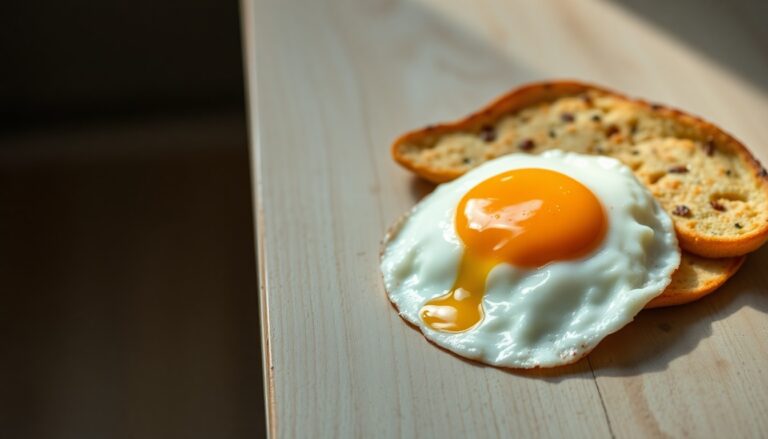
Fried egg
The fried egg is one of the simplest and most popular ways to cook an egg for breakfast or a quick meal. The egg is cracked straight into a hot pan, lightly oiled or buttered, leaving the white just set and the yolk runny or well cooked, to taste. With around 157 kcal per 100 g, it provides very good-quality protein (nearly 14.6 g) and a notable fat profile (10.4 g), while carbohydrate is almost absent. Rich in vitamins (A, D, B12) and minerals, the fried egg easily fits into a balanced diet, as long as you watch the cooking fat.
Macronutrient breakdown
Nutrition table per 100 g
| Calories | 157 kcal |
| Kilojoules | 656 kJ |
| Protein | 14,6 g |
| Carbohydrate | 1,4 g |
| Fat | 10,4 g |
Micronutrients per 100 g
All measured nutrients, ranked by share of the daily reference intake.
- Vitamin B121,4 µg56 %
- Selenium25,9 µg47 %
- Vitamin D2,3 µg46 %
- DHA0,09 g35 %
- Vitamin B20,41 mg29 %
- Phosphorus204 mg29 %
- Iodine40 µg27 %
- Vitamin B51,4 mg23 %
- Vitamin B9dietary folate equivalents73,3 µg
See the other 14 nutrients
- Vitamin E2,32 mg19 %
- Omega-6 LA1,47 g15 %
- Iron2 mg14 %
- Vitamin A112 µg14 %
- Zinc1,4 mg14 %
- Potassium155 mg8 %
- Total omega-30,19 g8 %
- Copper0,07 mg7 %
- Calcium53,1 mg7 %
- Vitamin B60,08 mg6 %
- Vitamin B10,06 mg5 %
- Omega-3 ALA0,1 g5 %
- Magnesium14 mg4 %
- Manganese0,03 mg2 %
Anses Ciqual 2025. Source: Anses, 2025, Ciqual food composition table
Tips
To get the best from the fried egg, the key is the cooking. Use a non-stick pan and a moderate amount of fat: a knob of butter or a drizzle of oil is enough. The more fat you add, the higher the calories and fat climb, which explains the difference from a poached egg or a soft-boiled egg, which are cooked without added fat. Gentle cooking over a medium heat also preserves the yolk and its nutrients better.
Portions and pairings: allow one to two eggs per person. The fried egg goes very well with vegetables (spinach, tomatoes, mushrooms), wholemeal bread or a slice of ham. For a lighter meal, serve it with a large salad rather than fatty cured meats. At breakfast, it keeps you full for a long time thanks to its protein and limits mid-morning cravings.
- Nutrition facts: around 14.6 g of protein, 10.4 g of fat and only 1.4 g of carbohydrate per 100 g, with no fibre.
- Micronutrients: vitamins A, D, E and B12 and minerals such as iron, zinc and selenium, mainly concentrated in the egg yolk.
- Glycaemic index: almost nil, which makes it a useful food if you are aiming for stable blood sugar.
For active people: the fried egg is a source of complete protein containing all the essential amino acids, useful for recovery and for maintaining muscle mass. When cutting, you can favour the egg white to reduce fat, or include the whole egg in a post-workout snack. To go further, discover our protein snack ideas, which complement your daily intake well.
Weight control: the egg itself is not very high in calories, but it is the cooking fat that makes the difference. So prefer a non-stick pan and measure your fat. Avoid adding too much salt and limit rich accompaniments (fried bacon, chips). You can compare these figures with other foods using our food calorie table, or explore the whole dairy products and eggs family to vary your meals. For storage, eat the fried egg straight after cooking, as it does not reheat well.