Group · Dairy
Scrambled eggs
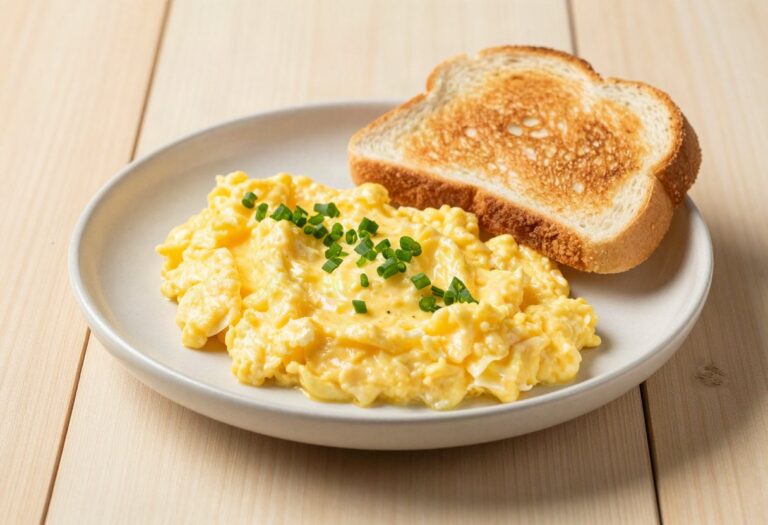
Scrambled eggs are a simple, comforting dish made by beating whole eggs and then cooking them gently, often with a little fat or milk. Creamy and soft, they are one of the classics of breakfast and brunch, but also work at lunch or dinner. Nutritionally, they provide around 167 kcal per 100 g, with nearly 11.9 g of very high-quality protein, 13 g of fat and only 0.44 g of carbohydrate. Rich in complete protein, they also contain vitamins (A, D, B12) and minerals. Easy to make and endlessly adaptable, scrambled eggs naturally have their place in a balanced, varied diet.
Macronutrient breakdown
Nutrition table per 100 g
| Calories | 167 kcal |
| Kilojoules | 693 kJ |
| Protein | 11,9 g |
| Carbohydrate | 0,5 g |
| Fat | 13 g |
Micronutrients per 100 g
All measured nutrients, ranked by share of the daily reference intake.
- Selenium22,5 µg41 %
- Vitamin B120,93 µg37 %
- Vitamin D1,8 µg36 %
- Iodine52 µg35 %
- Phosphorus196 mg28 %
- Vitamin B20,38 mg27 %
- Vitamin A194 µg24 %
- Vitamin B943 µg22 %
See the other 14 nutrients
- Vitamin B51,12 mg19 %
- DHA0,04 g17 %
- Iron1,94 mg14 %
- Zinc1,35 mg14 %
- Vitamin B60,13 mg9 %
- Calcium59,1 mg7 %
- Potassium133 mg7 %
- Copper0,07 mg7 %
- Vitamin B10,07 mg6 %
- Vitamin K14 µg5 %
- Magnesium12,2 mg3 %
- Total omega-30,04 g2 %
- Manganese0,03 mg2 %
- Vitamin B30,1 mg1 %
Anses Ciqual 2025. Source: Anses, 2025, Ciqual food composition table
Tips
To make soft scrambled eggs, cook them slowly over a low heat, stirring regularly. You can enrich them with fresh herbs (chives, parsley), a little cheese or vegetables. A typical portion is 2 or 3 eggs, or about 100 to 150 g. Watch the amount of added fat, though: butter and cream quickly push up the calories and fat. For a lighter version, limit the added fat and use a non-stick pan or a splash of semi-skimmed milk.
- Protein: with around 11.9 g of complete protein per 100 g, scrambled eggs keep you full for a long time and suit a high-protein breakfast.
- Glycaemic index: very low, thanks to the low carbohydrate content, which makes them a good choice for fullness.
- Micronutrients: vitamins A, D and B12, as well as selenium and phosphorus.
For active people, scrambled eggs are an excellent option for recovery or building muscle. Their reference protein supports the repair of muscle fibres after exercise. You can pair them with a source of carbohydrate (wholemeal bread, oat flakes) to replenish energy stores. They fit perfectly into a homemade protein snack or a bulking meal. To go further in planning your meals, see our advice on nutrition for fitness.
If you are watching your weight, keep in mind that the calorie density comes mostly from additions (butter, cream, bacon, cheese). Prepared simply, scrambled eggs remain a sensible, filling dish. To vary your sources of dairy protein, you can also turn to 0% fat fromage blanc at breakfast, or discover other egg dishes such as the poached egg, which is lighter as it is cooked without fat.
For storage, scrambled eggs are best eaten as soon as they are made. You can keep them in the fridge for 24 hours in an airtight container, but the texture suffers slightly. Avoid reheating them too fiercely so they do not dry out. To explore all the options in this category and compare their nutrition facts, browse the dairy products and eggs family. Versatile, rich in nutritional benefits and easy to include, scrambled eggs suit a weight-loss goal as well as a demanding sports routine.