Group · Sweet foods
Pain d’épices (French spice bread)
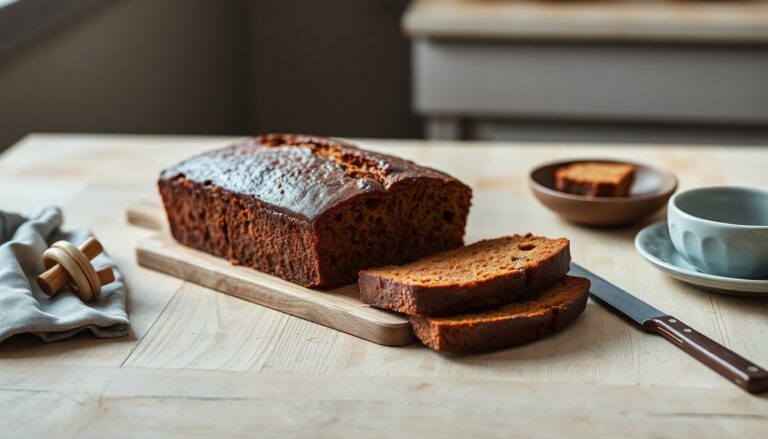
Pain d’épices (French spice bread, a honey and spice cake related to gingerbread) is a traditional bake with warm flavours, made from flour, honey and a mix of spices such as cinnamon, ginger, nutmeg, aniseed or star anise. Originating in renowned towns such as Dijon and Reims, it comes in soft versions, in bars or in slices, sometimes with candied fruit or coated in chocolate. Golden and fragrant, it belongs to the sugary foods family and is a welcome guest at breakfast or teatime. With around 320 kcal and 71.8 g of carbohydrate per 100 g, pain d’épices remains a pleasure food. Its relatively low fat content makes it a popular treat, to enjoy in moderation as part of a balanced diet.
Macronutrient breakdown
Nutrition table per 100 g
| Calories | 318 kcal |
| Kilojoules | 1350 kJ |
| Protein | 3,2 g |
| Carbohydrate | 71,8 g |
| Fat | 1,2 g |
| Fibre | 3,8 g |
Micronutrients per 100 g
All measured nutrients, ranked by share of the daily reference intake.
- Manganese0,5 mg25 %
- Phosphorus88 mg13 %
- Vitamin B60,16 mg11 %
- Copper0,11 mg11 %
- Iron1,1 mg8 %
- Zinc0,5 mg5 %
- Potassium91,9 mg5 %
- Vitamin B10,05 mg5 %
See the other 7 nutrients
- Magnesium14,3 mg4 %
- Total omega-30,08 g3 %
- Omega-3 ALA0,06 g3 %
- Omega-6 LA0,22 g2 %
- Vitamin B30,34 mg2 %
- Iodine2 µg1 %
- Calcium4 mg1 %
Anses Ciqual 2025. Source: Anses, 2025, Ciqual food composition table
Tips
Pain d’épices is best enjoyed in a thin slice, either plain or lightly toasted. A sensible portion is around 30 g, which provides nearly 95 kcal. You can spread it with a little soft fresh cheese or serve it with apricot jam for an indulgent breakfast. Its spice notes also go very well with tea, a plain yoghurt or a compote with no added sugar.
In terms of nutrition facts, pain d’épices is rich in carbohydrate (71.8 g per 100 g), mostly from honey and sugar, which gives it a fairly high glycaemic index. Its fat content is low (1.15 g), as is its protein (3.14 g). The honey used in the traditional recipe often replaces part of the refined sugar, and the spices add character without extra calories. To vary your treats, also look at honey or maple syrup, two natural sweetening alternatives.
In the kitchen, pain d’épices is versatile: crumbled over a crumble, worked into a festive poultry stuffing, cut into croutons to go with foie gras or dunked in a milky dessert. Store it in airtight wrapping or wrapped in a clean cloth: it keeps for several days and even gets softer over time.
For active people, pain d’épices can make a handy snack thanks to its quickly available carbohydrates. A slice before an endurance session or a long outing provides usable energy, and it is light to digest as it is low in fat. However, its lack of protein and fibre is not enough for recovery: pair it with a protein source such as yoghurt or fromage blanc, or discover our high-protein snack ideas to balance your snack.
For weight control, bear in mind that its calorie density and high sugar content call for moderation. Limit portions, favour honey-based versions and avoid the richer chocolate-coated variants. You can compare its values with other treats using the food calorie table, or explore the whole sugary foods family. Eaten with discernment, pain d’épices remains a fragrant treat that easily finds its place in a varied diet that leaves room for pleasure.