Group · Meat
Liver pâté
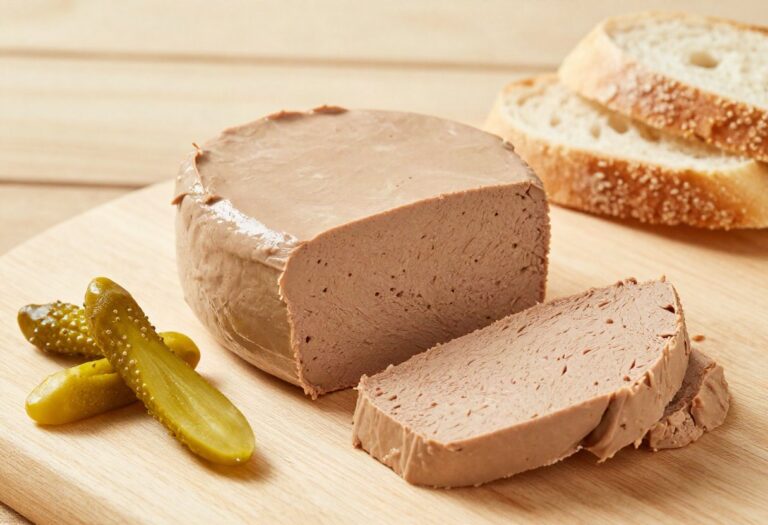
Liver pâté is a charcuterie preparation made from liver (often pork) blended with fat, eggs and seasonings, then cooked. Smooth and full of flavour, it comes in many versions: pork liver pâté, liver mousse, fine terrine, and peppered or herb varieties. It is an indulgent, rich and energy-dense food, traditionally served with drinks or as a starter. At around 316 kcal per 100 g, it provides protein (13.7 g), very little carbohydrate (1.21 g) but a lot of fat (28.3 g). Enjoyed for its taste, it is eaten above all for pleasure, in small amounts, as part of a varied and balanced diet.
Macronutrient breakdown
Nutrition table per 100 g
| Calories | 316 kcal |
| Kilojoules | 1310 kJ |
| Protein | 13,7 g |
| Carbohydrate | 1,3 g |
| Fat | 28,3 g |
| Fibre | 0,9 g |
Micronutrients per 100 g
All measured nutrients, ranked by share of the daily reference intake.
- Vitamin C10,5 mg13 %
- Vitamin D0,4 µg8 %
- Iodine10 µg7 %
Anses Ciqual 2025. Source: Anses, 2025, Ciqual food composition table
Tips
Liver pâté appeals with its melt-in-the-mouth texture and strong flavour, but its nutrition facts call for moderation. With 28.3 g of fat per 100 g, its calorie density is high: a sensible portion is around 30 to 40 g, or one to two thin slices on bread. There is no need to cut it out if you are watching your weight, but it is better kept for an occasion than eaten daily.
How to eat liver pâté
- On a slice of wholemeal bread or country bread, for a little more fibre and fullness (wholemeal breads have a more moderate glycaemic index).
- With gherkins, pickled baby onions or a green salad, which add freshness and crunch.
- As a light starter rather than a big spread on bread, to limit your saturated fat intake.
Nutritional profile. Liver pâté comes from offal (liver), which is naturally rich in iron, vitamin A and B vitamins. However, its fat and salt content sets it apart from plainly cooked liver. If you want the benefits of liver with less fat, turn to pan-fried calf’s liver or pig’s liver. Among charcuterie, liver pâté sits alongside other fatty preparations such as rillettes, which should also be eaten sparingly. You will find a broad overview in the meat family.
Tips for active people. Liver pâté provides protein, but its high fat content makes it a poor fit around exercise: it slows digestion and is not suitable as a pre-workout snack. For recovery, or for a lean protein source such as chicken breast, choose less fatty foods. If you are looking for high-protein snack ideas, take inspiration from these protein snack recipes. Pâté remains an occasional pleasure, to be eaten outside the key training windows.
Weight control. Liver pâté is high in calories and often salty: limit how often you eat it, keep an eye on your portions and serve it with vegetables. To compare it easily with other foods, check the food calorie table. Keep it in the fridge, well wrapped, and eat it soon after opening.
Pregnant? Pâtés and liver-based products are not recommended during pregnancy (listeriosis, vitamin A). See our foie gras in pregnancy guide.