Group · Meat
Beef salami
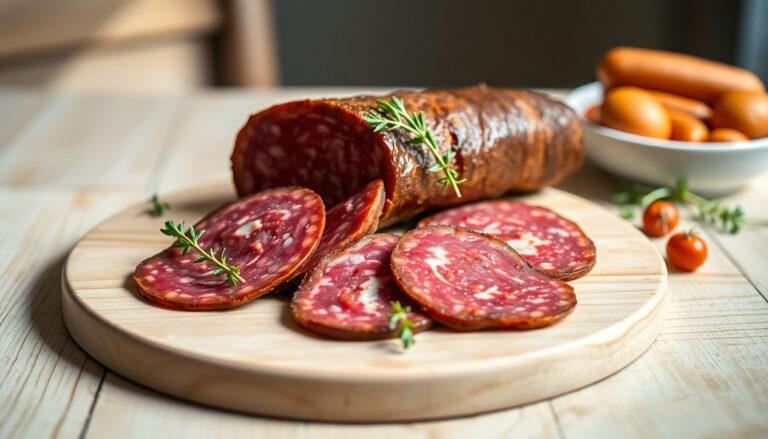
Beef salami is a dry-cured meat made from minced beef, seasoned and then fermented and dried. Recognisable by its firm texture and well-spiced taste, it comes in more or less spicy, smoked or matured versions depending on regional recipes. It is found in thin slices on nibbles boards, in sandwiches and in mixed salads. In terms of nutrition facts, beef salami provides 455 kcal per 100 g, with 14.5 g of protein, 43 g of fat and only 2.42 g of carbohydrate. It is a tasty but rich and salty product, to be enjoyed in small quantities as part of a varied, balanced diet.
Macronutrient breakdown
Nutrition table per 100 g
| Calories | 455 kcal |
| Kilojoules | 1880 kJ |
| Protein | 14,5 g |
| Carbohydrate | 2,5 g |
| Fat | 43 g |
Tips
Beef salami is an indulgent treat that deserves to be eaten in moderation. Its high calorie density (455 kcal per 100 g) and its richness in fat and salt make it a food to measure out. A reasonable portion is around 30 g, which is a few thin slices, enough to enjoy its flavour without weighing down the day’s energy total.
How to eat beef salami: sliced very thinly, it shows off its aromas better and naturally helps you limit the quantity. Pair it with raw vegetables, wholemeal bread, gherkins or a little fresh cheese to balance a plate. On a nibbles board, serve it with crunchy vegetables and fruit to offset the fatty, salty side.
- Storage: whole, it keeps for several weeks in a dry place or the fridge; once sliced, eat it quickly and wrap it airtight.
- Smart pairings: rocket, tomatoes, grilled peppers or a generous green salad to provide the fibre and vitamins that are completely absent from salami.
- Best time to eat it: with drinks before a meal or at lunch, rather than as a late snack, because it is salty.
Nutritionally, beef salami provides animal protein and iron, but its saturated fat and sodium content call for caution, especially if you are watching your blood pressure. To vary your lean protein sources, turn to turkey breast or leaner minced beef. You can also explore the whole meat family to compare nutrition profiles.
And for active people? Salami provides protein, but its high proportion of fat makes it unsuitable as a snack around training, when digestion needs to stay light. For recovery and bulking up, choose more digestible sources richer in lean protein, or practical options such as protein powder. Keep salami as an occasional treat rather than a pillar of your sports nutrition.
For weight control: its calories climb quickly, because people often eat it without realising. Weigh your slices, include it in a structured meal and round it off with vegetables. To see where this food sits among others, consult the food calorie table and keep in mind the principles of a balanced diet day to day.