Group · Meat
Bündnerfleisch (Grisons beef)
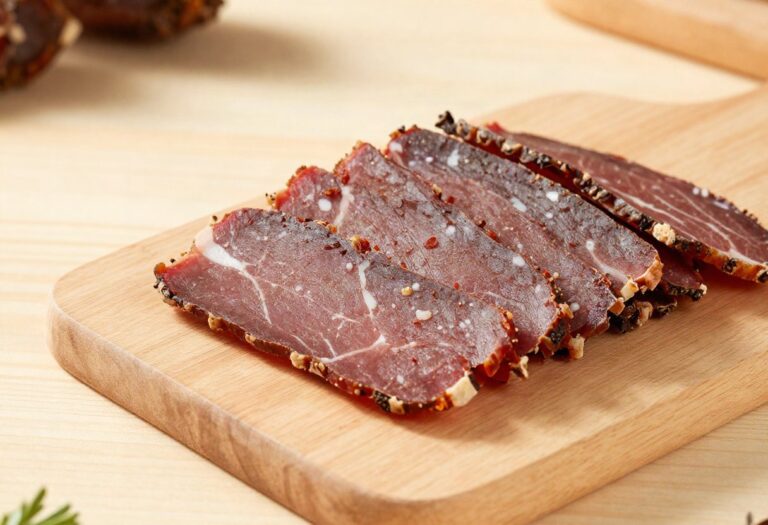
Bündnerfleisch, also known as Grisons beef, is a Swiss speciality made from lean beef that is salted, dried and air-cured. Served in thin slices of a characteristic dark red, it has a firm texture and a concentrated flavour. Particularly popular as a fine cured meat, it fits easily into a balanced diet thanks to its exceptional protein content. With only 207 kcal and 38.9 g of protein per 100 g, it contains very little fat (5.47 g) and carbohydrate (0.56 g). It is a dried meat favoured by athletes and by anyone watching their weight, provided they keep an eye on its salt content.
Macronutrient breakdown
Nutrition table per 100 g
| Calories | 207 kcal |
| Kilojoules | 874 kJ |
| Protein | 38,9 g |
| Carbohydrate | 0,6 g |
| Fat | 5,5 g |
Micronutrients per 100 g
All measured nutrients, ranked by share of the daily reference intake.
- Vitamin B122,39 µg96 %
- Vitamin B311,8 mg74 %
- Zinc5,9 mg59 %
- Vitamin B60,7 mg50 %
- Phosphorus278 mg40 %
- Iodine53,8 µg36 %
- Potassium660 mg33 %
- Vitamin B51,33 mg22 %
See the other 10 nutrients
- Vitamin B20,26 mg19 %
- Vitamin B933,9 µg17 %
- Selenium9 µg16 %
- Copper0,15 mg15 %
- Iron1,8 mg13 %
- Magnesium46,6 mg12 %
- Vitamin B10,06 mg6 %
- Calcium30,8 mg4 %
- Omega-6 LA0,09 g1 %
- Omega-3 ALA0,01 g1 %
Anses Ciqual 2025. Source: Anses, 2025, Ciqual food composition table
Tips
Thanks to its high protein density and low fat content, Bündnerfleisch is a valuable way to vary your sources of lean protein. Like any dried, salted product, however, it should be eaten in moderation.
- Recommended portion: 30 to 50 g is plenty, which is a few thin slices. Slicing it very thinly brings out its aromas and helps limit the amount you eat.
- Pairings: it goes well with a squeeze of lemon juice, shavings of Parmesan, rocket or gherkins. It is ideal on a nibbles board, in a mixed salad or rolled around breadsticks.
- Storage: wrapped and kept in the fridge, it lasts several days. Do not leave it uncovered, as it dries out quickly.
The salt issue: like pastrami or beef salami, Bündnerfleisch is high in sodium because of the curing process. Limit your portions if you are watching your blood pressure, and serve it with fresh foods such as crunchy vegetables.
Nutritional value: with over 38.9 g of protein per 100 g, it provides essential amino acids, haem iron and vitamin B12. Its near absence of fat and carbohydrate makes it a useful option in a balanced diet geared towards slimming, where lean protein is favoured for fullness.
Tips for active people: Bündnerfleisch makes a practical snack to take with you, perfect after a workout to support muscle recovery. A few slices with a source of carbohydrate (wholemeal bread, fruit) replenish your intake without loading up on fat. Whether you are aiming to bulk up or get lean, it is a good complement to other protein sources such as roast turkey or chicken breast. Remember to drink plenty, as the salt content increases your need for water. To find out more about your protein needs for your sport, see our guidelines on nutrition for fitness.
You will find other cured meats in our Meat family, ideal for comparing their nutrition profiles and putting together varied, tasty plates every day.