Group · Dairy
Low-fat fruit yoghurt
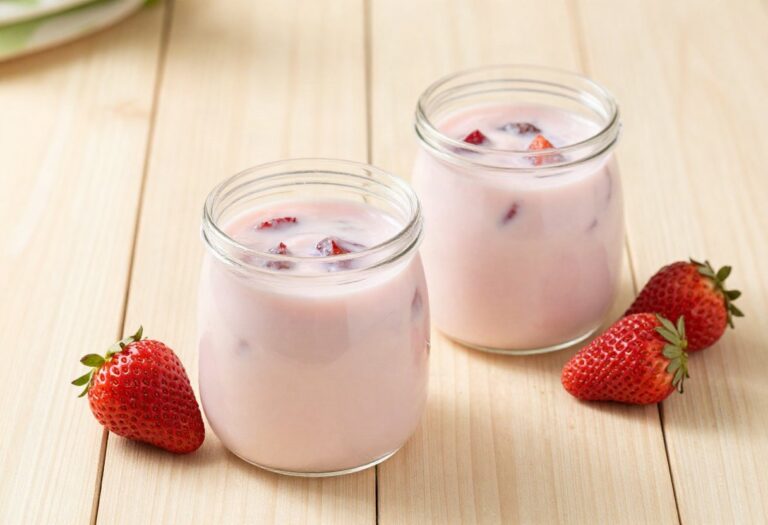
Low-fat fruit yoghurt (yaourt aux fruits allégé) combines the sweetness of fruity preparations with a formulation that is low in fat. Made from skimmed or semi-skimmed fermented milk, it is enriched with pieces of fruit, purée or flavourings, while limiting the fat content. It comes in individual pots in different varieties: strawberry, apricot, peach, red berries or exotic fruits. At around 91.6 kcal per 100 g, it provides 3.09 g of protein, 12.5 g of carbohydrate and only 2.92 g of fat. It is a practical option for a dessert or an indulgent snack, and fits easily into a balanced diet. Its nutritional value rests mainly on its milk protein, calcium and lactic cultures.
Macronutrient breakdown
Nutrition table per 100 g
| Calories | 92 kcal |
| Kilojoules | 386 kJ |
| Protein | 3,1 g |
| Carbohydrate | 12,5 g |
| Fat | 3 g |
| Fibre | 0,3 g |
Micronutrients per 100 g
All measured nutrients, ranked by share of the daily reference intake.
- Calcium122 mg15 %
- Iodine19,5 µg13 %
- Vitamin B20,18 mg13 %
- Phosphorus85,7 mg12 %
- Selenium4,42 µg8 %
- Potassium156 mg8 %
- Vitamin B120,14 µg6 %
- Vitamin B50,33 mg6 %
- Vitamin B9dietary folate equivalents8,97 µg
See the other 16 nutrients
- Vitamin A29,9 µg4 %
- Vitamin B60,04 mg3 %
- Magnesium10,7 mg3 %
- Zinc0,28 mg3 %
- Vitamin D0,14 µg3 %
- Vitamin B10,02 mg2 %
- Manganese0,03 mg1 %
- Vitamin C1,11 mg1 %
- Vitamin E0,13 mg1 %
- Copper0,01 mg1 %
- Iron0,11 mg1 %
- Total omega-30,02 g1 %
- Omega-3 ALA0,01 g1 %
- Vitamin K10,33 µg0 %
- Omega-6 LA0,04 g0 %
- Vitamin B30,06 mg0 %
Anses Ciqual 2025. Source: Anses, 2025, Ciqual food composition table
Tips
Low-fat fruit yoghurt slips perfectly into a varied day: at breakfast with oat flakes, as a light dessert or as an afternoon snack. Count one pot of 100 to 125 g per serving. Be careful with the carbohydrate, though: at 19 g per 100 g, part of it comes from sugars added to the fruit preparation. To limit this, you can alternate with a low-fat plain yoghurt topped with chopped fresh fruit, which is higher in fibre and more filling.
On the nutrition side, this yoghurt provides good-quality milk protein, calcium and lactic cultures (Lactobacillus, Streptococcus). Its fat content is almost nil, which reduces the calorie density compared with a classic smooth fruit yoghurt made with whole milk. Its glycaemic index stays moderate thanks to the protein, but varies depending on the amount of sugar in the recipe. Remember to read the label: some reduced-fat versions make up for it with more sugar.
Practical tips:
- Keep it in the fridge at between 4 and 6 °C and respect the use-by date.
- Pair it with fresh fruit, chia seeds or a little muesli to increase the fibre.
- Avoid adding sugar or honey to preserve its weight-loss appeal.
- Choose versions without sweeteners if you want a simple product.
For athletes, low-fat fruit yoghurt is an interesting snack after exercise: its carbohydrate helps replenish glycogen stores and its protein contributes to muscle recovery. For a higher-protein snack, pair it with nuts or see our protein snack ideas. If your goal is to gain mass, a full-fat yoghurt will provide more calories.
Weight control: despite the name, the « low-fat » claim mainly concerns fat, not always sugar. As part of a balanced diet, it remains a good alternative to industrial desserts, as long as you stay attentive to portions. To discover other dairy options and compare their nutrition facts, explore the dairy products family. There you will find plain yoghurts, fresh cheeses and fermented milks suited to every need.