Group · Seafood
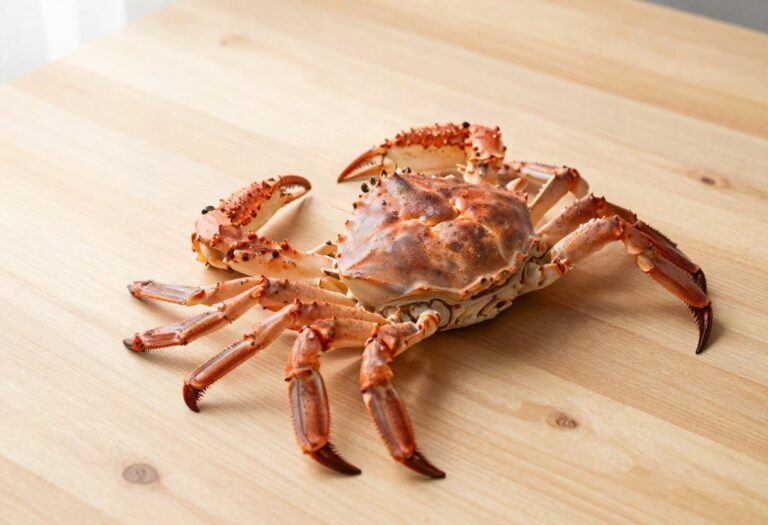
Spider crab
The spider crab is a sea crab prized for its fine, delicate, slightly sweet flesh. Recognisable by its spiny shell and long legs, it is mainly eaten cooked, often steamed or in court-bouillon, then enjoyed plain or in a salad. Nutritionally, it is a particularly interesting seafood: at around 108 kcal per 100 g and nearly 18.3 g of protein, it offers an excellent protein intake for a low level of fat (3.8 g) and no carbohydrate. Lean and tasty, the spider crab naturally earns its place in a balanced diet, whether you want to vary your protein sources or watch your figure without giving up pleasure.
Macronutrient breakdown
Nutrition table per 100 g
| Calories | 108 kcal |
| Kilojoules | 454 kJ |
| Protein | 18,3 g |
| Carbohydrate | 0,2 g |
| Fat | 3,8 g |
Micronutrients per 100 g
All measured nutrients, ranked by share of the daily reference intake.
- Vitamin B129,13 µg365 %
- EPA0,52 g208 %
- Selenium110 µg200 %
- DHA0,35 g140 %
- Copper0,91 mg91 %
- Vitamin B21,25 mg89 %
- Zinc5,9 mg59 %
- Vitamin E6,42 mg54 %
See the other 14 nutrients
- Iodine80 µg53 %
- Vitamin B995,1 µg48 %
- Phosphorus250 mg36 %
- Total omega-30,88 g35 %
- Calcium230 mg29 %
- Magnesium64 mg17 %
- Iron2 mg14 %
- Vitamin B50,79 mg13 %
- Potassium260 mg13 %
- Vitamin B31,43 mg9 %
- Vitamin B60,12 mg9 %
- Manganese0,07 mg4 %
- Omega-3 ALA0,01 g1 %
- Omega-6 LA0,03 g0 %
Anses Ciqual 2025. Source: Anses, 2025, Ciqual food composition table
Tips
Spider crab is best enjoyed in spring and early summer, when its meat is at its fullest and most fragrant. To cook it, plunge it into a gently simmering, flavoured court-bouillon (bay, thyme, coarse salt) or steam it to preserve its texture. Allow about 15 to 20 minutes depending on size. Once cooled, carefully pick the meat from the body and legs: it can be eaten plain, with a squeeze of lemon, a light home-made mayonnaise, or added to a fresh salad.
In terms of nutrition facts, spider crab shines with its protein density (nearly 18.3 g per 100 g) and its low fat content. It also provides minerals and trace elements typical of seafood, such as zinc, selenium and iodine, as well as B vitamins. Its lack of carbohydrate and nil glycaemic index make it an interesting food as part of a balanced diet.
Tips for your figure: at around 108 kcal per 100 g, spider crab is low in calories as long as you avoid fatty sauces. Choose light seasoning and limit shop-bought mayonnaise. It is a good alternative to fattier meats for varying your meals. To explore other equally lean crustaceans, you can turn to the brown crab or the spider crab, and discover the whole seafood family to diversify your intake.
For active people: its richness in quality protein and low fat content make it an ally for muscle recovery and lean mass gain. Served after a session, with a source of carbohydrate such as rice or potatoes, it makes an ideal addition to a recovery meal. If you want to optimise your daily protein intake, the principles of fitness nutrition will help you balance your plates around exercise.
- Recommended portion: 100 to 150 g of shelled meat per person as a main course.
- Storage: eat it soon after cooking, within 24 to 48 hours in the fridge.
- Pairings: crunchy vegetables, lemon, fresh herbs, avocado for a complete, balanced meal.
Bought live and lively, it guarantees freshness and flavour. To compare its calories with other foods, see the calorie table.