Group · Vegetables
Artichoke
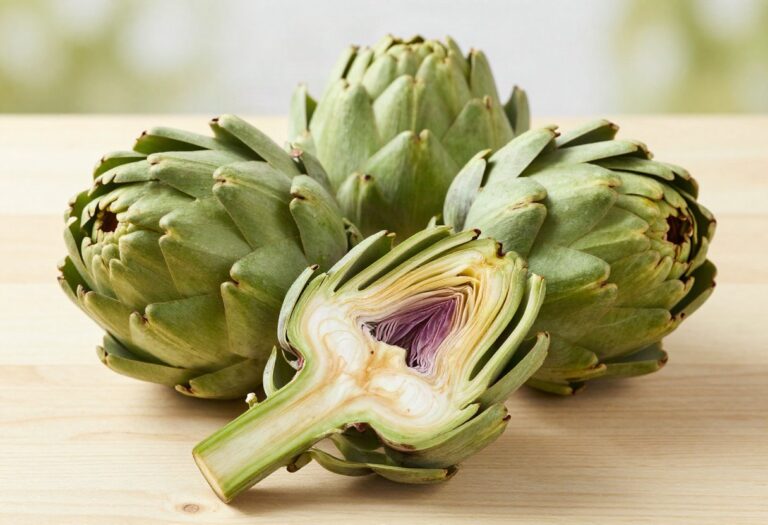
The artichoke is a flower vegetable emblematic of the Mediterranean region, of which we eat the fleshy heart and the base of the bracts (the famous leaves). Grown from a plant in the Asteraceae family, it comes in several varieties such as the large Camus de Bretagne, the violet de Provence or the poivrade, which can be eaten raw. With only 33.2 kcal per 100 g, it is low in calories while rich in fibre (8.3 g) and moderate in carbohydrates (0.99 g). Its plant protein content reaches 3.27 g, which is notable for a vegetable. A great choice for a balanced diet, the artichoke brings fullness and volume without weighing down the energy content of the plate.
Macronutrient breakdown
Nutrition table per 100 g
| Calories | 33 kcal |
| Kilojoules | 137 kJ |
| Protein | 2,6 g |
| Carbohydrate | 1 g |
| Fat | 0,3 g |
| Fibre | 8,3 g |
Micronutrients per 100 g
All measured nutrients, ranked by share of the daily reference intake.
- Potassium427 mg21 %
- Vitamin K114,8 µg20 %
- Magnesium44,6 mg12 %
- Vitamin C9,1 mg11 %
- Phosphorus73 mg10 %
- Copper0,08 mg8 %
- Manganese0,14 mg7 %
- Vitamin B31,11 mg7 %
- Vitamin B9dietary folate equivalents89 µg
See the other 11 nutrients
- Vitamin B20,09 mg6 %
- Vitamin B60,08 mg6 %
- Calcium42,9 mg5 %
- Iron0,67 mg5 %
- Vitamin B10,05 mg5 %
- Vitamin B50,24 mg4 %
- Zinc0,29 mg3 %
- Vitamin E0,19 mg2 %
- Omega-3 ALA0,03 g1 %
- Omega-6 LA0,11 g1 %
- Vitamin A0,67 µg0 %
Anses Ciqual 2025. Source: Anses, 2025, Ciqual food composition table
Tips
The artichoke can be enjoyed in different ways depending on its variety and size. Large artichokes (Camus, Breton) are steamed or boiled in salted water for 30 to 45 minutes, then you pull off the bracts and dip them in a light vinaigrette or a lemony yoghurt. Small poivrade artichokes are eaten raw, finely sliced in a salad with a drizzle of olive oil and some Parmesan. Remember to rub the cut surfaces with lemon to stop them turning black.
Varieties and seasonality: the peak season runs from spring to autumn, with a high point in summer. Choose very firm heads with tight, brittle bracts. The artichoke keeps for a few days in the fridge, with its stem in water like a bouquet. Once cooked, eat it quickly as it oxidises fast.
Key nutrients: its fibre, notably inulin, supports good digestion and fullness. The artichoke also provides potassium, magnesium, vitamin C and antioxidants. Its glycaemic index remains low, which makes it an interesting vegetable for blood sugar management. To preserve its vitamins, choose gentle steaming rather than prolonged boiling.
- Pair it with other low-calorie vegetables such as asparagus or raw fennel for light, tasty starters.
- Add the artichoke heart to pan-fries, savoury tarts or risottos.
- For a convenient version, you will also find the ready-prepared form on the cooked artichoke page.
For active people: the artichoke fits well into a recovery plate thanks to its potassium, useful after exercise, and its filling fibre. When cutting or losing weight, its low calorie density lets you fill the plate without blowing the total energy intake. Combine it with a lean protein source (fish, poultry) and a portion of starchy foods suited to your energy expenditure for a complete meal.
Weight control: plain artichoke is an asset for weight loss, but watch the preparations that push up the calorie bill: overly rich vinaigrettes, buttery sauces or breadcrumb coatings. Opt for light seasoning based on lemon, herbs and a drizzle of olive oil. To compare its nutrition facts with other vegetables, see the vegetable family and the food calorie table.