Group · Condiments & sauces
Capers
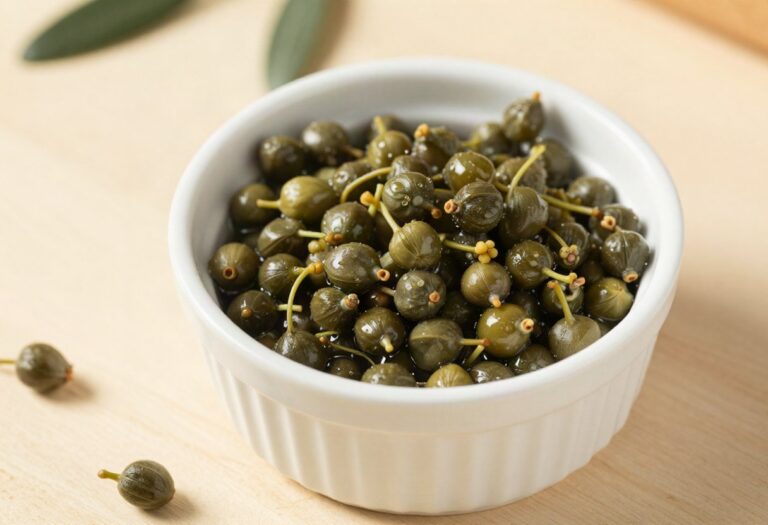
Capers are the flower buds of the caper bush, a Mediterranean shrub. They are picked before they open, then preserved in salt or in vinegar brine. Small, firm and pleasantly tangy with a slight bite, they lend flavour to many recipes with very little food. There are fine capers (the most prized) and larger ones, as well as salted capers and capers in vinegar. At only 23 kcal per 100 g, their nutrition facts make them a good way to season food without weighing it down: 3.6 g of fibre and a touch of minerals. Their intense flavour makes them a clever ally for tasty, well-managed cooking, and they fit perfectly into a balanced diet that keeps an eye on weight.
Macronutrient breakdown
Nutrition table per 100 g
| Calories | 23 kcal |
| Kilojoules | 96 kJ |
| Protein | 2,2 g |
| Carbohydrate | 3,5 g |
| Fat | 0,9 g |
| Fibre | 3,6 g |
Micronutrients per 100 g
All measured nutrients, ranked by share of the daily reference intake.
- Copper0,37 mg37 %
- Vitamin K124,6 µg33 %
- Iron1,67 mg12 %
- Vitamin B923 µg12 %
- Vitamin B20,14 mg10 %
- Magnesium33 mg9 %
- Vitamin E0,88 mg7 %
- Vitamin C4,3 mg5 %
See the other 10 nutrients
- Calcium40 mg5 %
- Vitamin B30,65 mg4 %
- Manganese0,08 mg4 %
- Zinc0,32 mg3 %
- Potassium40 mg2 %
- Vitamin B60,02 mg2 %
- Vitamin B10,02 mg2 %
- Phosphorus10 mg1 %
- Vitamin A6,92 µg1 %
- Vitamin B50,03 mg0 %
Anses Ciqual 2025. Source: Anses, 2025, Ciqual food composition table
Tips
When it comes to calories, capers are very light: 23 kcal per 100 g, but since you use them by the spoonful, their real impact is minimal. Their carbohydrate (3.5 g) and protein (2.18 g) content is negligible in a single serving, and their fat content is almost nil. What matters most is their ability to lift a dish without adding fat or sugar, a real advantage if you are trying to lose weight.
How to eat capers
- Add them at the end of cooking to preserve their aroma: on fish, in a raw tomato sauce or in a tapenade.
- Stir them into a tartare sauce or a vinaigrette for a tangy note.
- Rinse salted capers under water before use to reduce the sodium; drain those in vinegar.
- Pair them with lemon, olives, anchovies, tomato or parsley.
Their seasonality is mostly about the summer harvest, but once preserved they keep all year round. An open jar keeps in the fridge, submerged in its brine. Capers provide fibre and contribute to a varied diet, alongside other condiments such as mustard or gherkins, which are perfect for seasoning without overdoing it. You will find more options in the condiments and sauces family.
For active people, capers are not a source of energy or protein: their appeal is all about taste. They make healthy, low-calorie dishes (white fish, steamed vegetables, salads) more appetising when you are cutting or losing weight, without wrecking your calorie balance. Pair them with a lean protein source and wholegrain starchy foods for a complete recovery meal. If you are following a balanced diet plan, capers are an excellent habit for varying flavours while limiting fats and added sugars.
Something to watch: the main drawback of capers is their salt content, especially in the brined versions. If you are watching your blood pressure or your sodium intake, rinse them thoroughly and limit the amount. Their glycaemic index has no real impact given the portions eaten. Used in moderation, capers remain a smart condiment: few calories, plenty of flavour, and a valuable ally for light cooking full of character.