Group · Vegetables
Red cabbage
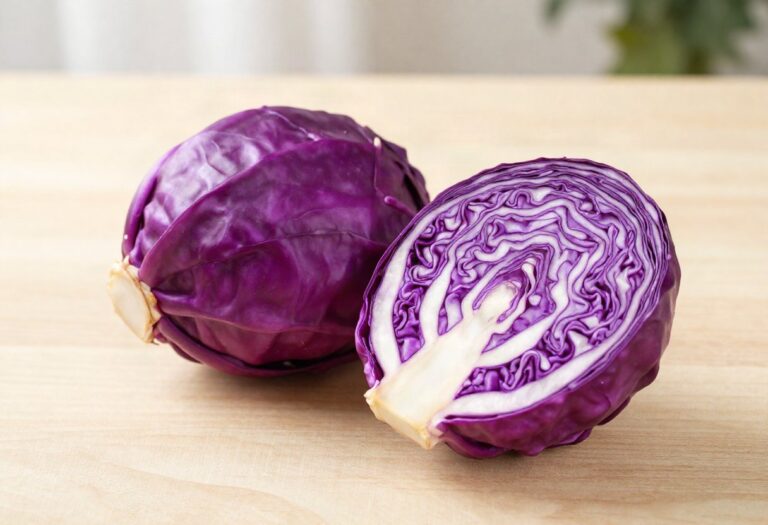
Recognisable by its beautiful purple colour, red cabbage is a variety of cabbage with a round head, prized for its crunch and slightly sweet flavour. It is found mainly in autumn and winter, when it adds colour to plates across France. With only 31.8 kcal per 100 g, it is a low-calorie vegetable, rich in fibre (2.9 g) and naturally low in fat. Its intense colour comes from plant pigments called anthocyanins. Raw, pickled or cooked, red cabbage suits many preparations and fits easily into a balanced diet. It is a great choice for adding variety without weighing down the energy content of a meal.
Macronutrient breakdown
Nutrition table per 100 g
| Calories | 32 kcal |
| Kilojoules | 134 kJ |
| Protein | 1,3 g |
| Carbohydrate | 5,2 g |
| Fat | 0,2 g |
| Fibre | 2,9 g |
Micronutrients per 100 g
All measured nutrients, ranked by share of the daily reference intake.
- Vitamin C28,2 mg35 %
- Vitamin K112 µg16 %
- Potassium253 mg13 %
- Vitamin B60,14 mg10 %
- Manganese0,16 mg8 %
- Calcium46,5 mg6 %
- Iodine7,93 µg5 %
- Vitamin B10,05 mg5 %
- Vitamin B9dietary folate equivalents40,1 µg
See the other 11 nutrients
- Vitamin B50,28 mg5 %
- Phosphorus27,7 mg4 %
- Magnesium12,7 mg3 %
- Iron0,38 mg3 %
- Vitamin B20,04 mg3 %
- Copper0,02 mg2 %
- Vitamin B30,31 mg2 %
- Zinc0,15 mg2 %
- Total omega-30,03 g1 %
- Vitamin E0,06 mg0 %
- Vitamin A1,15 µg0 %
Anses Ciqual 2025. Source: Anses, 2025, Ciqual food composition table
Tips
Red cabbage can be eaten raw or cooked, which makes it very versatile. Finely sliced in a salad, it adds crunch and lovely colour. To soften it, massage it with a splash of lemon juice or vinegar: the acidity also brightens its purple hue. Cooked, it goes wonderfully with slow-cooked dishes, meats or caramelised apples in the tradition of winter dishes.
How to eat it day to day:
- In a cold salad with apples, walnuts and a light vinaigrette;
- Gently braised with a little onion to preserve its texture;
- Pickled to liven up sandwiches and bowls;
- As a colourful side alongside other cruciferous vegetables such as cabbage or broccoli.
A portion of about 100 to 150 g is enough to enjoy its fibre, which promotes fullness and regular digestion. Choose gentle cooking to limit vitamin loss and preserve its pigments. Red cabbage contains vitamin C, vitamin K and antioxidant compounds linked to its colour. In terms of nutrition facts, its 5.13 g of carbohydrate per 100 g and moderate glycaemic index make it a vegetable fully compatible with weight loss.
Tips for active people: low in calories but filling, red cabbage complements a recovery plate or a balanced-diet meal well. Pair it with a protein source (egg, fish, poultry) and a wholegrain starchy food for a balanced meal after exercise. Like all cabbages, it can cause bloating in sensitive people: start with small cooked portions, which are easier to digest than raw, especially before a session.
Storage: whole, it keeps for several weeks in the fridge’s vegetable drawer. Once cut, wrap it in cling film and eat it within a few days to preserve its freshness and colour. You can also blanch and freeze it.
To vary your vegetable menus, explore other options in the vegetable family and compare their nutrients with the food calorie table. Red cabbage remains a great habit for eating colourful, varied and light food throughout the cold season.