Group · Starchy foods
Wheat flour
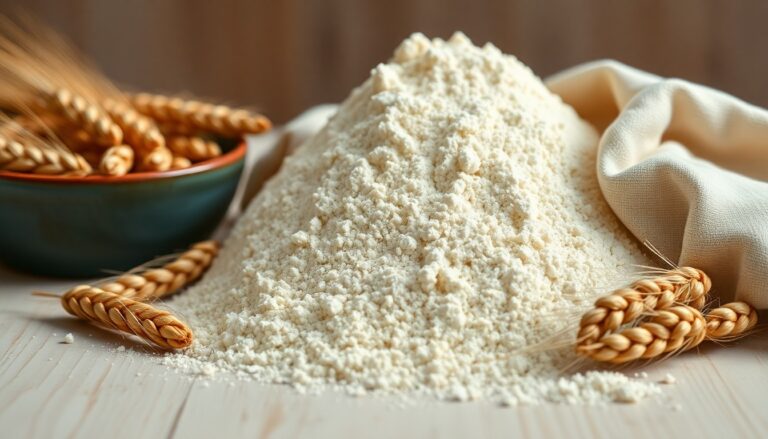
An essential ingredient in kitchens all over the world, wheat flour is made by milling the grains of common wheat. Sold as a fine powder, it comes in several types (T45, T55, T65, T80, T110, T150) depending on how refined it is and how much bran it contains. It is a staple starchy food, rich in complex carbohydrates, used to make breads, pasta, cakes, sauces and pastries. Per 100 g, wheat flour provides around 362 kcal, nearly 68.6 g of carbohydrate, 10.3 g of protein and 6.8 g of fibre. It is a valuable source of energy and has its place in a varied, balanced diet, provided you choose the right type.
Macronutrient breakdown
Nutrition table per 100 g
| Calories | 343 kcal |
| Kilojoules | 1450 kJ |
| Protein | 10,3 g |
| Carbohydrate | 68,6 g |
| Fat | 1,5 g |
| Fibre | 6,8 g |
Micronutrients per 100 g
All measured nutrients, ranked by share of the daily reference intake.
- Manganese2,2 mg110 %
- Phosphorus220 mg31 %
- Copper0,28 mg28 %
- Vitamin B10,26 mg24 %
- Magnesium73 mg19 %
- Zinc1,9 mg19 %
- Iron2,2 mg16 %
- Potassium280 mg14 %
- Vitamin B9dietary folate equivalents25,7 µg
See the other 8 nutrients
- Omega-6 LA0,82 g8 %
- Vitamin B50,48 mg8 %
- Vitamin B60,11 mg8 %
- Vitamin E0,71 mg6 %
- Calcium27 mg3 %
- Total omega-30,08 g3 %
- Omega-3 ALA0,06 g3 %
- Vitamin A0,42 µg0 %
Anses Ciqual 2025. Source: Anses, 2025, Ciqual food composition table
Tips
Wheat flour is versatile, but its nutritional values vary with how refined it is. The higher the number (T), the more bran, fibre and minerals such as magnesium, iron and B vitamins the flour contains. A highly refined white flour such as T45 or T55 has a higher glycaemic index than a wholemeal flour, which is more filling thanks to its fibre.
How to use wheat flour? Go for clever pairings to moderate the glycaemic response:
- Combine it with protein (eggs, dairy) and fibre in your preparations.
- For homemade bread, go for semi-wholemeal flours (T80, T110), which are nutritionally more interesting.
- Store flour in an airtight container, away from damp and light.
As for calories, flour remains dense: around 343 kcal per 100 g. But it is rarely used on its own. What matters most is what gets added to it in baking (sugar, butter, cream). For weight loss and weight control, keep an eye on portions of pastries and cakes, which are often high in sugar and fat. You can compare its values with other starchy foods in the food calorie table.
For active people, the complex carbohydrates in wheat flour are an excellent fuel. A portion of pasta, bread or homemade pancakes a few hours before exercise helps build up glycogen stores. After training, combining these carbohydrates with a source of protein supports recovery: think of protein snacks or enriched preparations. Fitness nutrition rests largely on this balance between carbohydrate and protein.
Wheat flour contains gluten, which gives it its elasticity in bread-making. If you are sensitive to it, find out about gluten intolerance and explore gluten-free alternatives such as buckwheat or maize flour. The starchy foods family offers plenty of options to vary your carbohydrate intake.
In short, wheat flour is a valuable staple: choose less refined versions when you can, watch the ingredients you add and adapt your portions to your physical activity and goals.