Group · Cereals & grains
Corn flakes
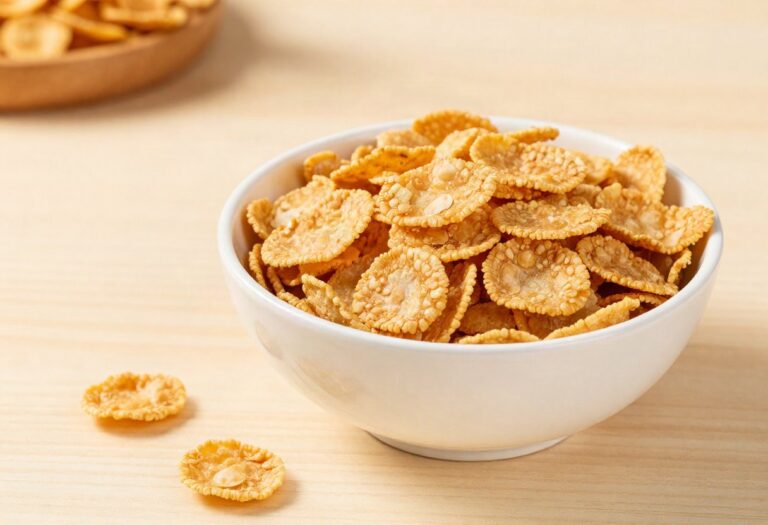
Corn flakes are breakfast cereals made from cooked, flattened and toasted corn kernels. Light and crunchy, they have been a morning bowl classic for over a century. You can find them plain, fortified with vitamins and minerals, or frosted (sweetened). In terms of nutritional values, they provide around 372 kcal per 100 g, with 82.4 g of carbohydrate, 6.88 g of protein and only 0.7 g of fat. Low in fat but rich in fast carbohydrate, corn flakes provide easily absorbed energy. Well integrated into a balanced diet and eaten in reasonable portions, they remain a practical, versatile everyday choice.
Macronutrient breakdown
Nutrition table per 100 g
| Calories | 372 kcal |
| Kilojoules | 1580 kJ |
| Protein | 6,9 g |
| Carbohydrate | 82,4 g |
| Fat | 0,7 g |
| Fibre | 4,6 g |
Micronutrients per 100 g
All measured nutrients, ranked by share of the daily reference intake.
- Vitamin E5,21 mg43 %
- Selenium6 µg11 %
- Phosphorus48,4 mg7 %
- Potassium99,6 mg5 %
- Copper0,04 mg4 %
- Vitamin B60,05 mg4 %
- Magnesium11,7 mg3 %
- Omega-6 LA0,28 g3 %
- Vitamin B9dietary folate equivalents6,95 µg
See the other 7 nutrients
- Vitamin B30,41 mg3 %
- Manganese0,05 mg2 %
- Vitamin B20,03 mg2 %
- Vitamin B50,1 mg2 %
- Vitamin A9,25 µg1 %
- Total omega-30,02 g1 %
- Omega-3 ALA0,01 g1 %
Anses Ciqual 2025. Source: Anses, 2025, Ciqual food composition table
Tips
To enjoy corn flakes without unbalancing your breakfast, first watch the portion. A standard serving is around 30 to 40 g, the equivalent of a small bowl. Beyond that, the calorie density rises quickly, because these cereals are above all a source of carbohydrate (nearly 82.4 g per 100 g). Pour them over a dairy product or a plant-based drink to slow the absorption of sugars, and add fresh fruit, nuts or a few seeds for more fibre, protein and fullness.
- Glycaemic index: corn flakes have a high glycaemic index. Pair them with a source of protein (yoghurt, fromage blanc) or healthy fats to moderate the blood sugar response.
- Fibre: with about 4.6 g of fibre per 100 g, they contain little. For a more filling intake, alternate with wholegrain cereals such as cooked oat bran or oats.
- Storage: keep the packet tightly closed, away from moisture, to preserve the crunch.
As for culinary uses, corn flakes are not limited to the morning bowl. Crushed into breadcrumbs, they make a lovely coating for chicken nuggets or fish fillets for a crispy bake in the oven. You can also sprinkle them over a crumble, stewed fruit or a yoghurt as a topping. If you are comparing the different options on the shelf, take a look at classic corn flakes and the sweeter versions such as frosted corn flakes to spot the variants highest in added sugar.
For active people: corn flakes are a good source of fast carbohydrate, useful as a snack before exercise or to replenish glycogen stores after training. Combine them with a source of protein (milk, fromage blanc, or even protein powder) to support muscle recovery. This carbohydrate and protein duo is one of the foundations of good fitness nutrition.
Weight control: plain corn flakes are not fatty, but their carbohydrate content is still significant and some versions are sweetened. Weigh your portions, limit added sugar and choose packets without a frosted coating. To place these cereals among other morning foods, browse the cereal family and compare the energy content so that you can make a choice suited to your goals.