Group · Herbs & spices
Ground ginger
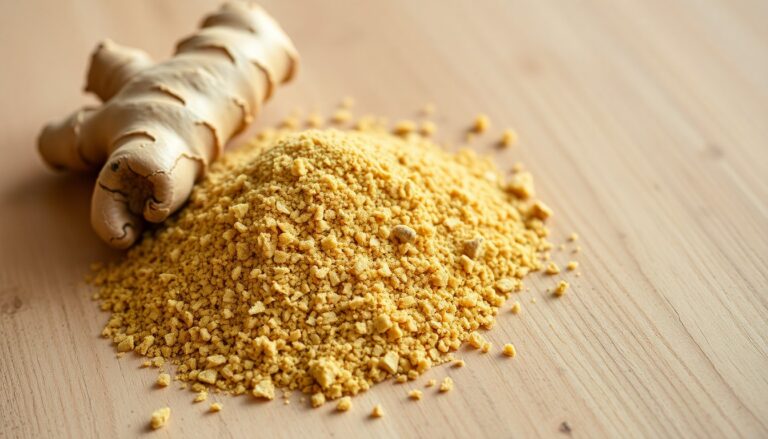
Ground ginger is made by drying and then grinding the ginger rhizome (Zingiber officinale). More concentrated and sharper than fresh, it has a warm, slightly lemony and peppery flavour that is much appreciated in both sweet and savoury cooking. As a fine powder, it keeps for a long time and is easy to measure by the pinch. It is an essential spice in Asian, Indian and Middle Eastern cooking, but also in Western baking (spiced bread, biscuits). Used in very small amounts, it barely affects the calorie content of a dish while enhancing flavours. Rich in aromatic compounds, it fits perfectly into a varied, balanced diet, where it helps you cut back on added salt or sugar.
Macronutrient breakdown
Nutrition table per 100 g
| Calories | 335 kcal |
| Kilojoules | 1410 kJ |
| Protein | 9 g |
| Carbohydrate | 58,3 g |
| Fat | 4,3 g |
| Fibre | 14,1 g |
Micronutrients per 100 g
All measured nutrients, ranked by share of the daily reference intake.
- Manganese33,3 mg1665 %
- Iron19,8 mg141 %
- Potassium1320 mg66 %
- Vitamin B39,62 mg60 %
- Magnesium214 mg57 %
- Copper0,48 mg48 %
- Vitamin B60,63 mg45 %
- Zinc3,64 mg36 %
- Vitamin B9dietary folate equivalents13 µg
See the other 9 nutrients
- Phosphorus168 mg24 %
- Calcium114 mg14 %
- Vitamin B20,17 mg12 %
- Omega-3 ALA0,22 g11 %
- Vitamin B50,48 mg8 %
- Vitamin B10,05 mg4 %
- Vitamin K10,8 µg1 %
- Vitamin C0,7 mg1 %
- Vitamin A1,5 µg0 %
Anses Ciqual 2025. Source: Anses, 2025, Ciqual food composition table
Tips
Ground ginger is used in small touches: half a teaspoon is often enough to flavour a dish for several people. At around 335 kcal per 100 g, its nutrition facts look high on paper, but the real portions are tiny. In daily use, the calories, carbohydrate and fat provided by a pinch are therefore negligible, which makes it a great ally for lifting flavours without adding to the energy bill.
In the kitchen, ground ginger suits many preparations:
- Savoury dishes: curries, vegetable stir-fries, poultry marinades, soups and stocks. It goes wonderfully with ground turmeric, cumin and ground cardamom in spice blends.
- Sweet dishes: gingerbread, biscuits, compotes, smoothies and hot infusions.
- Drinks: a pinch in a herbal tea with lemon and honey, or in a tea, adds warmth and character.
To preserve its aromas, keep it in an airtight jar, away from light and moisture. The powder gradually loses its intensity: buy it in small quantities and replace it regularly. Ground ginger is more concentrated than fresh, so use it sparingly. If you want a fresher, juicier note, you can turn to fresh ginger or explore other spices in the herbs and spices family.
For active people, ground ginger is useful for lifting recovery recipes without adding unnecessary calories: a pinch in porridge, a bowl of high-protein fromage blanc or a post-workout smoothie adds flavour and a comforting feeling of warmth. You can also stir it into a hot tea during cutting phases, when every calorie counts. To go further on eating for exercise, take a look at our advice on fitness nutrition.
Weight control: in itself, ground ginger is not a food to worry about, as it is used in pinches. Watch the preparations that go with it instead: biscuits, shop-bought gingerbread and sweetened drinks can be high in added sugar. Favour homemade recipes where you control the ingredients. Used to flavour low-calorie dishes, it helps you vary flavours and cut back on salt or sugar, a useful habit in a balanced diet approach. Well measured, it makes meals tastier without compromising the balance of the plate.
Heartburn, pregnancy, anticoagulants, real benefits: everything the European Medicines Agency and the studies say, in ginger: is it dangerous?