Group · Herbs & spices
Dill seeds
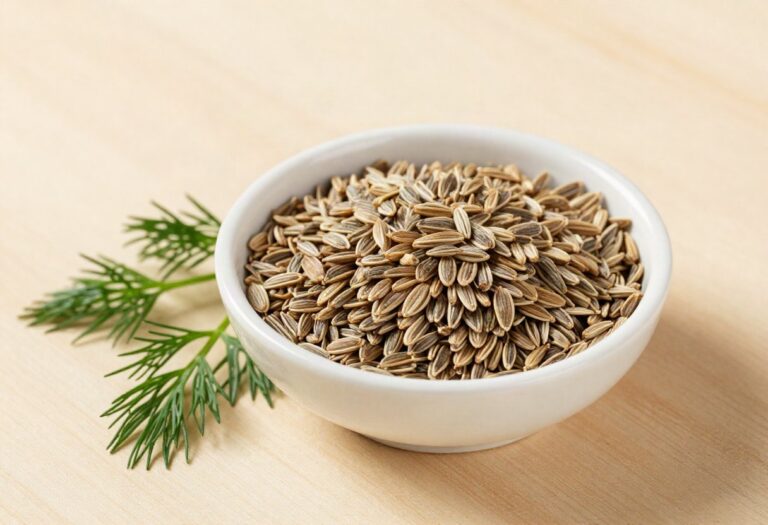
Dill seeds are the dried fruits of dill (Anethum graveolens), an aromatic plant in the umbellifer family, a cousin of fennel and caraway. Light brown and flat-oval in shape, they give off a fresh, slightly aniseed and lemony aroma. Used whole or ground, they flavour marinades, breads, preserves and fish dishes. Nutritionally, they provide around 305 kcal per 100 g, with fibre (21.1 g), protein (16 g) and minerals. These values come from the US USDA FoodData Central database, as this food is not listed in the Ciqual table. Like all spices, they are eaten in very small quantities, which makes their calorie impact negligible on the plate. A tasty seasoning to include in a varied, balanced diet.
Macronutrient breakdown
Nutrition table per 100 g
| Calories | 305 kcal |
| Kilojoules | 1276 kJ |
| Protein | 16 g |
| Carbohydrate | 34,1 g |
| Fat | 14,6 g |
| Fibre | 21,1 g |
Micronutrients per 100 g
All measured nutrients, ranked by share of the daily reference intake.
- Calcium1516 mg190 %
- Iron16,33 mg117 %
- Manganese1,83 mg92 %
- Copper0,78 mg78 %
- Magnesium256 mg68 %
- Potassium1186 mg59 %
- Zinc5,2 mg52 %
- Phosphorus277 mg40 %
See the other 10 nutrients
- Vitamin B10,42 mg38 %
- Vitamin C21 mg26 %
- Selenium12,1 µg22 %
- Vitamin B20,28 mg20 %
- Vitamin B60,25 mg18 %
- Vitamin B32,81 mg18 %
- Omega-6 LA0,96 g10 %
- Omega-3 ALA0,15 g8 %
- Vitamin B910 µg5 %
- Vitamin A3 µg0 %
USDA FoodData Central (FDC 170925)
Tips
Dill seeds are used sparingly: a teaspoon is enough to flavour a dish. You can use them whole in jars of gherkins and lacto-fermented vegetables, in court-bouillons and fish marinades, or crush them lightly to release their essential oils. Lightly dry-toasted in a frying pan, they reveal a deeper aroma, ideal for flavouring a bread, a fromage frais or a yoghurt sauce.
Varieties and flavour profile: there is a difference between the seeds (the fruit) and the leafy dill, which is milder. The seeds recall caraway and cumin while keeping that characteristic aniseed note. If you enjoy these flavours, also explore fennel seeds and caraway, which are very similar in cooking. The fresh version, dill leaves, complements the seeds perfectly for oily fish and Nordic sauces.
Nutrition facts and benefits: with around 305 kcal, 16 g of protein, 34.07 g of carbohydrates, 14.54 g of fat and above all 21.1 g of fibre per 100 g, dill seeds are concentrated in nutrients. But as they are used in pinches, their real contribution is minimal. They provide minerals such as calcium, iron and manganese, as well as interesting aromatic compounds. To discover other fragrant seasonings without notable calories, browse the Herbs & Spices family.
- Storage: keep them in an airtight jar, away from light and damp, to preserve their aromas for several months.
- Cooking: add them at the start of cooking in slow-cooked dishes, or at the end for fresh preparations.
- Pairings: fish, potatoes, beetroot, cucumber, yoghurt, rye bread.
For active people: dill seeds provide no significant energy or protein at the scale of a portion, but they are valuable for lifting healthy meals without added fat or salt. They let you season steamed fish, vegetables or fromage frais while following a balanced diet, while varying the flavours. A good strategy for limiting sodium and keeping the pleasure of taste.
Weight control: no worries on the slimming front, dill seed is a “smart” seasoning that lifts flavour without a problematic calorie density. Choose it over fatty or very sugary sauces to flavour your light everyday dishes.