Group · Fish
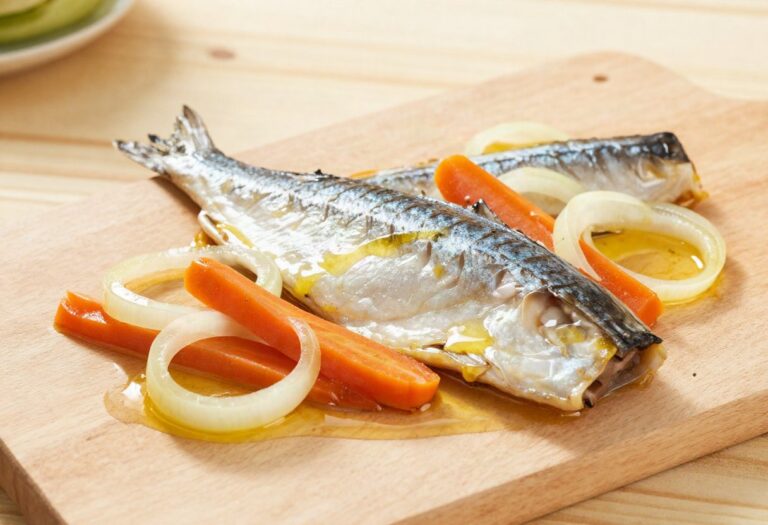
Pickled herring
The pickled herring is a traditional preparation made from an oily fish of cold seas, the herring, preserved in a marinade of vinegar, oil, onions and aromatics. Very popular in the kitchens of Northern Europe, it comes as fillets in vinegar, in oil, in cream or with juniper berries. Valued for its melt-in-the-mouth flesh and distinctive taste, it fits into a balanced diet as an interesting source of protein and healthy fatty acids. At 189 kcal per 100 g, pickled herring is nevertheless a fairly energy-dense food, to be enjoyed in sensible portions so you benefit from its nutritional qualities without overdoing it.
Macronutrient breakdown
Nutrition table per 100 g
| Calories | 189 kcal |
| Kilojoules | 787 kJ |
| Protein | 13,7 g |
| Carbohydrate | 2 g |
| Fat | 13,8 g |
Micronutrients per 100 g
All measured nutrients, ranked by share of the daily reference intake.
- EPA0,75 g300 %
- Vitamin D13,2 µg264 %
- DHA0,48 g192 %
- Vitamin B124,27 µg171 %
- Selenium46 µg84 %
- Total omega-31,48 g59 %
- Iodine47 µg31 %
- Vitamin B33,3 mg21 %
See the other 18 nutrients
- Vitamin E1,71 mg14 %
- Vitamin B60,19 mg14 %
- Phosphorus89 mg13 %
- Omega-3 ALA0,25 g13 %
- Copper0,11 mg11 %
- Vitamin B20,14 mg10 %
- Calcium77 mg10 %
- Iron1,22 mg9 %
- Zinc0,53 mg5 %
- Vitamin A35,8 µg4 %
- Omega-6 LA0,43 g4 %
- Potassium69 mg3 %
- Vitamin B10,04 mg3 %
- Magnesium8 mg2 %
- Manganese0,04 mg2 %
- Vitamin B50,08 mg1 %
- Vitamin B92 µg1 %
- Vitamin K10,2 µg0 %
Anses Ciqual 2025. Source: Anses, 2025, Ciqual food composition table
Tips
The pickled herring is most often eaten cold, as a starter or a light dish. You can serve it on slices of rye bread, with warm potatoes, red onions, tart apples or fresh dill. A portion of 80 to 100 g is plenty for a balanced meal. To lighten the dish, drain the oil or marinade well and serve the fish with raw vegetables or a green salad.
In terms of nutrition facts, pickled herring provides around 13.7 g of protein and 13.8 g of fat per 100 g, including a share of omega-3 fatty acids typical of oily fish. The 1.95 g of carbohydrate comes mainly from the sugar added to the marinade. It also supplies vitamin D, vitamin B12, phosphorus and selenium. Be careful with its salt content, however, which is often high in shop-bought recipes: this is something to watch if you are keeping an eye on your blood pressure or trying to lose weight.
- Cooking and preparation: pickled herring is ready to eat, but you can also rinse it quickly to reduce the salt. Fresh herring, on the other hand, is great grilled.
- Storage: keep it in the fridge in its marinade and eat it within a few days of opening.
- Pairings: potatoes, beetroot, onions, light cream, fresh herbs.
If you are active, pickled herring can round out a meal thanks to its protein and fatty acids that help recovery. But its calorie density and salt make it less suitable around exercise than a lean fish such as cod or sole. To vary your omega-3 intake, alternate with other oily fish such as mackerel or salmon.
To explore other options and compare intakes, browse the whole fish family and check the food calorie table. If you are watching your weight, pickled herring is a treat to include in moderation: stick to a measured portion, limit the creamy versions and build a plate rich in vegetables to enjoy its benefits without adding too many calories.