Group · Seafood
Spiny lobster
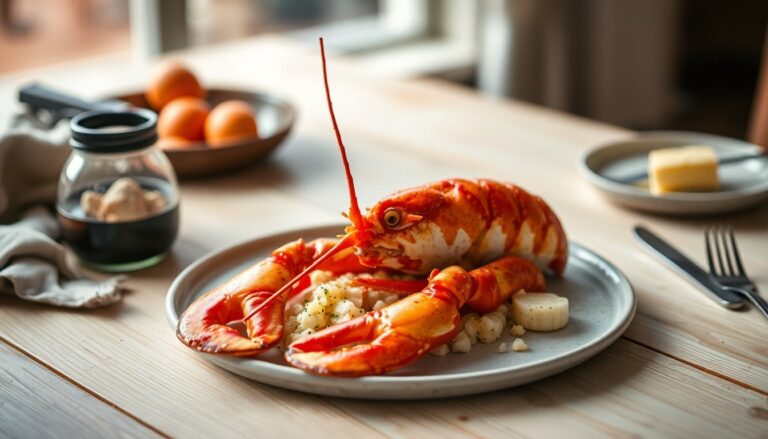
The spiny lobster is a marine crustacean prized for its fine, flavoursome flesh, often considered a festive treat. Unlike the lobster, it has no large claws but has long, spiny antennae. It is enjoyed poached, grilled or in a bisque, in different species depending on the ocean (red, royal, green spiny lobster). Nutritionally, it is a particularly interesting food: at around 106 kcal per 100 g and nearly 21.8 g of protein, it offers lean flesh that is rich in protein and low in fat (under 1.52 g). Its low carbohydrate content and lack of fibre make it a popular option in a balanced diet that pays attention to nutrition facts and protein quality.
Macronutrient breakdown
Nutrition table per 100 g
| Calories | 106 kcal |
| Kilojoules | 449 kJ |
| Protein | 21,8 g |
| Carbohydrate | 1,3 g |
| Fat | 1,6 g |
Micronutrients per 100 g
All measured nutrients, ranked by share of the daily reference intake.
- Vitamin B124,04 µg162 %
- EPA0,26 g104 %
- Zinc7,27 mg73 %
- DHA0,11 g44 %
- Iodine65 µg43 %
- Copper0,42 mg42 %
- Phosphorus229 mg33 %
- Vitamin B34,9 mg31 %
See the other 14 nutrients
- Total omega-30,37 g15 %
- Magnesium51 mg14 %
- Vitamin B60,17 mg12 %
- Potassium208 mg10 %
- Vitamin D0,5 µg10 %
- Iron1,36 mg10 %
- Calcium65,5 mg8 %
- Vitamin B50,4 mg7 %
- Vitamin B20,06 mg4 %
- Vitamin C2,1 mg3 %
- Vitamin A10,5 µg1 %
- Manganese0,02 mg1 %
- Vitamin B10,01 mg1 %
- Vitamin B91 µg1 %
Anses Ciqual 2025. Source: Anses, 2025, Ciqual food composition table
Tips
Spiny lobster is best enjoyed fresh, ideally in late spring and summer, when it is most widely available. To preserve its delicate flesh, go for controlled cooking: poaching in court-bouillon, steaming or a quick grill. Cooking for too long makes the flesh rubbery. If you want to go further on nutrient-friendly methods, the gentle cooking approach suits this crustacean perfectly.
Portions and pairings. A portion of 100 to 150 g is enough for an excellent protein intake. Pair it with steamed green vegetables, brown rice or a salad for a complete, balanced meal. A squeeze of lemon, fresh herbs and a little olive oil bring out its flavour without adding much to the calorie count. Avoid buttery sauces or too much mayonnaise if you are watching your weight, as they increase the energy density of a naturally light dish.
Nutritional value. With around 106 calories and 21.8 g of protein per 100 g, spiny lobster is among the best-quality sources of lean protein. It provides minerals such as zinc, selenium, phosphorus and magnesium, as well as B vitamins. Its glycaemic index is negligible and its fat content very low. Like most crustaceans, it contains cholesterol, so moderate consumption is sensible. You can compare it with other treasures from the seafood family, such as scallops or prawns, which are just as rich in protein.
Tips for active people. Spiny lobster is an excellent source of lean protein for muscle recovery after exercise, without excess fat. Included in a post-workout meal with a source of carbohydrate (rice, sweet potato), it supports muscle repair and lean mass gain. When cutting, its protein-to-calorie ratio is particularly favourable. You can complete it with other strategies described in our guidance on fitness nutrition.
Weight control. Naturally low in calories and filling thanks to its protein content, spiny lobster fits well into a balanced diet. Stay alert to fatty accompaniments and fried preparations. Keep it in the fridge and eat it soon after buying. To see how its calories compare with other foods, see the calorie table.