Group · Starchy foods
Barley
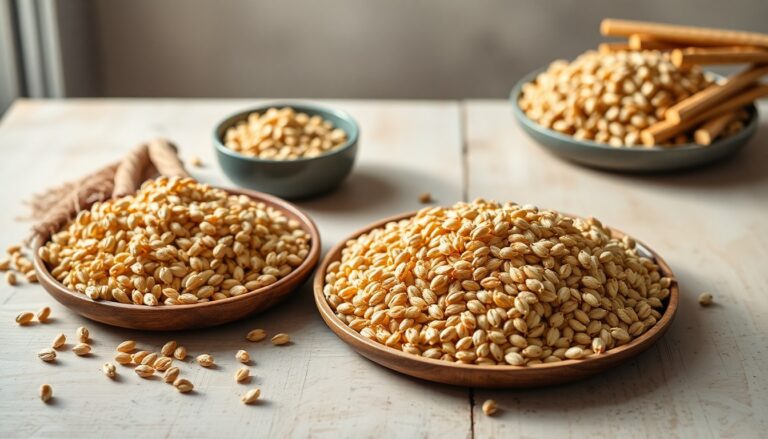
Barley is an ancient cereal, cultivated for thousands of years, that deserves a prime place among starchy foods. It comes in several forms: pearl barley (polished, quick-cooking), pot barley (more wholegrain, keeping more fibre), and also as flakes and flour. With its 119 kcal per 100 g once cooked, barley offers a good density of complex carbohydrates while staying light. Its soft texture and slight hazelnut taste make it an excellent substitute for rice or pasta. Rich in fibre and a source of minerals, it fits easily into a balanced diet, from slow-cooked dishes to fresh salads.
Macronutrient breakdown
Nutrition table per 100 g
| Calories | 119 kcal |
| Kilojoules | 503 kJ |
| Protein | 2,5 g |
| Carbohydrate | 24,4 g |
| Fat | 0,5 g |
| Fibre | 3,8 g |
Micronutrients per 100 g
All measured nutrients, ranked by share of the daily reference intake.
- Manganese0,26 mg13 %
- Vitamin B32,06 mg13 %
- Copper0,11 mg11 %
- Iron1,33 mg10 %
- Vitamin B60,12 mg9 %
- Zinc0,82 mg8 %
- Phosphorus54 mg8 %
- Vitamin B10,08 mg8 %
- Vitamin B9dietary folate equivalents16 µg
See the other 9 nutrients
- Magnesium22 mg6 %
- Potassium93 mg5 %
- Vitamin B20,06 mg4 %
- Vitamin B50,14 mg2 %
- Calcium11 mg1 %
- Vitamin K10,8 µg1 %
- Iodine0,5 µg0 %
- Vitamin E0,01 mg0 %
- Vitamin A0,42 µg0 %
Anses Ciqual 2025. Source: Anses, 2025, Ciqual food composition table
Tips
Barley lends itself to many culinary uses. Allow about 60 to 80 g of raw barley per person, a generous portion once swollen by cooking. To prepare it well, rinse it then cook it in two to three times its volume of water or stock: 25 to 30 minutes for pearl barley, a little longer for pot barley. You can also soak it the night before to shorten the cooking time and improve digestibility.
In terms of nutrition facts, cooked barley provides 24.4 g of carbohydrate, 2.42 g of protein and only 0.44 g of fat per 100 g. Its fibre, especially the soluble beta-glucans, contributes to fullness and supports regular digestion. Its moderate glycaemic index makes it an interesting cereal for spreading energy over time. It also provides minerals such as magnesium, phosphorus and selenium, as well as B vitamins.
- In salads: cold with crunchy vegetables, fresh herbs and a drizzle of olive oil.
- In soup: barley naturally thickens soups and minestrones.
- As a risotto (orzotto): creamy and comforting, an original alternative to rice.
- As a side: instead of white rice or bulgur.
For active people, barley is an excellent source of complex carbohydrates to include in meals before training, several hours before exercise, for steady energy. After the session, pair it with a source of protein (pulses, eggs, lean meat) to support recovery. Combined with pulses, as in a barley and lentil dish, it completes its amino acid profile. To go further on balancing your plates for exercise, see our advice on nutrition for fitness.
For weight control, barley remains a low-calorie starchy food once cooked and very filling thanks to its fibre, which helps limit snacking. Beware, however, of preparations rich in fat or cheese, which quickly raise calorie intake. Choose pot barley, which is more wholegrain, as part of a balanced diet. Store raw barley in an airtight jar away from moisture, and cooked barley for up to three days in the fridge. Discover other interesting starchy foods in the starchy foods family.