Group · Vegetables
Red pepper
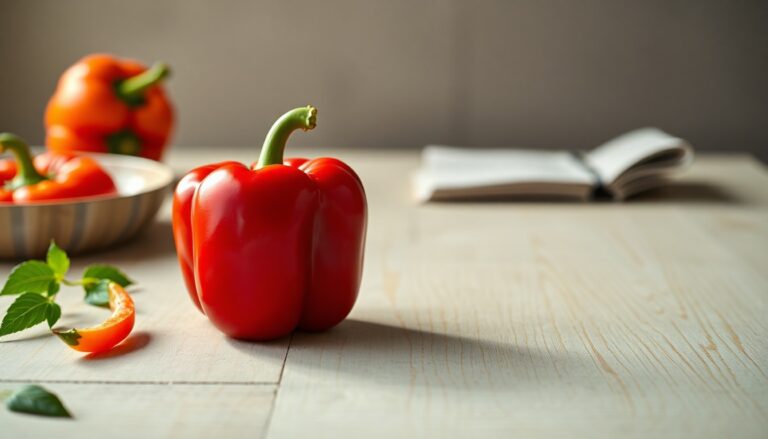
The red pepper is the ripe version of the pepper, harvested at full maturity, which gives it its bright colour and its mild, slightly sweet flavour. A member of the nightshade family, it also comes in green, yellow and orange versions, each with its own flavour nuances. Crunchy raw and soft when cooked, it features in a multitude of colourful, appetising dishes. With only 33.6 kcal per 100 g, it combines low calorie density with plenty of fibre, vitamin C and carotenoid antioxidants. Versatile and easy to cook, the red pepper naturally fits into a balanced diet, whether you want to vary your vegetables or watch your weight.
Macronutrient breakdown
Nutrition table per 100 g
| Calories | 34 kcal |
| Kilojoules | 141 kJ |
| Protein | 1,1 g |
| Carbohydrate | 6 g |
| Fat | 0,3 g |
| Fibre | 3,2 g |
Micronutrients per 100 g
All measured nutrients, ranked by share of the daily reference intake.
- Vitamin C121 mg151 %
- Vitamin E3,45 mg29 %
- Vitamin B60,31 mg22 %
- Potassium180 mg9 %
- Vitamin B20,11 mg8 %
- Vitamin A46,2 µg6 %
- Vitamin K13,16 µg4 %
- Copper0,04 mg4 %
- Vitamin B9dietary folate equivalents81,8 µg
See the other 10 nutrients
- Manganese0,08 mg4 %
- Vitamin B10,04 mg3 %
- Vitamin B50,18 mg3 %
- Phosphorus19 mg3 %
- Magnesium8,2 mg2 %
- Vitamin B30,34 mg2 %
- Iron0,21 mg2 %
- Zinc0,14 mg1 %
- Total omega-30,03 g1 %
- Calcium4,8 mg1 %
Anses Ciqual 2025. Source: Anses, 2025, Ciqual food composition table
Tips
The red pepper can be enjoyed in countless ways. Raw, cut into strips, it goes with a dip or joins a vegetable salad for maximum crunch and vitamin C. Cooked, it shows its full sweetness: roasted in the oven then peeled, pan-fried with a drizzle of olive oil, or stewed in a ratatouille with courgette, aubergine and tomato. A portion of 100 to 150 g suits everyday eating perfectly.
In terms of nutrition facts, the red pepper shines for its vitamin C content, which is particularly high when eaten raw, as well as provitamin A and antioxidant compounds such as beta-carotene and lycopene. Its 3.2 g of fibre per 100 g support digestion and fullness, while its low glycaemic index and 5.98 g of carbohydrate make it an ally for light meals. To limit the loss of heat-sensitive vitamins, choose gentle cooking or eat it raw.
Here are a few practical pointers:
- Choose peppers with smooth, shiny, firm skin, without wrinkles or soft spots.
- Keep them in the fridge salad drawer for up to a week.
- Remove the seeds and the white membranes, which are more bitter, before cooking.
- Pair them with a source of fat (olive oil) to absorb the carotenoids better.
For active people, the red pepper is an excellent source of micronutrients to include in recovery meals. Light and hydrating thanks to its high water content, it is an ideal addition to a protein-rich plate without increasing the calories. You can add it to an omelette, a chicken stir-fry or a bowl of quinoa after training. To go further on organising your meals around exercise, see our advice on fitness nutrition.
For weight control, the red pepper is a slimming asset: low in calories, filling and tasty, it lets you fill the plate with colour and volume without guilt. Beware of preparations that undermine its qualities, though, such as peppers preserved in oil or very rich stuffings. Choose light cooking methods and vary with other colourful vegetables such as the yellow pepper. Discover more ideas in the vegetable family to put together balanced, tasty menus all year round.