Group · Fruit
Pomelo
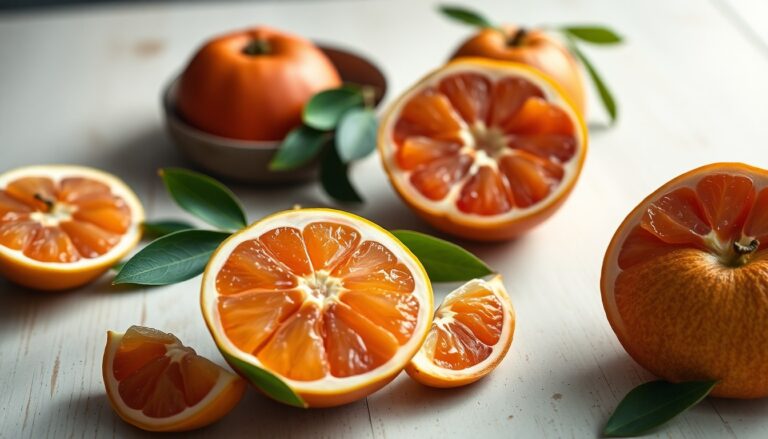
The pomelo is a juicy citrus fruit often confused with the grapefruit, when it is in fact the fruit most commonly found on our shelves. Recognisable by its thick yellow or pinkish skin and tangy flesh, it comes in several varieties, notably white, pink and red flesh. Light and refreshing, it fits easily into a balanced diet. With only 38 kcal per 100 g, the pomelo has an excellent profile for anyone watching their weight. Rich in water and vitamin C, and providing fibre, it can be enjoyed at breakfast, as a snack or alongside savoury dishes. A tasty, thirst-quenching fruit to enjoy all year round.
Macronutrient breakdown
Nutrition table per 100 g
| Calories | 38 kcal |
| Kilojoules | 159 kJ |
| Protein | 0,7 g |
| Carbohydrate | 7,4 g |
| Fat | 0,1 g |
| Fibre | 1,1 g |
Micronutrients per 100 g
All measured nutrients, ranked by share of the daily reference intake.
- Vitamin C33,3 mg42 %
- Potassium148 mg7 %
- Copper0,05 mg5 %
- Vitamin B50,28 mg5 %
- Vitamin B10,04 mg3 %
- Vitamin B60,04 mg3 %
- Magnesium9 mg2 %
- Vitamin B30,27 mg2 %
- Vitamin B9dietary folate equivalents10 µg
See the other 8 nutrients
- Calcium12 mg2 %
- Vitamin B20,02 mg1 %
- Phosphorus8 mg1 %
- Vitamin E0,13 mg1 %
- Zinc0,07 mg1 %
- Manganese0,01 mg1 %
- Iron0,06 mg0 %
- Vitamin A1,17 µg0 %
Anses Ciqual 2025. Source: Anses, 2025, Ciqual food composition table
Tips
The pomelo is best eaten plain, simply cut in half and eaten with a spoon, or in segments peeled right back to remove the sometimes bitter membrane. Allow half a pomelo as an ideal portion to enjoy its freshness without overdoing it. You can also squeeze it for a vitamin-rich juice, or add the segments to a mixed salad with avocado, prawns or fennel. Its acidity lifts fish and white meats beautifully.
In terms of nutrition facts, the pomelo is low in calories (38 kcal per 100 g), rich in water and a source of vitamin C, fibre and potassium. Its carbohydrate content stays moderate (7.31 g) and its glycaemic index is low, which makes it an interesting fruit for slimming or for a balanced diet. Its fibre contributes to fullness and digestive comfort.
The pomelo season runs mainly from winter to early spring, when it is at its most fragrant. Keep it at room temperature for a few days, or for up to two weeks in the salad drawer of the fridge, alongside the vegetables. Once cut, cover it with cling film and eat it quickly.
- At breakfast: half a pomelo for an invigorating, thirst-quenching start.
- As a snack: a few segments, ideal when watching your weight.
- In cooking: as segments in a salad, or as fresh juice with no added sugar.
For active people, the pomelo is an excellent source of hydration and vitamin C, useful around training. Its richness in water and potassium makes it a refreshing option after exercise. Like any fruit, its carbohydrates are modest: pair it with a source of protein, for example a high-protein snack, for a complete snack that supports recovery.
If you like citrus fruits, also explore the grapefruit and the orange, which is sweeter and just as rich in vitamins. The pomelo naturally has its place among the fruits to favour every day. To compare its calories with those of other foods, see our calorie table.
One point to watch: if you are taking medication, some pomelos and grapefruits can interact with medicines. If in doubt, ask a healthcare professional for advice. Otherwise, enjoy this light fruit without any particular restriction, varying your treats with other seasonal citrus fruits.
Grapefruit, pomelo or Chinese grapefruit? Differences, vitamin C and interactions with medicines: our complete guide.
