Group · Vegetables
Radish
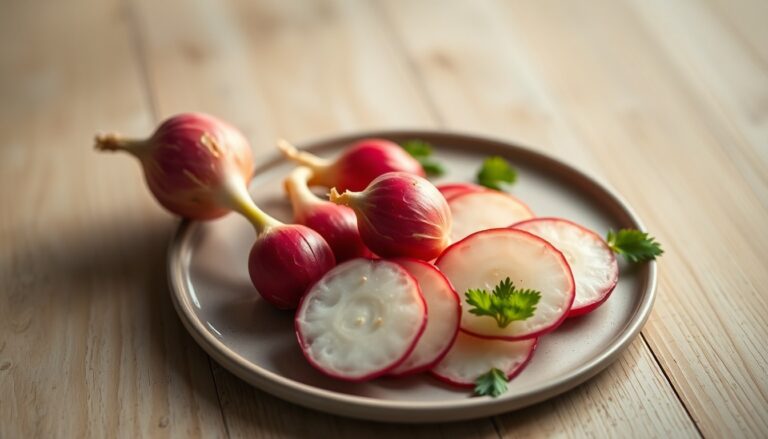
Small, crunchy and colourful, the radish is a root vegetable from the cruciferous family that adds a fresh, peppery touch to many dishes. It comes in several forms: the classic pink radish with a white tip, the round radish, the stronger-tasting black radish, or Asian radishes. With only 11 kcal per 100 g, the radish is an ally of light, tasty plates. Low in fat, rich in water and a source of fibre, it fits easily into a balanced diet. Eaten raw on its own or added to recipes, it offers a refreshing crunch while staying very low in calories. A great everyday asset.
Macronutrient breakdown
Nutrition table per 100 g
| Calories | 11 kcal |
| Kilojoules | 46 kJ |
| Protein | 1 g |
| Carbohydrate | 1,6 g |
| Fat | 0,1 g |
| Fibre | 1,4 g |
Micronutrients per 100 g
All measured nutrients, ranked by share of the daily reference intake.
- Vitamin C12,2 mg15 %
- Potassium250 mg13 %
- Vitamin B60,06 mg5 %
- Iron0,4 mg3 %
- Phosphorus20 mg3 %
- Manganese0,04 mg2 %
- Calcium15 mg2 %
- Magnesium6,2 mg2 %
- Vitamin B9dietary folate equivalents95,4 µg
See the other 4 nutrients
- Vitamin B50,09 mg2 %
- Total omega-30,03 g1 %
- Zinc0,08 mg1 %
- Vitamin A0,21 µg0 %
Anses Ciqual 2025. Source: Anses, 2025, Ciqual food composition table
Tips
The radish is best enjoyed raw, freshly washed and eaten plain or with a knob of butter and a pinch of salt, in the traditional way. You can also slice it thinly into rounds in a mixed salad, grate it, or add it to a sandwich for a bit of crunch. Do not throw away the tops: full of flavour, they can be cooked into a soup or a pesto.
Nutritional values and benefits: with around 11 kcal per 100 g, the radish has particularly low calories. It is mostly water, which makes it hydrating and thirst-quenching, with 1.53 g of carbohydrate, little protein (0.94 g) and almost no fat. Its 1.4 g of fibre contribute to fullness and digestive comfort. The radish also provides vitamin C and minerals such as potassium. Its low glycaemic index and low calorie density make it an ideal nibble with no guilt.
- Portion: a bunch of radishes makes an excellent crunchy starter for two.
- Storage: remove the tops as soon as you buy them and keep the radishes in a damp cloth in the fridge to keep them firm.
- Pairings: they go well with cucumber, celery or a lighter fromage frais.
For active people: low in calories and rich in water, the radish is perfect as a light pre-workout snack or a crunchy side in a cutting-phase meal. It helps with hydration and provides micronutrients without weighing on digestion. However, its low carbohydrate and protein content is not enough to refuel after exercise: combine it with a protein source and starchy foods for full recovery.
Weight control: the radish is a real asset for weight loss thanks to its very low calorie density. You can eat plenty of it as part of a balanced diet. Beware of the preparations, though: butter, mayonnaise or fatty sauces can push up the calories. Choose a light dressing based on yoghurt, lemon or fresh herbs.
To vary things, explore other crunchy vegetables in the vegetables family, such as daikon radish, and compare their content using the food calorie table.