Group · Condiments & sauces
Sweet and sour sauce
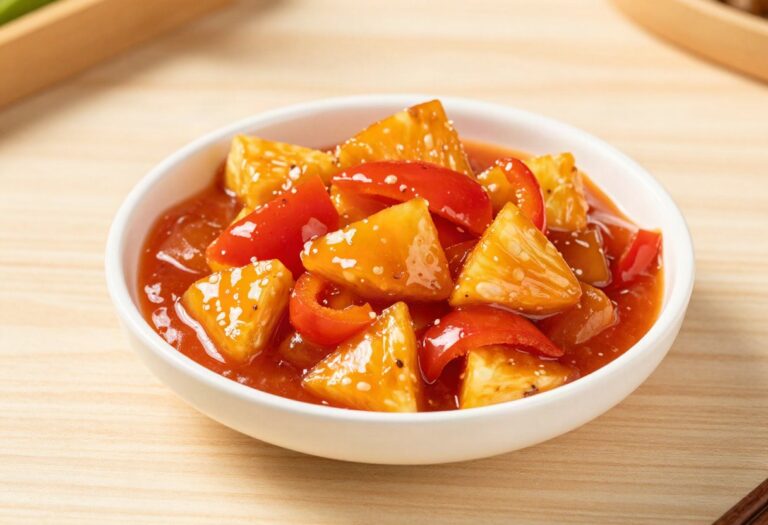
Sweet and sour sauce is an iconic condiment of Asian cooking, combining sugar, vinegar and sometimes fruit such as pineapple or tomato. Its balance between sharpness and sweetness makes it the ideal accompaniment to spring rolls, fritters, breaded chicken or wok-fried dishes. You can find it ready to use from the shop or homemade, which is easier to portion. With 153 kcal per 100 g, it is relatively low in fat (0.2 g) but high in carbohydrate (37 g), mostly from sugar. Providing a lot of flavour in a small volume, it livens up dishes without weighing down the plate, as long as you watch the amounts you use day to day.
Macronutrient breakdown
Nutrition table per 100 g
| Calories | 153 kcal |
| Kilojoules | 649 kJ |
| Protein | 0,3 g |
| Carbohydrate | 37 g |
| Fat | 0,2 g |
| Fibre | 1 g |
Micronutrients per 100 g
All measured nutrients, ranked by share of the daily reference intake.
- Iodine1,2 µg1 %
- Total omega-30,02 g1 %
Anses Ciqual 2025. Source: Anses, 2025, Ciqual food composition table
Tips
Sweet and sour sauce shines for its versatility: it coats egg-fried rice, goes with glazed pork and poultry skewers, with crunchy vegetables, or serves as a dipping sauce. One to two tablespoons are enough to flavour a portion, which limits the calorie intake. In terms of nutrition facts, its 37 g of carbohydrate per 100 g come mainly from sugar, which gives it a rather high glycaemic index. It is therefore better used as a touch of seasoning than as a generous base.
- Cooking: add it at the end of cooking in the wok so that it coats the food without over-caramelising and losing its balance.
- Homemade: make it with rice vinegar, a little honey or sugar, soy sauce and cornflour. That way you control the added sugar and salt.
- Storage: once opened, keep it in the fridge in an airtight container and use it within a few weeks.
To vary your condiments and sauces, you can explore other options in the condiments and sauces family. If you are looking for a lighter tangy note, vinegar adds freshness without sugar, while soy sauce or tamari offer an interesting savoury depth for Asian dishes.
For active people: sweet and sour sauce provides fast carbohydrates that can complement a recovery meal, for example with rice and a source of lean protein such as chicken or prawns. Keep to sensible amounts, though, as its sugar and sodium can quickly mount up if you overdo it. To optimise your meals and your progress, an overall framework of eating for fitness matters more than the choice of a condiment.
Weight control: its energy density comes mainly from added sugars. To protect your waistline, measure it by the spoonful rather than a generous drizzle, favour homemade versions and serve it with crunchy, fibre-rich vegetables. Treated as a flavour enhancer and not as a topping, sweet and sour sauce fits without problem into a balanced, enjoyable diet.