Group · Starchy foods
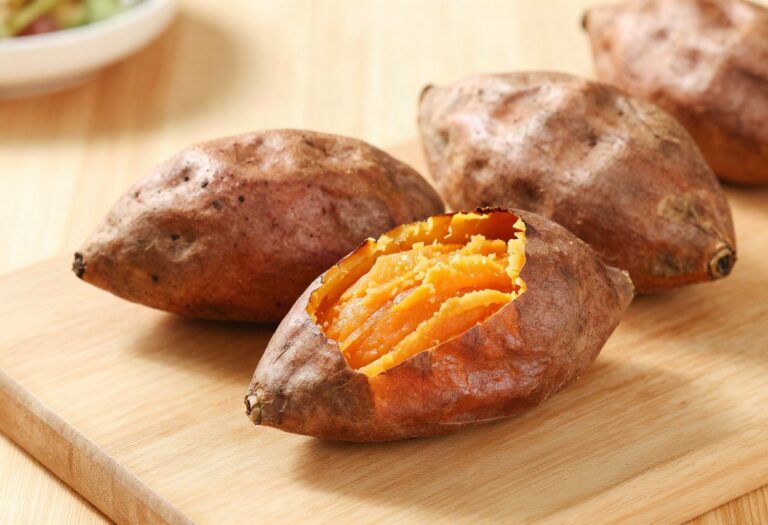
Baked sweet potato with skin
Baked sweet potato with its skin is a tuberous root with tender, naturally sweet flesh, one of the most popular starchy foods in healthy cooking. Baked whole, skin included, it keeps as much flavour and as many nutrients as possible. It comes with orange, white or purple flesh, each with a characteristic melting texture. At around 79.1 kcal per 100 g, it provides complex carbohydrates, fibre and a small amount of fat. Its sweetness, moderate glycaemic index and richness in provitamin A make it an interesting ally in a balanced diet, for athletes and for people watching their weight alike.
Macronutrient breakdown
Nutrition table per 100 g
| Calories | 79 kcal |
| Kilojoules | 335 kJ |
| Protein | 1,7 g |
| Carbohydrate | 16,3 g |
| Fat | 0,2 g |
| Fibre | 2,9 g |
Micronutrients per 100 g
All measured nutrients, ranked by share of the daily reference intake.
- Vitamin A873 µg109 %
- Vitamin C16,2 mg20 %
- Manganese0,38 mg19 %
- Potassium353 mg18 %
- Vitamin B60,23 mg16 %
- Copper0,13 mg13 %
- Vitamin B50,73 mg12 %
- Vitamin B10,08 mg7 %
- Vitamin B9dietary folate equivalents6 µg
See the other 10 nutrients
- Vitamin E0,83 mg7 %
- Vitamin B31,01 mg6 %
- Phosphorus43 mg6 %
- Magnesium22,5 mg6 %
- Vitamin B20,08 mg6 %
- Iron0,71 mg5 %
- Calcium32,5 mg4 %
- Vitamin K12,2 µg3 %
- Zinc0,26 mg3 %
- Iodine3 µg2 %
Anses Ciqual 2025. Source: Anses, 2025, Ciqual food composition table
Tips
Baking with the skin on is probably the best way to enjoy sweet potato. It develops a caramelised flavour while limiting added fat. Allow half an hour at 200 °C for a medium tuber, until the flesh is melting. The skin, rich in fibre, is perfectly edible once cooked and adds crunch.
Nutrition facts and benefits: per 100 g, you get around 79.1 kcal, 16.3 g of carbohydrate, 1.69 g of protein, 0.15 g of fat and 2.9 g of fibre. This fibre promotes fullness and contributes to regular digestion. The orange flesh is an excellent source of beta-carotene (provitamin A), along with potassium, vitamin C and vitamin B6. Its glycaemic index stays more moderate than that of many other starchy foods when it is cooked with the skin, which makes it a sensible choice for slimming, provided you watch the amount of topping added (butter, cheese, cream).
- Recommended portion: 150 to 200 g cooked as a side, more for an athlete’s full meal.
- Pairings: with a source of protein (poultry, fish, egg, pulses) and green vegetables for a balanced plate.
- Storage: sweet potatoes keep for several weeks in a cool, dry place away from light, outside the fridge.
- Best timing: at lunch or dinner, or as a carbohydrate snack before training.
For active people: sweet potato is a quality source of energy to replenish glycogen stores. Eaten 2 to 3 hours before exercise, it provides slow-release carbohydrates. After training, pair it with a source of protein to optimise recovery, for example alongside a post-training shaker. When bulking up, it makes an interesting base, gentler on digestion than some cereals.
You can vary things by alternating with other starchy foods from the same family, such as quinoa or brown rice, to diversify your intake. If you are watching your weight, sweet potato fits very well into a balanced diet: filling and low in calories, it helps you put together satisfying meals without excess. The key remains moderation with fatty additions and control of portions.