Group · Starchy foods
Brick pastry sheet (feuille de brick)
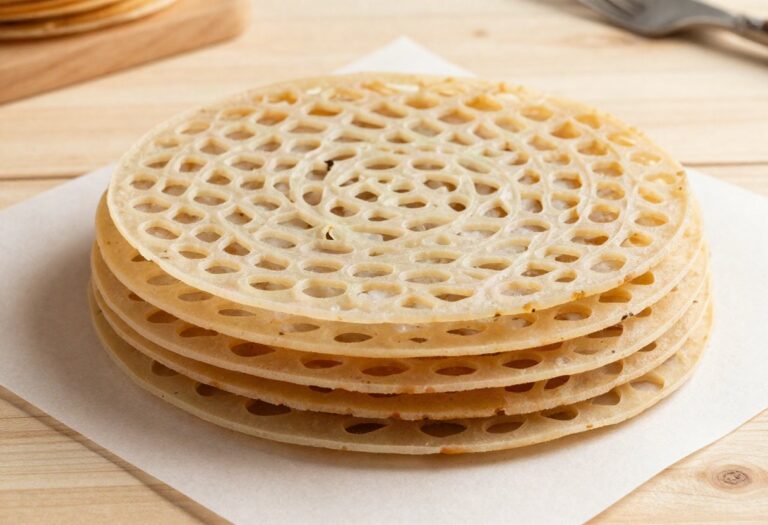
Brick pastry (feuille de brick, or malsouka) is a very thin dough of Tunisian origin, spread by hand on a hot plate. It is used to wrap egg brik, samosas and plenty of savoury or sweet preparations. Thinner and more fragile than filo pastry, it turns crisp without being flaky.
In terms of nutrition facts: 283 kcal per 100 g, with 59 g of carbohydrate, 7 g of protein, 2.5 g of fibre and only 1.5 g of fat. The surprising figure is the salt: 3.25 g per 100 g, one of the highest in the starchy foods family.
Macronutrient breakdown
Nutrition table per 100 g
| Calories | 283 kcal |
| Kilojoules | 1200 kJ |
| Protein | 7 g |
| Carbohydrate | 59 g |
| Fat | 1,5 g |
| Fibre | 2,5 g |
Tips
Its real quality is that it is lean. 1.5 g of fat per 100 g, against more than 25 g for puff pastry. A sheet weighs about fifteen grams: the wrapper of a brik hardly counts. Everything depends on the cooking.
Bake it, do not fry it. This is the step that changes everything: a fried brik absorbs several times its weight in oil, while a brik brushed with a little olive oil and baked at 200°C is just as crisp. The difference is counted in hundreds of kilocalories per portion.
The salt deserves some thought. A 15 g sheet provides about 0.5 g of salt before the filling is even added. Across three briks, you approach a third of the daily benchmark without having added any salt. Season the filling lightly to compensate.
The filling decides the dish. Tuna, egg and capers stay on the light side; minced meat and cheese tip everything over. Vegetables (spinach, courgette, carrot) add volume and fibre without weighing it down.
It dries out within minutes in the air. Keep the packet under a damp tea towel while you work, and shape one sheet at a time. Once dry, it cracks and becomes unusable.
Sources
Average nutritional values per 100 g, provided for guidance only (may vary by brand, cut and preparation).