Group · Cereals & grains
Corn cakes
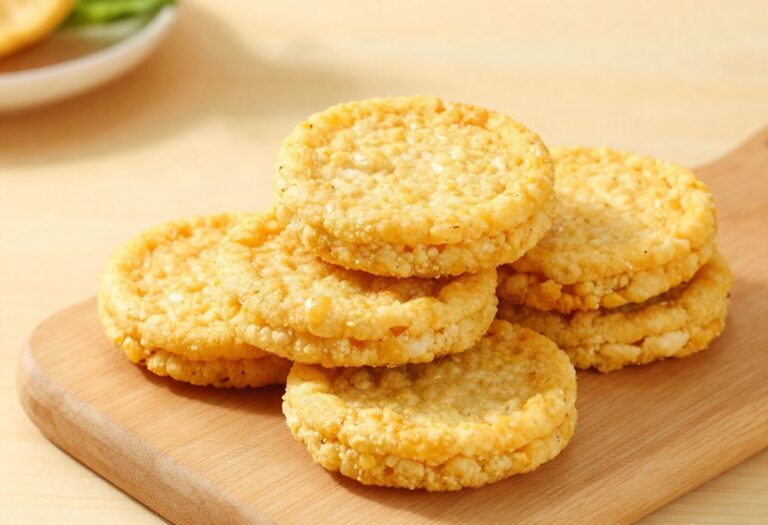
Light and crunchy, corn cakes are made from puffed corn kernels pressed into thin round slices. With no added fat in most cases, they appeal for being practical and for their mild, toasted flavour. Naturally gluten-free, they are an alternative to bread for many people. In terms of nutritional values, expect about 387 kcal per 100 g, 83.5 g of carbohydrate, 7.38 g of protein, 1.9 g of fat and 3 g of fibre. Note, though, that a single cake weighs very little, so the real intake stays modest. They easily find a place in a balanced diet, as long as you choose the topping well and watch the high glycaemic index of puffed corn.
Macronutrient breakdown
Nutrition table per 100 g
| Calories | 387 kcal |
| Kilojoules | 1640 kJ |
| Protein | 7,4 g |
| Carbohydrate | 83,5 g |
| Fat | 1,9 g |
| Fibre | 3 g |
Micronutrients per 100 g
All measured nutrients, ranked by share of the daily reference intake.
- Vitamin B60,25 mg18 %
- Phosphorus106 mg15 %
- Magnesium39 mg10 %
- Potassium169 mg8 %
- Omega-6 LA0,83 g8 %
- Zinc0,75 mg8 %
- Manganese0,15 mg8 %
- Copper0,06 mg6 %
- Vitamin B9dietary folate equivalents11,4 µg
See the other 6 nutrients
- Selenium3 µg5 %
- Iron0,61 mg4 %
- Vitamin E0,35 mg3 %
- Vitamin B50,13 mg2 %
- Omega-3 ALA0,04 g2 %
- Vitamin B30,27 mg2 %
Anses Ciqual 2025. Source: Anses, 2025, Ciqual food composition table
Tips
Corn cakes lend themselves to a thousand uses, from breakfast to teatime. Spread them with nut butter, fresh cheese, hummus or a mashed banana for a quick snack. For a more complete meal, add a source of protein (egg, poultry breast, tuna) and raw vegetables to slow the absorption of carbohydrate and prolong fullness.
- Recommended portion: 2 to 3 cakes, or about 15 to 25 g, which keeps the overall calorie intake in check.
- Storage: in an airtight pack, away from moisture, to preserve their crispness.
- Smart pairings: avocado, poached egg, crunchy vegetables, or a thin layer of dark chocolate for a treat version.
Nutritionally, puffed corn has a high glycaemic index. The cakes contain little fibre (3 g per 100 g) and are fairly low in micronutrients compared with wholegrain flakes. To vary your intake, alternate with higher-fibre cereals such as cooked oat bran or oat-based products, which have a more moderate glycaemic index. You can also compare their profile with that of rice cakes, which are very similar in texture.
For active people, these cakes are a useful source of fast carbohydrate before or after exercise. Before a session, a cake spread with honey or jam provides easily absorbed fuel. For recovery, pair them with a portion of protein (fromage blanc, lean ham, or a preparation made with protein powder) to restart muscle synthesis and replenish glycogen stores. Their lightness also makes them a handy option to slip into a gym bag.
On the weight loss front, do not be fooled by their airy look: the calorie density by weight is high, and it is easy to eat several in a row. The risk comes mainly from sweet or fatty toppings. Choose low-calorie spreads and keep control of quantities. To structure your meals, take inspiration from the principles of a gradual balanced diet. You can explore other options in the cereals family to diversify your breakfasts and snacks according to your goals.