Group · Drinks
Papaya nectar
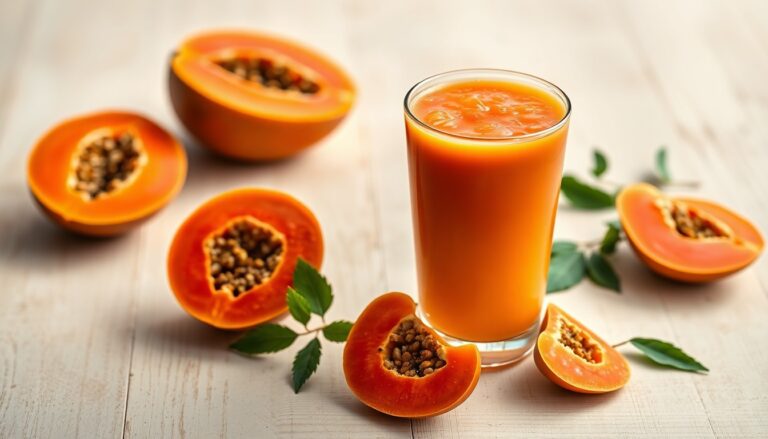
Papaya nectar is a smooth drink made from papaya purée, water and most often added sugar. Unlike pure juice, nectar contains pulp, which gives it its thick texture and characteristic orange colour. Much loved for its sweet, exotic taste, it evokes tropical flavours and is best served chilled. With about 58.9 kcal per 100 g, it provides mainly carbohydrate (13.9 g), little protein and very little fat. A source of taste pleasure, it can have an occasional place in a balanced diet, as long as you watch the amount of sugar and see it as a treat drink rather than an everyday water.
Macronutrient breakdown
Nutrition table per 100 ml
| Calories | 59 kcal |
| Kilojoules | 250 kJ |
| Protein | 0,2 g |
| Carbohydrate | 13,9 g |
| Fat | 0,2 g |
| Fibre | 0,6 g |
Micronutrients per 100 ml
All measured nutrients, ranked by share of the daily reference intake.
- Vitamin C3 mg4 %
- Iron0,34 mg2 %
- Vitamin E0,24 mg2 %
- Potassium31 mg2 %
- Zinc0,15 mg2 %
- Copper0,01 mg1 %
- Calcium10 mg1 %
- Vitamin K10,8 µg1 %
See the other 9 nutrients
- Vitamin B92 µg1 %
- Vitamin A7,58 µg1 %
- Vitamin B30,15 mg1 %
- Vitamin B50,05 mg1 %
- Magnesium3 mg1 %
- Manganese0,01 mg1 %
- Vitamin B60,01 mg1 %
- Vitamin B10,01 mg1 %
- Vitamin B20 mg0 %
Anses Ciqual 2025. Source: Anses, 2025, Ciqual food composition table
Tips
Papaya nectar is appealing for its tropical sweetness, but like most sugary drinks, it calls for a little moderation. Here is how to enjoy it sensibly.
- Recommended serving: a small glass of 150 to 200 ml is enough to treat yourself. Beyond that, carbohydrates and added sugars build up quickly.
- Ideal time: at breakfast or as a snack, rather than as a drink for thirst throughout the day. To hydrate, water remains the reference.
- Tasty pairings: blend it into a smoothie with plain yoghurt, chia seeds or a little banana for a filling, more complete snack.
- Storage: once opened, keep the bottle in the fridge and drink it within 2 to 3 days to preserve freshness and aromas.
In terms of nutrition facts, papaya nectar provides about 58.9 kcal per 100 g, mainly from carbohydrate. Its protein and fat content is negligible, and its fibre stays modest (0.6 g) because the production process retains less than the whole fruit. Fresh papaya naturally provides vitamin C and antioxidant compounds; to get the best from it, also favour fresh fruit from the fruit family where possible.
For active people: its fast-acting sugars make it a useful option around exercise. A glass before a short session provides easily absorbed energy, and after training it helps refill glycogen stores. For muscle recovery, combine it with a source of protein, for example by adding it to a post-training shaker or a protein snack. This carbohydrate and protein duo is more effective for recovery.
Weight control: its calorie density is low, but liquid sugars are not very filling and can push up your daily intake without you noticing. If you are watching your waistline, limit how often you drink it, choose a nectar with no added sugar where possible and count it in your sugary drinks budget. You can compare its figures with other options in the calorie table.
Fancy some variety? Other items in the drinks family, such as peach nectar, offer similar profiles, to be enjoyed with the same moderation.