Group · Pulses
Pink beans
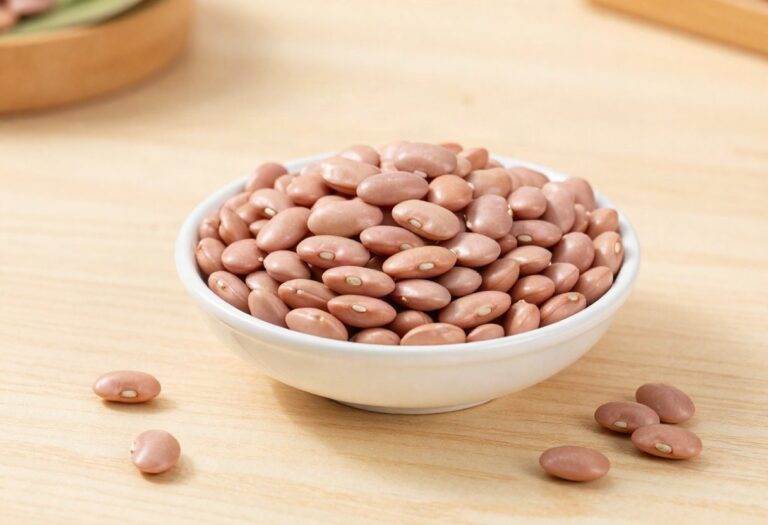
Pink beans, sometimes called Mexican pink beans, are small pulses with a pinkish skin and a mild, slightly creamy taste. Cousins of pinto beans and kidney beans, they are cooked after soaking and boiling, from dried or tinned. Very popular in Latin American cooking, they work as well in slow-cooked dishes as in salads. With around 149 kcal per 100 g, they combine plant protein (9.06 g), complex carbohydrate (27.91 g) and fibre (5.3 g) with almost no fat. They are a filling, nourishing food that naturally has its place in a varied, balanced diet, whether you are sporty or simply careful about your plate.
Macronutrient breakdown
Nutrition table per 100 g
| Calories | 149 kcal |
| Kilojoules | 623 kJ |
| Protein | 9,1 g |
| Carbohydrate | 28 g |
| Fat | 0,5 g |
| Fibre | 5,3 g |
Micronutrients per 100 g
All measured nutrients, ranked by share of the daily reference intake.
- Manganese0,55 mg27 %
- Copper0,27 mg27 %
- Potassium508 mg25 %
- Phosphorus165 mg24 %
- Vitamin B10,26 mg23 %
- Magnesium65 mg17 %
- Iron2,3 mg16 %
- Vitamin B60,18 mg13 %
See the other 8 nutrients
- Zinc0,96 mg10 %
- Vitamin E0,98 mg8 %
- Calcium52 mg7 %
- Vitamin B50,3 mg5 %
- Vitamin K13,7 µg5 %
- Vitamin B20,06 mg5 %
- Vitamin B30,57 mg4 %
- Selenium1,4 µg3 %
USDA FoodData Central (SR Legacy)
Tips
To enjoy the benefits of pink beans, go for a sensible portion of 60 to 80 g dry (about 150 to 180 g cooked). Dried beans are best soaked for several hours, then cooked for a long time in simmering water: this gentle cooking makes them easier to digest and keeps their soft texture. Tinned versions, which are handy and already cooked, should be rinsed well to cut the salt.
How to eat pink beans? They go wonderfully with brown rice, sweetcorn, tomato, onion, cumin and coriander. You find them in chillies, soups, mixed salads or mashed into a spread. To get the most from the protein, pair them with a cereal: the combination of pulse and cereal provides a complete amino acid profile, ideal on a vegetarian plate.
In terms of nutrition facts, pink beans stand out for their fibre (5.3 g), which promotes fullness and healthy digestion, as well as their richness in plant protein and minerals such as iron, magnesium and potassium. Their glycaemic index is moderate: the carbohydrates are released slowly, which helps maintain steady energy. This makes them a useful pulse as part of a balanced diet.
For active people, pink beans are an excellent source of complex carbohydrate and protein for muscle recovery. Included in a meal after training, they help to rebuild glycogen stores. Their iron content supports oxygen transport, useful for endurance athletes. A plate of pink beans, rice and green vegetables makes a complete and inexpensive recovery meal. You can also explore other protein-rich pulses such as lentils or chickpeas to vary your plant sources.
Weight control: with 149 kcal per 100 g cooked and very little fat, pink beans are not very energy-dense while still being filling. Watch out, though, for fatty preparations (bacon pieces, cream, sweet sauces), which push up the calorie count. Favour light seasonings based on spices and herbs. To discover all the neighbouring varieties, browse the pulses family and its many culinary uses.