Group · Fruit
Raisins
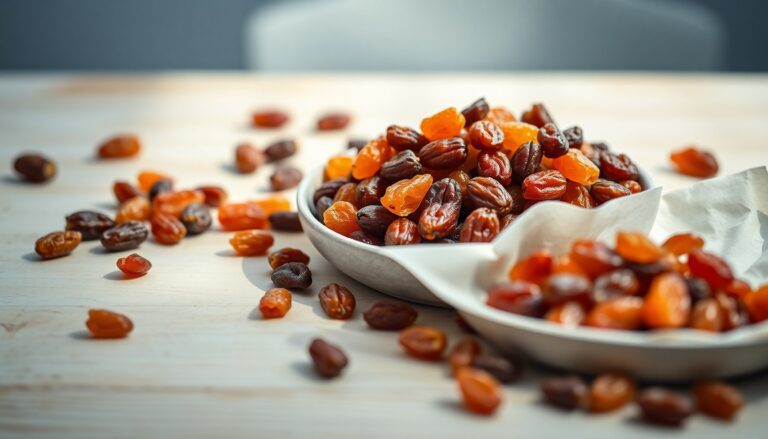
The raisin is simply dried grape, with most of the water removed to concentrate its sugars and aromas. It comes in several forms depending on the grape varieties used: Smyrna raisins, golden sultanas, smaller, darker currants. Practical and portable, it slips into sweet and savoury dishes alike. At 322 kcal per 100 g, it is a dense food, rich in natural carbohydrate and fibre, but also a source of minerals such as potassium and iron. A small concentrated sweet treat, it has its place in a balanced diet, as long as you watch the portions. Let’s look together at its nutrition facts and how to eat it well.
Macronutrient breakdown
Nutrition table per 100 g
| Calories | 322 kcal |
| Kilojoules | 1360 kJ |
| Protein | 3 g |
| Carbohydrate | 73,2 g |
| Fat | 0,9 g |
| Fibre | 4,2 g |
Micronutrients per 100 g
All measured nutrients, ranked by share of the daily reference intake.
- Potassium960 mg48 %
- Copper0,38 mg38 %
- Vitamin K112,6 µg17 %
- Manganese0,28 mg14 %
- Vitamin E1,67 mg14 %
- Iron1,7 mg12 %
- Phosphorus82 mg12 %
- Magnesium35 mg9 %
- Vitamin B9dietary folate equivalents82 µg
See the other 10 nutrients
- Vitamin B10,08 mg7 %
- Calcium54 mg7 %
- Vitamin B60,06 mg4 %
- Vitamin B30,53 mg3 %
- Zinc0,24 mg2 %
- Omega-6 LA0,17 g2 %
- Vitamin B50,08 mg1 %
- Total omega-30,03 g1 %
- Omega-3 ALA0,01 g1 %
- Vitamin A0,21 µg0 %
Anses Ciqual 2025. Source: Anses, 2025, Ciqual food composition table
Tips
The raisin has interesting nutrition values: around 73.2 g of carbohydrate, 3 g of protein, very little fat and nearly 4.2 g of fibre per 100 g. Its high energy density (322 kcal) is explained by the concentration of sugars during drying. It also provides potassium, iron and small amounts of antioxidants from the skin of the fruit.
How to eat raisins? A reasonable portion is around 20 to 30 g, or a small handful. You can add them to:
- porridge, muesli or yoghurt at breakfast;
- savoury dishes such as a tagine, couscous or a carrot salad;
- home-made cakes, breads and biscuits;
- a mix of dried fruit and nuts for a snack.
For storage, keep them in an airtight jar, away from light and damp. If they harden, soak them for a few minutes in warm water or tea to rehydrate them.
For active people, the raisin is a practical ally. Its quickly available carbohydrate makes it an ideal energy source before or during prolonged endurance effort (running, cycling, hiking). After training, paired with a source of protein, it helps refill glycogen stores. To go further on the subject, see our article on fitness nutrition or our ideas for protein snacks to combine it cleverly.
For weight control, beware: the glycaemic index of the raisin is fairly high and its energy density significant. A few handfuls eaten without thinking can quickly push up your sugar intake. It is best to measure it out, savour it slowly and choose the plain version, without sugary coating. If you are looking for lower-calorie snacks day to day, sometimes turn to fresh fruit such as fresh grapes or an apple, richer in water and more filling for the same volume.
The raisin shares the stage with other dried fruit such as the dried apricot or the dried date, all concentrated in energy. To explore other tasty options and compare their intakes, browse our Fruit family. In short, the raisin is a natural concentrate of flavour and energy: interesting for its benefits, to be eaten with moderation as part of a varied diet.
Grapes and diabetes: the right portion is about twenty fresh grapes. Glycaemic index, raisins and juice are covered in our guide to grapes and diabetes.
