Group · Fruit
Dried dates
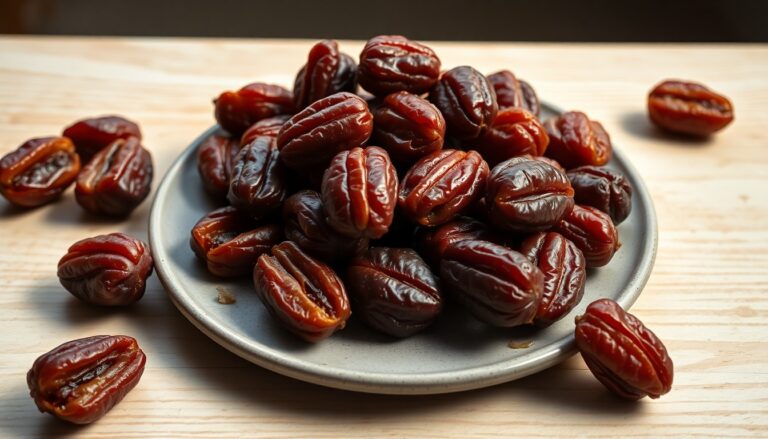
The dried date is the fruit of the date palm, naturally dried to concentrate its sugars and its aromas of honey and caramel. It comes in many varieties, including the famous Medjool, plump and melting, and the Deglet Nour, thinner and translucent. Small but very energy-dense, it provides around 287 kcal per 100 g and more than 64.7 g of carbohydrate, making it a source of quickly available sugars. Rich in fibre, potassium, magnesium and copper, it features in sweet and savoury recipes alike. In a balanced diet, the dried date plays the role of natural sweetener, to be eaten in moderation for its nutritional and tasty value.
Macronutrient breakdown
Nutrition table per 100 g
| Calories | 287 kcal |
| Kilojoules | 1210 kJ |
| Protein | 1,9 g |
| Carbohydrate | 64,7 g |
| Fat | 0,3 g |
| Fibre | 7,3 g |
Micronutrients per 100 g
All measured nutrients, ranked by share of the daily reference intake.
- Potassium696 mg35 %
- Copper0,22 mg22 %
- Vitamin B60,25 mg18 %
- Manganese0,3 mg15 %
- Vitamin B50,81 mg14 %
- Magnesium47,3 mg13 %
- Vitamin B31,61 mg10 %
- Phosphorus62 mg9 %
- Vitamin B9dietary folate equivalents15 µg
See the other 12 nutrients
- Iron0,9 mg6 %
- Calcium44,9 mg6 %
- Selenium3,05 µg6 %
- Vitamin B10,05 mg5 %
- Vitamin B20,06 mg4 %
- Vitamin K12,7 µg4 %
- Zinc0,23 mg2 %
- Iodine1,4 µg1 %
- Vitamin A7,42 µg1 %
- Omega-6 LA0,05 g0 %
- Vitamin E0,05 mg0 %
- Omega-3 ALA0,01 g0 %
Anses Ciqual 2025. Source: Anses, 2025, Ciqual food composition table
Tips
The dried date is a concentrate of energy: a sensible portion is around 2 to 4 dates, about 25 to 40 g. Always check whether the stone is still in, and favour dates not coated in syrup or added sugar to benefit from their natural nutritional values. For storage, keep them in an airtight box away from light and moisture: they last several months.
In the kitchen, its uses are varied. Blended, the date works as a binder and natural sweetener in energy balls, spreads or raw tart bases. Stoned and stuffed with soft cheese or almond, it makes a festive bite. It also flavours tagines, curries and sweet-and-savoury slow-cooked dishes. For variety, combine it with other dried fruits or nuts, taking inspiration too from the dried fig or the dried apricot, just as handy as snacks.
Nutritionally, the dried date provides fibre (7.3 g per 100 g) that contributes to digestive comfort and fullness, as well as potassium, magnesium, copper and antioxidant compounds. Its glycaemic index is fairly high, however: it is better to pair it with a source of protein or healthy fats (yoghurt, nuts) to moderate the rise in blood sugar.
Tips for active people: thanks to its quickly absorbed carbohydrates, the dried date is an excellent source of energy before or during an endurance effort. Slip a few in your bag before a long outing, or combine them with a banana for an effective snack. After training, they help replenish glycogen stores, especially in a protein snack recipe with fromage blanc or protein powder. To go further, discover our guidance on nutrition for fitness.
Weight control: very dense in sugars and calories, dried dates are easy to nibble on without realising. Stay attentive to portions if you are watching your waistline, and count them in your daily calorie total. You can compare their content with that of other fresh fruits in our calorie table, or explore the whole fruit family to balance your everyday choices.