Group · Meat
Roast duck
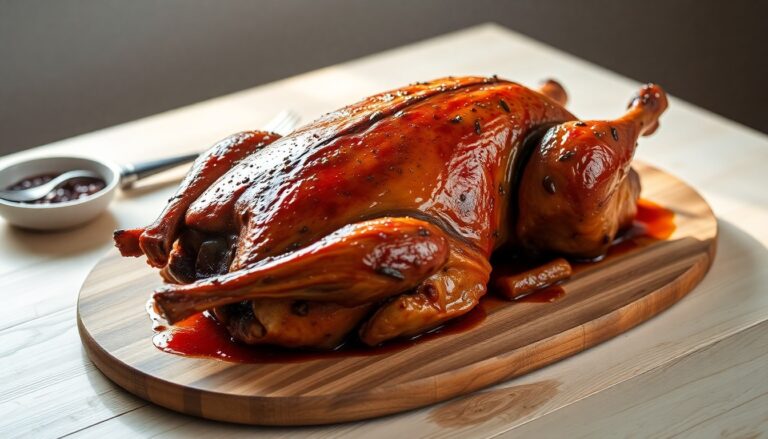
Roast duck is a poultry meat appreciated for its tasty, juicy flesh and crispy skin. A centrepiece of festive tables, it comes in several cuts: breast, leg, strips or a whole bird roasted golden in the oven. Its pronounced flavour sets it apart from more neutral poultry such as chicken or turkey. In terms of nutrition facts, roast duck provides around 331 kcal per 100 g, with 19 g of good-quality protein, no carbohydrate and 28.4 g of fat, part of which sits in the skin. It is therefore an energy-rich meat, to be included in moderation in a balanced diet. Its strengths: complete protein and useful haem iron.
Macronutrient breakdown
Nutrition table per 100 g
| Calories | 331 kcal |
| Kilojoules | 1370 kJ |
| Protein | 19 g |
| Fat | 28,4 g |
Micronutrients per 100 g
All measured nutrients, ranked by share of the daily reference intake.
- Vitamin B34,83 mg30 %
- Copper0,23 mg23 %
- Phosphorus156 mg22 %
- Iron2,7 mg19 %
- Vitamin B20,27 mg19 %
- Zinc1,86 mg19 %
- Vitamin B51,1 mg18 %
- Vitamin B10,17 mg15 %
See the other 11 nutrients
- Vitamin B60,18 mg13 %
- Vitamin B120,3 µg12 %
- Potassium204 mg10 %
- Vitamin A63 µg8 %
- Vitamin K15,1 µg7 %
- Vitamin E0,7 mg6 %
- Magnesium16 mg4 %
- Vitamin B96 µg3 %
- Vitamin D0,1 µg2 %
- Calcium11 mg1 %
- Manganese0,02 mg1 %
Anses Ciqual 2025. Source: Anses, 2025, Ciqual food composition table
Tips
To get the best out of roast duck without weighing down your plate, keep an eye on the portion: 100 to 130 g of flesh is enough for a meal. The vast majority of the fat is concentrated in the skin and the subcutaneous fat; removing the skin after cooking significantly lowers the calories while keeping the protein. As duck naturally contains no carbohydrate, its glycaemic index is zero, which makes it an interesting food if you are aiming for stable energy.
- Cooking: roasting in the oven brings out the tenderness of the flesh. Prick the skin to release the melted fat, which you can collect for cooking. Leaving it pink keeps it tender.
- Pairings: serve your duck with green vegetables, cabbage or a sweet potato mash to balance the meal and add the fibre that meat lacks.
- Storage: keep cooked duck for 2 to 3 days in the fridge, well covered, or freeze it in portions.
Nutritionally, duck provides haem iron, zinc, selenium and B vitamins (notably B3 and B12), useful for energy metabolism. Its fat includes a fair share of monounsaturated fatty acids, close to the profile of healthier fats. To vary your meat sources, you can explore other poultry in the meat family, such as duck compared with leaner options such as chicken breast or roast turkey.
For active people: with nearly 19 g of protein per 100 g, roast duck supports muscle maintenance and recovery. Its high calorie density makes it particularly suitable for bulking phases or big energy needs. When cutting or losing weight, choose skinless flesh and pair it with complex carbohydrate sources around training. To top up your daily protein intake, also think of protein snacks that extend recovery.
Weight control: the benefits of duck should not make you forget its high fat content. Limit fatty sauces, cooking methods that leave it swimming in fat and overly generous portions. You can compare its nutrition facts with other foods using the calorie table to adjust your meals. Eaten in moderation and well accompanied, roast duck has its place in a diet that is both indulgent and sensible.