Group · Meat
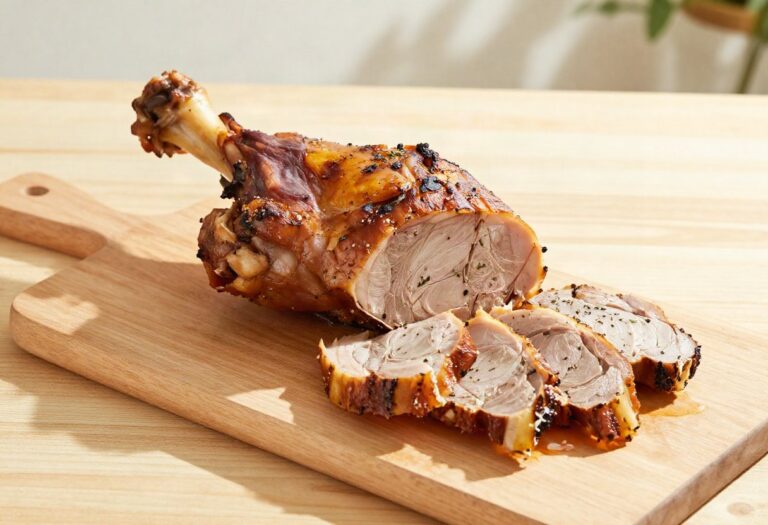
Roast pork leg
Roast pork leg is a tasty, generous cut of meat, appreciated for its tender flesh and melting texture after oven cooking. Taken from the animal’s leg, it can be prepared whole, boned or sliced, sometimes coated in a golden crust of aromatics. With 295 kcal per 100 g, it provides a good amount of protein (nearly 26.2 g) with no carbohydrate, but also fat (21.2 g), which makes it a rather rich meat. In a balanced diet, it has a place as a source of quality animal protein, ideal for a family meal or Sunday roast, as long as you measure portions and take care over the accompaniments.
Macronutrient breakdown
Nutrition table per 100 g
| Calories | 295 kcal |
| Kilojoules | 1230 kJ |
| Protein | 26,2 g |
| Fat | 21,2 g |
Micronutrients per 100 g
All measured nutrients, ranked by share of the daily reference intake.
- Selenium39,1 µg71 %
- Vitamin B10,71 mg65 %
- Zinc4,2 mg42 %
- Vitamin B35,65 mg35 %
- Vitamin B120,88 µg35 %
- Phosphorus213 mg30 %
- Vitamin B60,38 mg27 %
- Potassium425 mg21 %
See the other 15 nutrients
- Vitamin B20,24 mg17 %
- Vitamin D0,7 µg14 %
- Vitamin B50,78 mg13 %
- Omega-6 LA1,2 g12 %
- Iron1,09 mg8 %
- Magnesium28 mg7 %
- Copper0,06 mg6 %
- Omega-3 ALA0,07 g3 %
- Iodine5 µg3 %
- Calcium18 mg2 %
- Vitamin E0,2 mg2 %
- Manganese0,02 mg1 %
- Vitamin C0,6 mg1 %
- Vitamin B91 µg1 %
- Vitamin A2 µg0 %
Anses Ciqual 2025. Source: Anses, 2025, Ciqual food composition table
Tips
To get the most from roast pork leg, aim for a reasonable portion of 100 to 130 g of cooked meat per meal. Its richness in protein (26.2 g per 100 g) makes it a filling dish, but its 21.2 g of fat calls for a little vigilance if you are watching your weight. A simple tip is to remove the visible fat before serving and to favour the leanest pieces.
Cooking and preparation:
- Favour slow, low-temperature oven cooking to keep the meat moist without drying it out. You can take inspiration from the principles of gentle cooking to preserve nutrients and flavour.
- Flavour it with garlic, thyme, rosemary, bay leaf and a splash of olive oil rather than fatty or very sweet sauces.
- Serve with roasted vegetables, a green salad or wholegrain starchy foods for a more balanced meal.
Storage: once cooked, keep the meat in the fridge for 2 to 3 days in an airtight container. Leftovers lend themselves well to batch cooking: sliced cold into a salad, in a sandwich or reheated in a stock.
Tips for active people: thanks to its complete protein, roast pork leg supports muscle recovery after exercise and helps maintain lean mass. For a recovery plate, pair it with a portion of carbohydrate (rice, sweet potato) and vegetables. If you are cutting, control quantities because of the fat, and perhaps top up your intake with other sources such as the leaner chicken breast. To go further on eating for training, see our guide to fitness nutrition.
Variations and family: in the large meat family, pork comes in many cuts such as roast pork shoulder or the classic roast. Each has its own nutrition facts and calorie profile, which are worth comparing according to your goals.
Weight control: with 295 kcal per 100 g and a complete absence of carbohydrate and fibre, roast pork leg remains a dish of moderate calorie density. The secret to weight loss lies mainly in portions, choosing a lean piece and serving it with plenty of vegetables. Eaten in moderation, it fits easily into a varied, balanced diet.