Group · Vegetables
Salsify
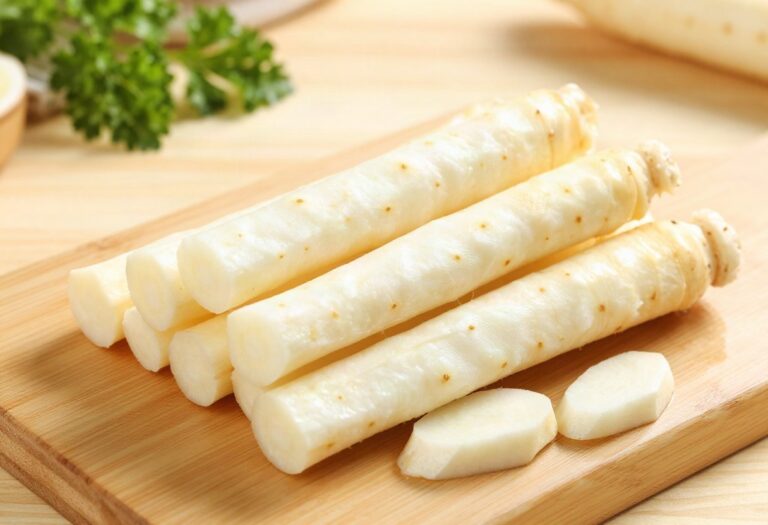
The salsify is an old-fashioned root vegetable with white flesh and a delicate, slightly sweet taste that sometimes recalls artichoke or asparagus. There is true salsify (with a pale root) and scorzonera (with black skin), often sold under the same name. Available fresh in autumn and winter, but also tinned or frozen, it is returning to our kitchens for its rustic, comforting character. With around 67.7 kcal per 100 g, it provides carbohydrate, fibre and a small amount of plant protein. This forgotten vegetable naturally has a place in a varied, balanced diet, whether in a gratin or a slow-cooked side dish.
Macronutrient breakdown
Nutrition table per 100 g
| Calories | 68 kcal |
| Kilojoules | 286 kJ |
| Protein | 2,8 g |
| Carbohydrate | 12,3 g |
| Fat | 0,2 g |
| Fibre | 3,1 g |
Micronutrients per 100 g
All measured nutrients, ranked by share of the daily reference intake.
- Vitamin B60,22 mg16 %
- Potassium283 mg14 %
- Vitamin B20,17 mg12 %
- Manganese0,21 mg11 %
- Phosphorus56 mg8 %
- Copper0,07 mg7 %
- Calcium47 mg6 %
- Vitamin C4,6 mg6 %
- Vitamin B9dietary folate equivalents15 µg
See the other 9 nutrients
- Vitamin B10,06 mg5 %
- Magnesium18 mg5 %
- Vitamin B50,28 mg5 %
- Iron0,55 mg4 %
- Zinc0,3 mg3 %
- Vitamin B30,39 mg2 %
- Vitamin E0,19 mg2 %
- Vitamin K10,3 µg0 %
- Iodine0,2 µg0 %
Anses Ciqual 2025. Source: Anses, 2025, Ciqual food composition table
Tips
The salsify needs a little preparation, but it is worth the effort. When fresh, peel it under running water wearing gloves (its sap sticks to the fingers), then immediately put it in lemony water to stop it turning brown. You can cook it in salted boiling water, steam it or gently fry it in a pan. Gentle cooking best preserves its melting texture and nutrients.
Nutritional values and benefits: with 68 kcal, 12.3 g of carbohydrate, 2.73 g of protein, only 0.17 g of fat and 3.1 g of fibre per 100 g, salsify is a filling, low-fat vegetable. Its fibre, including inulin, contributes to digestive comfort and the feeling of fullness. It also provides minerals such as potassium, magnesium and a little plant-based iron. Its glycaemic index is moderate, which makes it a useful side dish as part of a balanced diet.
How to eat it: in a gratin with a lighter béchamel, sautéed in parsley butter, in a creamy soup, or simply topped with a drizzle of olive oil and fresh herbs. It goes well with other root vegetables such as parsnip or Jerusalem artichoke, for colourful, nourishing winter sautés. You will find more seasonal vegetable ideas on the Vegetables family page.
- Recommended portion: 150 to 200 g as a side, varied from meal to meal.
- Storage: fresh, keep it for a few days in the fridge; it also freezes very well once blanched.
- Seasonality: choose it from autumn to late winter, when it tastes best.
For active people: salsify provides slow-release carbohydrate, useful for replenishing energy reserves after a session. Combined with a protein source (fish, poultry, eggs or pulses), it makes a balanced recovery meal. Its richness in fibre helps digestion, but avoid overdoing it just before intense exercise to limit discomfort.
Weight control: thanks to its low calorie density and its near absence of fat, salsify is a useful ally for weight loss. Beware of preparations rich in cream, butter or cheese, which push up the calorie count. You can compare its calories with other foods using the calorie table to build better plates.