Group · Fruit
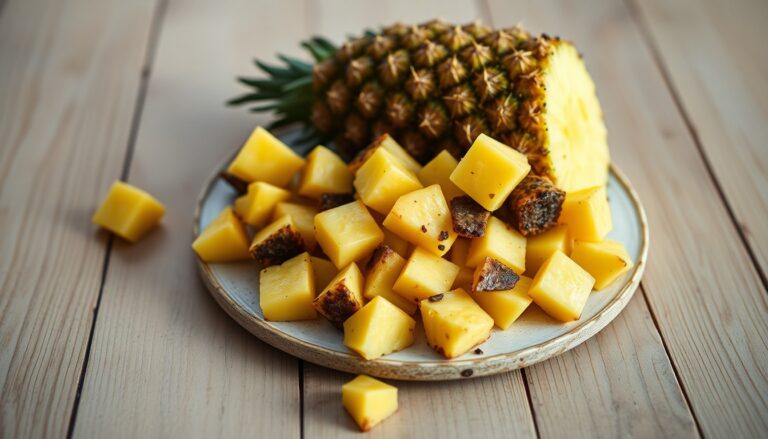
Pineapple chunks
Pineapple chunks are a practical form of this tropical fruit with juicy yellow flesh, most often sold tinned, in syrup or in its own juice. Cut into cubes or neat slices, it can be eaten with no preparation and suits breakfast just as well as a mixed salad or a quick dessert. With around 66.5 kcal per 100 g, 15.6 g of carbohydrate and very little fat, pineapple chunks bring a sweet, exotic note. Their water content, gentle fibre and tart flavours make them a tasty snack. Beware, though, of the versions in syrup, which are higher in added sugars than fresh fruit.
Macronutrient breakdown
Nutrition table per 100 g
| Calories | 67 kcal |
| Kilojoules | 282 kJ |
| Protein | 0,3 g |
| Carbohydrate | 15,6 g |
| Fat | 0,1 g |
| Fibre | 1,1 g |
Micronutrients per 100 g
All measured nutrients, ranked by share of the daily reference intake.
- Manganese1,16 mg58 %
- Vitamin C5,11 mg6 %
- Potassium101 mg5 %
- Vitamin B10,04 mg3 %
- Copper0,03 mg3 %
- Magnesium11,4 mg3 %
- Vitamin B60,03 mg2 %
- Iron0,12 mg1 %
- Vitamin B9dietary folate equivalents11,8 µg
See the other 6 nutrients
- Calcium5,77 mg1 %
- Phosphorus4,06 mg1 %
- Vitamin B50,03 mg1 %
- Zinc0,03 mg0 %
- Vitamin A1,03 µg0 %
- Vitamin E0,01 mg0 %
Anses Ciqual 2025. Source: Anses, 2025, Ciqual food composition table
Tips
Pineapple chunks can be enjoyed at any time: plain as a snack, mixed into a plain yoghurt or a fromage blanc, added to a fruit salad or used to flavour a sweet-and-savoury dish (chicken, prawns, Cantonese-style rice). Its tart flesh also pairs with other tropical fruits such as mango or banana for a vitamin-rich smoothie.
In terms of nutritional values, pineapple remains a refreshing, low-calorie fruit in its plain form. It provides vitamin C, manganese, potassium and gentle fibre that contribute to digestive comfort. Its famous bromelain, an enzyme found in the fresh fruit, adds to its reputation as a light fruit. On the other hand, packaged pineapple chunks are often bathed in a sweet syrup: favour versions in natural juice or drained, and rinse the pieces with water to reduce added sugars.
- Recommended portion: around 100 to 150 g, the equivalent of one portion of fruit.
- Storage: once the tin is open, transfer the pieces to an airtight container and eat within 2 to 3 days.
- Cooking: quickly pan-fried or grilled, pineapple develops delicious caramelised aromas for dessert.
- Smart pairing: with a lean protein for a balanced, colourful meal.
For active people, pineapple chunks are a source of quickly available carbohydrates, useful as a snack after training to support recovery. Paired with a source of protein, for example in a protein snack or a bowl of fromage blanc, they help replenish energy stores. Their water content also helps with hydration after exercise. For those watching their waistline, keep in mind that the glycaemic index rises with syrup: the plain version or fresh fruit remains preferable if you want to lose weight.
As part of a balanced diet, pineapple chunks can replace a sugary processed dessert while still bringing an exotic touch. You can explore other tropical fruits such as fresh pineapple or discover the whole fruit family to vary your intake. To compare the energy content of your favourite foods, see the calorie table. The key is moderation: a sweet fruit remains an asset in a varied diet, as long as you include it in balance.