Group · Meat
Tripe
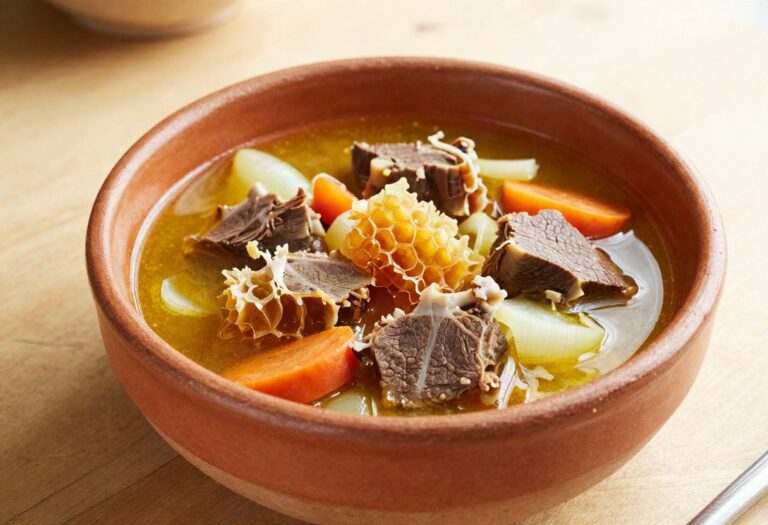
Tripe is an offal, more precisely the stomach lining of cattle (rumen, reticulum, omasum and abomasum). This traditional meat, cooked for generations in the home cooking of many regions, comes in emblematic dishes such as tripe à la mode de Caen, Lyon-style gras-double or tripoux. Nutritionally, tripe has an interesting profile: around 85 calories per 100 g, 12.1 g of protein, 3.69 g of fat and no carbohydrate. Its low calorie density and high protein content set it apart in the meat family. Lean and slow-simmered, it has its place in a varied, balanced diet.
Macronutrient breakdown
Nutrition table per 100 g
| Calories | 82 kcal |
| Kilojoules | 342 kJ |
| Protein | 12,1 g |
| Fat | 3,7 g |
Micronutrients per 100 g
All measured nutrients, ranked by share of the daily reference intake.
- Vitamin B121,39 µg56 %
- Zinc1,42 mg14 %
- Phosphorus64 mg9 %
- Calcium69 mg9 %
- Copper0,07 mg7 %
- Vitamin B30,88 mg6 %
- Vitamin B20,06 mg5 %
- Manganese0,09 mg4 %
See the other 9 nutrients
- Iron0,59 mg4 %
- Vitamin B50,23 mg4 %
- Vitamin C3 mg4 %
- Magnesium13 mg3 %
- Potassium67 mg3 %
- Vitamin B95 µg3 %
- Vitamin B60,01 mg1 %
- Vitamin E0,09 mg1 %
- Omega-3 ALA0,01 g0 %
Anses Ciqual 2025. Source: Anses, 2025, Ciqual food composition table
Tips
Tripe needs long, gentle cooking to bring out its tenderness. Most tripe on sale is already part-cooked (blanched), but it benefits from simmering for several hours with white wine, stock, carrots, onion, cloves and a bouquet garni. A reasonable portion is around 150 to 200 g cooked, served with steamed potatoes or another starchy food for a complete meal.
- Nutrition facts: with only 85 kcal, 12.1 g of protein and 0 g of carbohydrate per 100 g, tripe is a source of lean protein. Its 3.69 g of fat is moderate, as long as you watch the fatty sauces that go with it.
- Minerals: offal such as tripe provides iron, zinc and selenium, nutrients that are useful in a varied diet.
- Storage: very perishable, so eat it soon after buying or freeze it. Once simmered, it keeps for 2 to 3 days in the fridge and reheats perfectly, which makes it a good candidate for batch cooking.
As for the benefits, tripe appeals with its high protein content and low fat intake compared with many cured meats. To keep the calories down, choose a slow-simmered dish without too much cream or butter, and go for gentle cooking methods that preserve flavour and nutritional quality.
Tips for active people: thanks to its high protein content and lack of carbohydrate, tripe can fit into a recovery meal or a cutting plan, where the aim is to maintain muscle mass while controlling calorie intake. Pair it with a source of complex carbohydrate (rice, potatoes) to replenish your energy stores after exercise. If you are aiming for a very precise protein intake or a convenient snack, protein powder can easily top up your day’s intake. To vary your lean animal protein sources, you can also turn to chicken breast or explore other options in the meat family.
Watching your weight: plain tripe is low in calories, but the total soon climbs with a rich sauce, cheese or a fatty side dish. Go for a balanced plate with vegetables and a measured portion. Eaten in moderation and well cooked, tripe is a tasty traditional dish that fits a slimming goal, as long as you take care over the preparation and the quantities.