Group · Meat
Turkey thigh
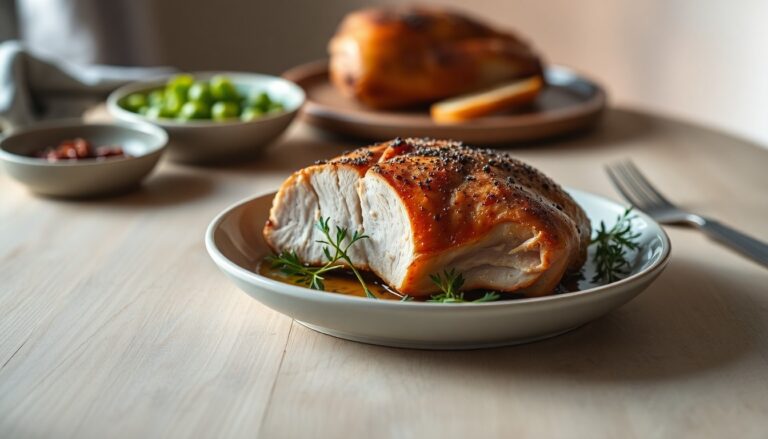
The turkey thigh is a cut of poultry appreciated for its flavoursome meat, which is more tender and tasty than the breast. Taken from the bird’s leg, it can be cooked whole, as a drumstick or boned, and suits roasting as well as braising or stewing. Nutritionally, it is a meat rich in protein (about 19.7 g per 100 g), with no carbohydrate or fibre, and moderately fatty (about 7.85 g of fat). With 149 kcal per 100 g, it easily finds a place in a balanced diet. Versatile and economical, turkey thigh appeals as much to families as to athletes looking for a quality source of protein.
Macronutrient breakdown
Nutrition table per 100 g
| Calories | 149 kcal |
| Kilojoules | 625 kJ |
| Protein | 19,7 g |
| Fat | 7,9 g |
Micronutrients per 100 g
All measured nutrients, ranked by share of the daily reference intake.
- Vitamin B121,12 µg45 %
- Zinc2,71 mg27 %
- Vitamin B60,37 mg26 %
- Vitamin B34,16 mg26 %
- Phosphorus172 mg25 %
- Omega-6 LA1,74 g17 %
- Vitamin B50,97 mg16 %
- Vitamin B20,22 mg16 %
See the other 15 nutrients
- Potassium241 mg12 %
- Copper0,11 mg11 %
- Vitamin D0,5 µg10 %
- Iron1,36 mg10 %
- DHA0,02 g7 %
- Vitamin B10,07 mg6 %
- Magnesium21,5 mg6 %
- Omega-3 ALA0,11 g6 %
- Total omega-30,13 g5 %
- Vitamin B98 µg4 %
- Calcium14 mg2 %
- Vitamin A13,5 µg2 %
- EPA0 g1 %
- Vitamin E0,11 mg1 %
- Manganese0,02 mg1 %
Anses Ciqual 2025. Source: Anses, 2025, Ciqual food composition table
Tips
Turkey thigh can be cooked in a thousand ways. Roasted in the oven with herbs (thyme, rosemary, bay leaf), gently braised with root vegetables or stewed in a sauce, it stays tender. Remove the skin after cooking to lighten the fat intake while keeping the meat moist. A portion of 120 to 150 g suits a main meal, served with green vegetables and a portion of starchy foods according to your appetite and activity level.
Nutrition facts and benefits: turkey thigh has an excellent protein-to-calorie ratio, with nearly 19.7 g of complete protein for only 149 kcal per 100 g. It provides iron, zinc, phosphorus and B vitamins (notably B3 and B6), useful for energy metabolism. The absence of carbohydrate makes it a meat with a glycaemic index of zero, of interest as part of a balanced diet.
- Cooking: favour the oven, a casserole or steaming over frying. Gentle cooking preserves tenderness and nutrients.
- Storage: keep raw thigh for 1 to 2 days in the fridge, or freeze it. Once cooked, eat it within 3 days.
- Pairings: seasonal vegetables, wholegrain cereals, pulses for a complete, filling dish.
For active people: with its high protein content, turkey thigh is an ally for muscle recovery and lean mass gain. Eaten after exercise, it supplies the amino acids needed to repair fibres. You can include it in a post-workout meal with a source of carbohydrate to replenish glycogen. To vary your intake, alternate with the leaner turkey breast or chicken breast depending on your goals. Also discover other cuts in the Meat family.
Weight control: turkey thigh is fattier than the white cuts, but its calorie density remains reasonable. For weight loss, remove the skin, limit fatty sauces and favour cooking methods without added fats. Avoid turning it into a fried or breaded dish, which would push up the calories. Well prepared, it offers fullness and enjoyment without excess, making it a sensible choice for anyone watching their figure while ensuring a good daily protein intake.