Group · Bread
Bran bread
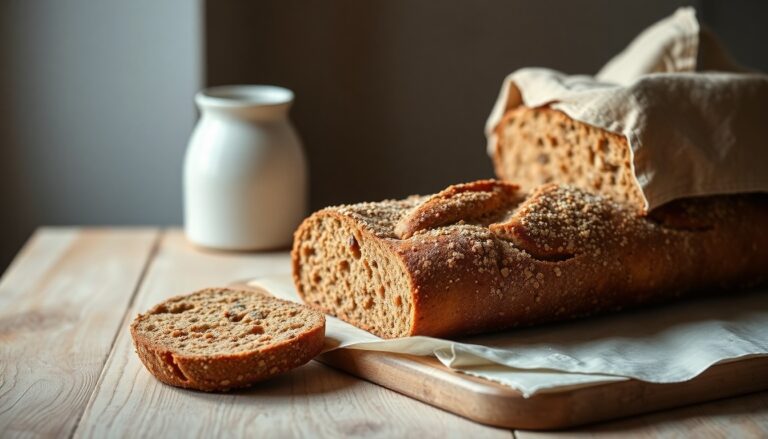
Bran bread is a wheat bread enriched with bran, the outer layer of the cereal grain, which is rich in fibre. This gives it a denser crumb, a rustic crust and a slightly stronger flavour than ordinary white bread. It comes as a round loaf, a baguette or in slices, sometimes combined with other wholemeal flours. With around 244 kcal per 100 g, it provides 9.1 g of protein, 44.4 g of carbohydrate, 1.94 g of fat and 6.21 g of fibre. Its fibre content and moderate energy intake make it a valuable ally in a balanced diet, whether you are watching your weight or simply looking for a more filling everyday bread.
Macronutrient breakdown
Nutrition table per 100 g
| Calories | 244 kcal |
| Kilojoules | 1030 kJ |
| Protein | 9,1 g |
| Carbohydrate | 44,4 g |
| Fat | 2 g |
| Fibre | 6,3 g |
Micronutrients per 100 g
All measured nutrients, ranked by share of the daily reference intake.
- Manganese1,64 mg82 %
- Phosphorus198 mg28 %
- Copper0,23 mg23 %
- Iron2,05 mg15 %
- Magnesium54,1 mg14 %
- Vitamin B10,15 mg14 %
- Potassium253 mg13 %
- Vitamin B31,93 mg12 %
See the other 9 nutrients
- Zinc1,19 mg12 %
- Vitamin B60,16 mg11 %
- Vitamin B50,58 mg10 %
- Selenium3,8 µg7 %
- Vitamin B913,1 µg7 %
- Omega-6 LA0,59 g6 %
- Calcium30,5 mg4 %
- Vitamin B20,04 mg3 %
- Omega-3 ALA0,05 g2 %
Anses Ciqual 2025. Source: Anses, 2025, Ciqual food composition table
Tips
Bran bread naturally has its place at breakfast and lunch. A reasonable portion is around 40 to 50 g, or one to two slices depending on your energy expenditure. Its relative richness in fibre supports fullness, which can help you manage quantities better over the day. Remember to vary things with other breads from the bread family, such as wholemeal bread or sourdough bread, to diversify flavours and nutrients.
Smart pairings: bran bread goes very well with a source of protein (egg, fresh cheese, lean ham) and a little good-quality fat. This combination slows the digestion of carbohydrates and limits blood sugar spikes, which is useful if you pay attention to your glycaemic index. Avoid routinely spreading it with very sugary products, which add to the calorie intake.
- Serving and storage: keep it in a clean cloth or a bread bin to preserve its softness; you can also slice and freeze it, then toast it.
- Ideas for use: morning toast, savoury open sandwiches at lunch, a side for a soup or salad, or the base of a balanced sandwich.
- Fibre and digestive comfort: introduce bran gradually if you are not used to it, and drink enough water.
For active people: bran bread is a good source of complex carbohydrates to refuel your energy reserves. A few slices two to three hours before exercise provide gradual fuel. For recovery, pair it with a source of protein to restart muscle repair; you can round off your snack with inspiration from these protein snack ideas. To structure your whole diet, fitness nutrition offers useful guidelines.
Weight control: at around 244 kcal per 100 g, bran bread is still an energy-dense food. The secret is not to cut it out but to adjust portions and toppings. If you are following a balanced diet, include it in place of white bread rather than on top of it. You can also compare its nutrition facts with other foods using the calorie table. With good-quality bread, regular portions and sensible pairings, bran bread remains a simple, filling everyday choice.