Group · Bread
Baguette
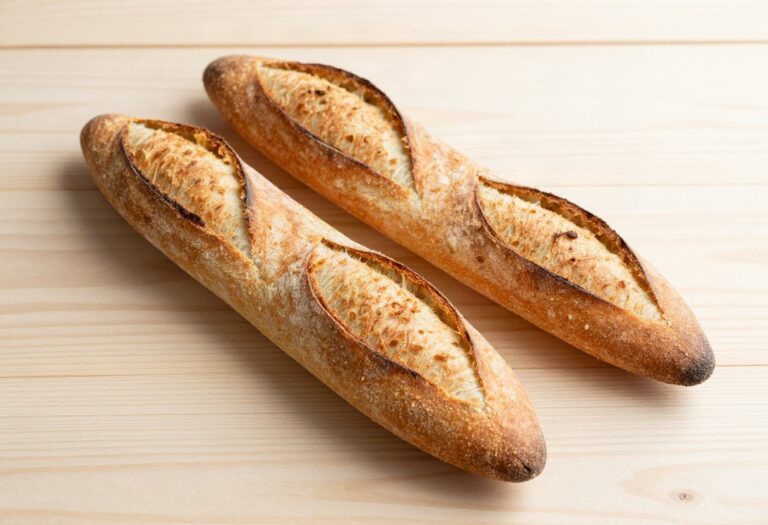
A symbol of French gastronomy, the baguette is a staple of our everyday meals. Made from wheat flour, water, yeast and salt, it is recognisable by its golden, crackly crust and airy crumb. It comes as a baguette tradition, a country-style baguette or a seeded baguette, each with its own flavours. With around 287 kcal per 100 g, it provides mainly carbohydrate (58.3 g) and a little protein (9.06 g), with very little fat. A source of quick energy, it naturally has its place in a balanced diet, provided you watch portions and pair it with foods rich in fibre and good nutrients.
Macronutrient breakdown
Nutrition table per 100 g
| Calories | 287 kcal |
| Kilojoules | 1220 kJ |
| Protein | 9,1 g |
| Carbohydrate | 58,3 g |
| Fat | 1,4 g |
| Fibre | 2,7 g |
Micronutrients per 100 g
All measured nutrients, ranked by share of the daily reference intake.
- Manganese0,59 mg30 %
- Vitamin B32,88 mg18 %
- Phosphorus110 mg16 %
- Vitamin B10,17 mg15 %
- Copper0,13 mg13 %
- Potassium180 mg9 %
- Iron1,2 mg9 %
- Vitamin B50,46 mg8 %
- Vitamin B9dietary folate equivalents26,8 µg
See the other 7 nutrients
- Zinc0,73 mg7 %
- Magnesium23 mg6 %
- Omega-6 LA0,49 g5 %
- Calcium22 mg3 %
- Vitamin E0,32 mg3 %
- Total omega-30,06 g2 %
- Omega-3 ALA0,04 g2 %
Anses Ciqual 2025. Source: Anses, 2025, Ciqual food composition table
Tips
The baguette can be enjoyed at any time of day: at breakfast with a little butter and jam, at lunchtime in a filled sandwich, or alongside a meal. A reasonable portion is around 50 to 80 g, or about a third of a baguette. Its calorie density and high glycaemic index (white crumb, little fibre) call for moderation, especially if you are watching your weight.
How to eat it well?
- Choose a baguette tradition or one with a less dense crumb, and pair it with protein (egg, lean ham, cheese) and vegetables to slow the absorption of carbohydrates.
- Keep it in a clean cloth rather than in the fridge, which makes it go stale quickly. You can freeze it sliced to avoid waste.
- A lightly toasted baguette slice absorbs less fat than a slice generously spread.
Nutrition facts and alternatives. The classic baguette is low in fibre. For a better intake, turn to more wholegrain breads such as wholemeal bread, bran bread or sourdough bread, whose glycaemic index is generally more moderate. You can discover all the varieties on the Bread family page.
Tips for active people. With its easily digested carbohydrates, the baguette is useful before prolonged exercise or during recovery, when glycogen stores need replenishing. A slice of baguette with a little honey a few hours before training provides effective fuel. After exercise, pair it with a source of protein to optimise muscle recovery; you can round it off with other ideas from our approach to fitness nutrition. When cutting or losing weight, reduce the quantities and choose breads that are richer in fibre and more filling.
Points to watch. The baguette is a food of pleasure and convenience, but eating too much can push up your overall calorie intake for the day, especially if it accompanies dishes that are already rich. To compare its calories and nutrition facts with other foods, see the calorie table. The key is to go for variety, good-quality bread and portions suited to your needs.