Konjac and glucomannan: benefits, weight loss, side effects and konjac noodles
The short answer
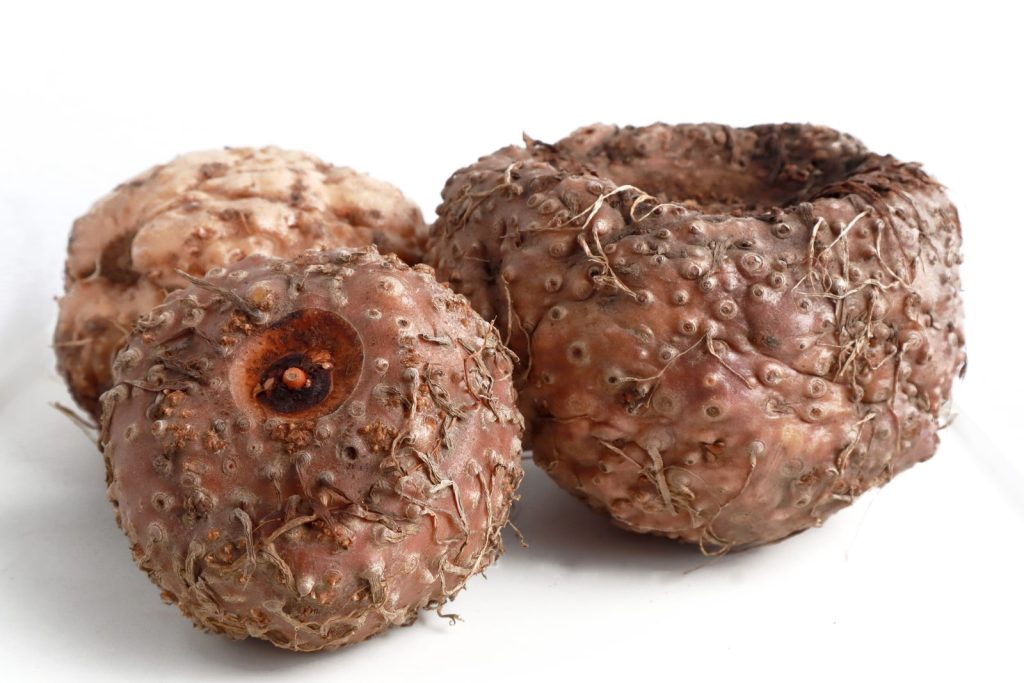
Konjac is an Asian plant whose root (corm) provides glucomannan, a soluble fiber that soaks up huge amounts of water and turns into a thick gel. You meet it in two forms: as food (konjac noodles, shirataki and konjac rice, which are very low in calories) and as a supplement (glucomannan capsules or powder). For weight loss, the European Union allows one claim: glucomannan contributes to weight loss at 3 g a day, in three 1 g doses with 1 to 2 glasses of water before meals, as part of a calorie-restricted diet. Trials show a small effect, under 1 kg (about 2 lb) on average. Its clearest benefit is on LDL cholesterol (about 10% lower at 3 g a day). The main safety risk is mechanical: swallowed without enough water, glucomannan swells and can block the esophagus.
This article is for information and does not replace medical advice. If you have trouble swallowing, an esophageal condition or take medication, ask your doctor before using konjac supplements.
What is konjac?
Konjac (Amorphophallus konjac) is grown in East Asia for its large corm, ground into flour. Its main fiber, glucomannan, is made of mannose and glucose and is the most viscous dietary fiber known: in water it swells to many times its original size. That explains both its appeal (it fills the stomach and slows digestion) and its main hazard. As a food additive it is listed as E425.
Konjac noodles and konjac rice
Konjac noodles (shirataki) and konjac rice are konjac flour set into a gel with lots of water: very few calories and almost no carbs, but also almost no protein, vitamins or minerals. They let you bulk up a plate of pasta or rice for fewer calories, but they are not a real starch: add protein and vegetables. Rinse them well, then dry-fry them for a few minutes for a better texture. Large amounts at once can cause gas or bloating.
For other filling foods, see our guide to natural appetite suppressants.
Glucomannan for weight loss: what the studies show
EU Regulation 432/2012 allows the claim that “glucomannan in the context of an energy restricted diet contributes to weight loss”, only for foods providing 1 g per serving, with consumers told the effect comes from 3 g a day in three 1 g doses, with 1 to 2 glasses of water, before meals. A choking warning is mandatory for people with swallowing difficulties or who drink too little, with advice to take it with plenty of water.
| Meta-analysis | Trials | Weight result |
|---|---|---|
| Sood et al., 2008 | 14 studies, 531 people | -0.79 kg (about 1.7 lb) vs control |
| Onakpoya et al., 2014 | 8 trials in overweight or obese adults | -0.22 kg, not statistically significant |
Glucomannan is not a fat burner. It can help you eat a little less by making you feel full, but it does not cause weight loss on its own. See how to lose weight healthily.
Cholesterol and blood sugar
A meta-analysis of 12 trials (Ho et al., 2017, 370 people) found LDL cholesterol 0.35 mmol/L lower, about 10%, and non-HDL cholesterol about 7% lower, with roughly 3 g a day. The EU also allows a cholesterol claim at 4 g a day. In type 2 diabetes, 6 trials (Zhang et al., 2023, 440 people) showed lower fasting and post-meal blood sugar and lower total and LDL cholesterol. A 2025 meta-analysis judged the cholesterol drops statistically significant but not clinically important: an add-on, never a replacement for treatment. See also foods to lower cholesterol and fiber benefits and sources.
Is konjac safe? Side effects and risks
Choking and blockage. Glucomannan absorbs water fast. Swallowed dry or with too little water, it can lodge in the esophagus. Cases have been reported since the 1980s with glucomannan diet tablets; a 2007 case report describes a 37-year-old woman whose esophagus became blocked after a glucomannan diet aid. She had an undiagnosed esophageal narrowing, the group most at risk.
Why are konjac jellies banned? Konjac itself is not banned. In 2003, an EU directive prohibited E425 konjac in jelly confectionery, including jelly mini-cups, after they caused the deaths of several children and elderly people by choking outside Europe. The text says the shape and size of the cups, but also konjac’s physical properties, created the risk, and that warning labels were not enough. Konjac noodles, konjac rice and supplements remain allowed in the EU. Keep drinkable or squeezable konjac jellies away from children.
- digestive effects: abdominal discomfort, diarrhea or constipation in trials;
- medication: by slowing digestion, glucomannan may change how other drugs are absorbed; take them apart and ask your pharmacist;
- diabetes medication: it lowers post-meal blood sugar, so talk to your doctor;
- avoid with swallowing difficulties, esophageal narrowing or disease, and in children; discuss supplements in pregnancy with your doctor.
How to take glucomannan
- Studied dose for weight: 3 g a day, as 1 g before each of your three main meals.
- Always with plenty of water: 1 to 2 large glasses each time, sitting or standing, never dry or right before lying down.
- With a calorie-restricted diet, and start gradually.
- Check the glucomannan content on the label, not just the weight of konjac powder.
Nutrition•pro: Pure Konjac made in France
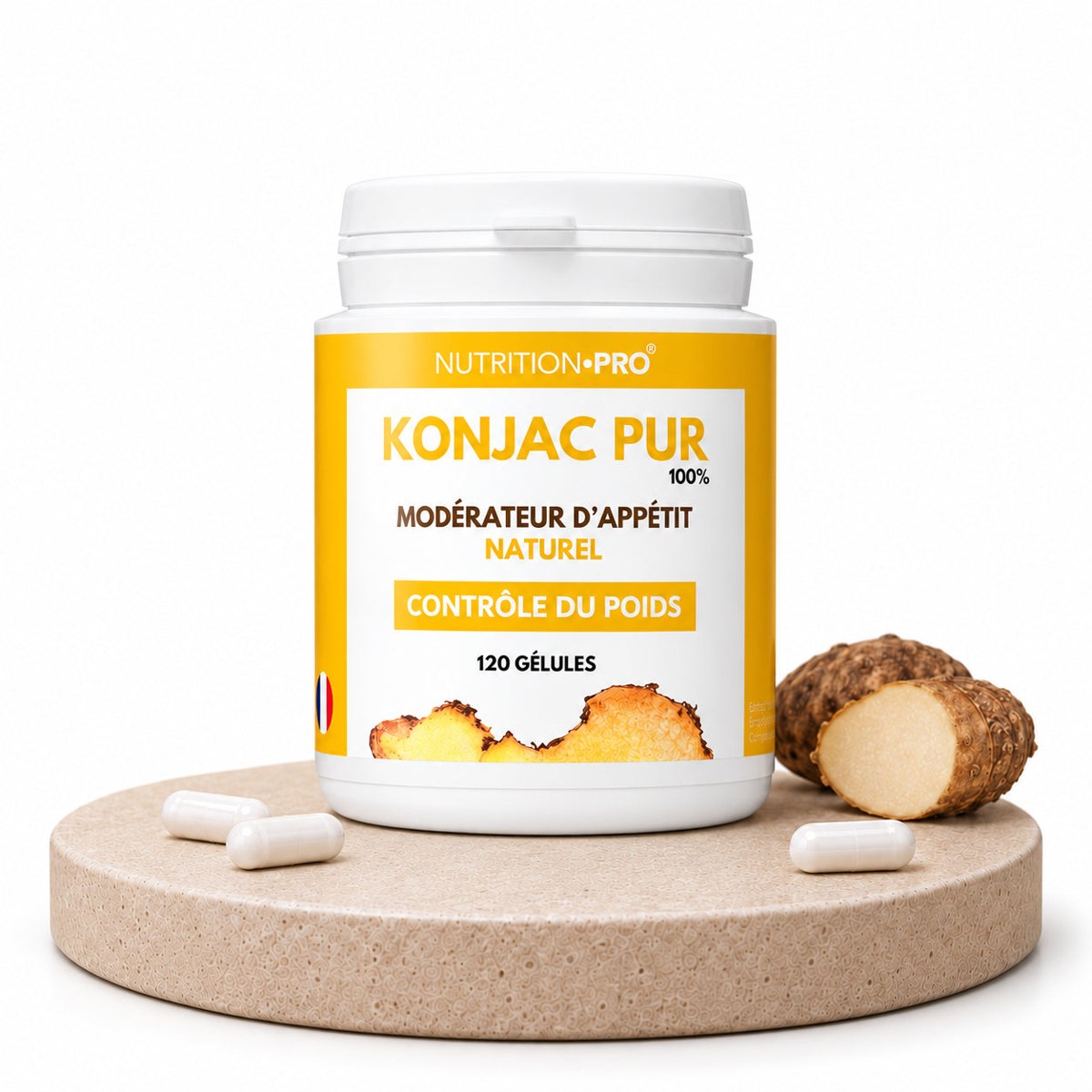
Nutrition•pro is a French brand based in Paris. Its product page states that this Pure Konjac is made in France, from konjac root, a plant native to Asia. Its strength is a single-ingredient formula with nothing added beyond the vegetable capsule.
- 100% konjac (Amorphophallus konjac, root) in HPMC vegetable capsules;
- 1.44 g of konjac per 3 capsules, 480 mg per capsule;
- 1 capsule 15 to 60 minutes before each meal, with a large glass of water;
- 120 capsules, a 40-day supply;
- €24.99 per jar (price checked on 22/11/2026), about €0.62 a day.
How does the dose compare? The routine matches the studies: before each meal with a large glass of water, which is good for safety. The amount is more moderate: 1.44 g of konjac powder a day, while the EU weight claim relies on 3 g of pure glucomannan, and the page does not state the glucomannan content. So trial results do not transfer directly to this product; it suits people looking for a simple appetite aid alongside a controlled diet. The brand advises not to exceed the recommended dose and to take the capsules with plenty of water.
Promo code: SEOCONSULTINGSL for 10% off your order, €22.49 per jar, about €0.56 a day (as of 22/11/2026).
See Nutrition•pro Pure Konjac →
Partner link: we earn a commission if you order through this link, at no extra cost to you.
To compare other fiber supplements, see our best fiber supplement comparison and our best weight loss program comparison.
Frequently asked questions
What is konjac?
An Asian plant whose root is rich in glucomannan, a soluble fiber used to make low-calorie noodles and rice, and sold as a supplement for fullness, weight and cholesterol.
Does glucomannan help you lose weight?
A little, at 3 g a day with a calorie-restricted diet. The average extra loss in trials is under 1 kg; its main role is to make a diet easier to stick to.
Are konjac noodles healthy?
They are very low in calories and carbs but provide almost no nutrients. Pair them with protein and vegetables.
Why were konjac noodles banned?
They were not. The EU banned konjac in jelly confectionery, including mini-cup jellies, in 2003 after choking deaths. Konjac noodles and supplements remain on sale.
What are the side effects of glucomannan?
Gas, bloating, diarrhea or constipation, possible interference with medication absorption, and a risk of esophageal blockage if taken without enough water.
Sources
- Onakpoya I., Posadzki P., Ernst E. The efficacy of glucomannan supplementation in overweight and obesity: a systematic review and meta-analysis of randomized clinical trials. J Am Coll Nutr, 2014; 33(1): 70-8. PubMed 24533610
- Sood N. et al. Effect of glucomannan on plasma lipid and glucose concentrations, body weight, and blood pressure: systematic review and meta-analysis. Am J Clin Nutr, 2008; 88(4): 1167-75. PubMed 18842808
- Ho H.V.T. et al. A systematic review and meta-analysis of randomized controlled trials of the effect of konjac glucomannan on LDL cholesterol and the new lipid targets non-HDL cholesterol and apolipoprotein B. Am J Clin Nutr, 2017; 105(5): 1239-1247. PubMed 28356275
- Zhang Z. et al. Effects of Glucomannan Supplementation on Type II Diabetes Mellitus in Humans: A Meta-Analysis. Nutrients, 2023; 15(3): 601. PubMed 36771306
- Haijun Z. et al. Does glucomannan supplementation exert profitable effects on serum lipid profile in adults? Prostaglandins Other Lipid Mediat, 2025; 176: 106934. PubMed 39528010
- Vanderbeek P.B. et al. Esophageal obstruction from a hygroscopic pharmacobezoar containing glucomannan. Clin Toxicol, 2007; 45(1): 80-2. PubMed 17357389
- Commission Regulation (EU) No 432/2012, Annex, glucomannan entries. Text: legislation.gov.uk/eur/2012/432/annex
- Directive 2003/52/EC of 18 June 2003 on the conditions of use for food additive E 425 konjac. Text: legislation.gov.uk/eudr/2003/52