Natural appetite suppressants: the foods that really fill you up
The best natural appetite suppressants are bulky foods that are rich in water, fibre or protein: pulses, boiled potatoes, eggs, plain dairy, rolled oats, whole fruit, soups and vegetables. In a landmark study, at equal calories, boiled potato was seven times more filling than a croissant. Add a few habits with a proven track record, such as starting a meal with soup or eating slowly, and you cut your intake without fighting hunger. Here is what the studies say, food by food.
👉 Free tool: Calorie deficit: calculate it in 30 seconds, no sign-up needed.
Hunger, fullness, satiety: what are we talking about?
Three notions often get mixed up:
- Hunger: the physiological need to eat.
- Fullness: the feeling that makes you stop eating during a meal.
- Satiety: the absence of hunger between two meals, which lasts for a shorter or longer time.
The HAS (2023, the French national health authority) asks professionals to assess how people perceive these internal signals, hunger, satiety and fullness, and to check that every meal contains foods that generate satiety. An effective “appetite suppressant” acts on fullness (you eat less during the meal), on satiety (you last longer), or on both.
Why some foods fill you up more than others
The most cited study on the subject is the satiety index by Holt et al. (1995). Volunteers ate portions of 38 foods that each provided 240 kcal, then rated their satiety over two hours, before eating freely. White bread served as the reference (100%). Results:
- boiled potato came top with a score of 323%, seven times more than the croissant, which came last with 47%;
- the score was higher the heavier, and so the bulkier, the portion was;
- it rose with the content of water, fibre and protein, and fell with the fat content;
- the higher the satiety, the less the participants ate afterwards.
In other words, energy density matters a great deal: a food that provides few calories for a lot of volume occupies the stomach for longer. The table below compares filling foods with their actual contents.
| Food (per 100 g) | Energy (kcal) | Water (g) | Protein (g) | Fibre (g) |
|---|---|---|---|---|
| Broccoli, cooked | 30 | 91.6 | 3.2 | 2.6 |
| Mixed vegetable soup | 36.8 | 90.2 | 0.8 | 1.2 |
| Raspberry, raw | 47.9 | 86.8 | 1.2 | 4.3 |
| Plain fromage blanc 0% | 48.4 | 86.5 | 7.3 | 0 |
| Apple, raw with skin | 54 | 85.4 | 0.3 | 1.4 |
| Rolled oats cooked in water | 69.1 | 83.6 | 2.5 | 1.7 |
| Potato, boiled | 81 | 78.3 | 1.8 | 1.8 |
| Kidney beans, cooked | 116 | 65 | 9.6 | 11.6 |
| Lentils, cooked | 125 | 64.8 | 10.1 | 8.5 |
| Hard-boiled egg | 134 | 76.5 | 13.5 | 0 |
| Chicken fillet, grilled | 141 | 67.5 | 30.1 | 0 |
| Chickpeas, cooked | 148 | 62 | 8.3 | 8.2 |
| For comparison: croissant | 417 | 21.2 | 6.6 | 2.4 |
Natural appetite suppressants, food by food
Pulses
Lentils, chickpeas, kidney beans: they combine fibre and protein, with a moderate energy density. A review (McCrory et al., 2010) concludes that meals based on pulses increase satiety over 2 to 4 hours, and that randomised trials point to better weight loss when pulses are combined with calorie restriction, not without it. Santé publique France recommends eating them at least twice a week.
Eggs, plain dairy and protein
A review by Leidy et al. (2015) confirms a modest effect of higher-protein meals on feelings of fullness and satiety hormones, but no demonstrated drop in intake at the next meal. The authors mention around 25 to 30 g of protein per meal in the studies with favourable results. Egg, fromage blanc, Greek yoghurt or plain skyr make it easy to get protein at breakfast. Our guide to protein foods and satiety goes further.
Oats
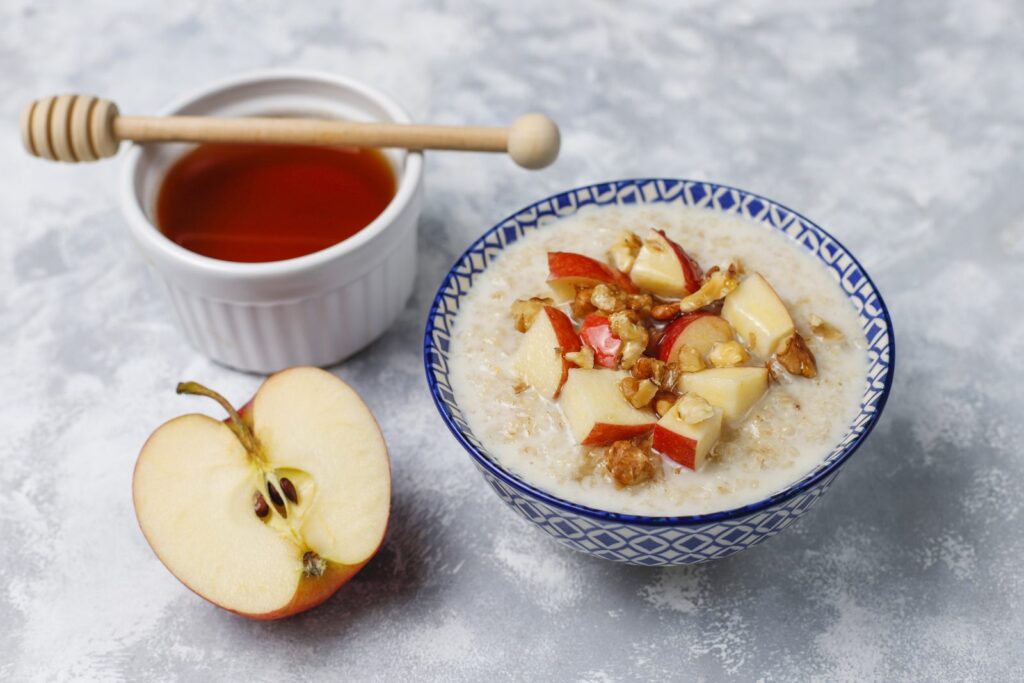
Rolled oats contain beta-glucans, soluble fibre that forms a viscous gel. In the review by Clark and Slavin (2013), beta-glucan is one of the few fibres whose effect on satiety is supported by more than one publication. Cooked in water or milk, the oats swell and provide a lot of volume. Our comparison of rolled oats helps you choose.
Boiled potatoes
The champion of the Holt index, boiled potato provides 81 kcal per 100 g according to Ciqual. Fried or as crisps, it moves into another category: 532 kcal per 100 g of crisps. The cooking method makes all the difference.
Whole fruit, not juice
An apple or raspberries provide water and fibre. Santé publique France points out that fruit juices are very sugary and low in fibre, and recommends not going over one glass a day.
Soups, salads and a glass of water: strategies tested in the lab
Soup as a starter
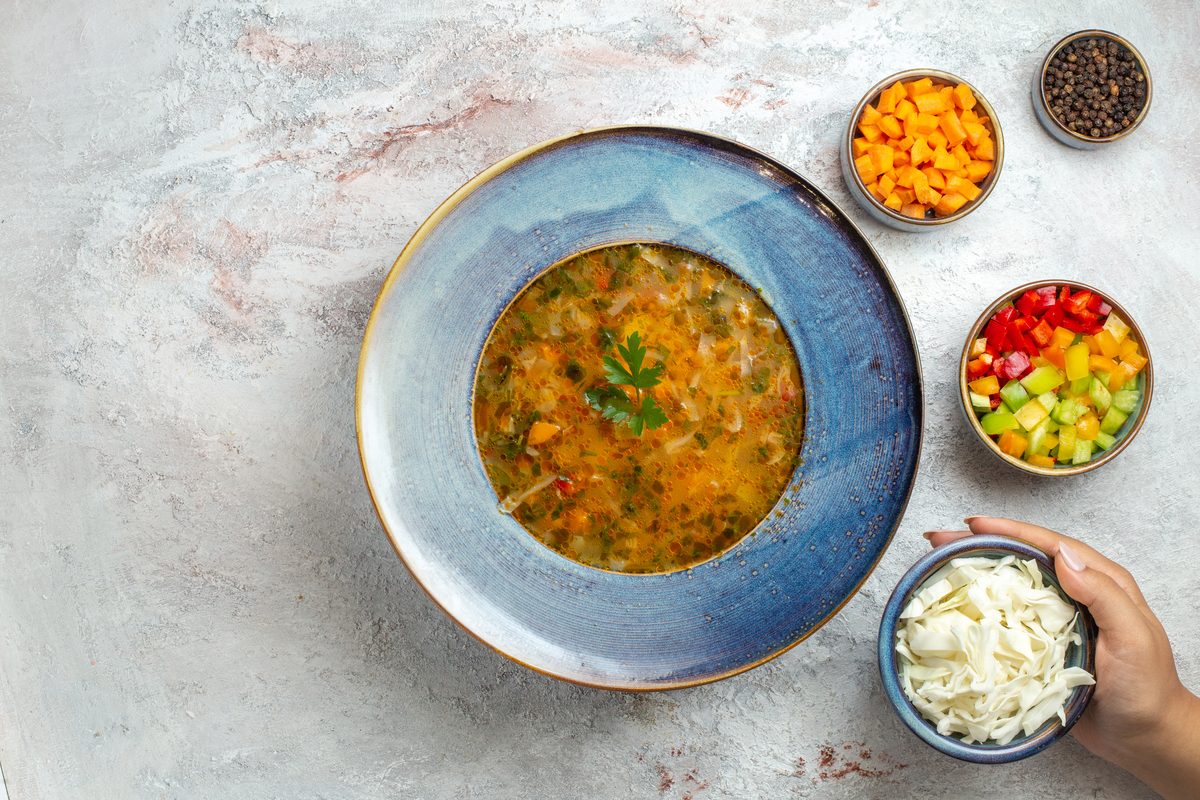
In the study by Flood and Rolls (2007), 60 adults ate a vegetable soup before lunch, in different forms: broth and vegetables served separately, chunky soup or blended soup. Whatever the form, the total energy intake of the meal, soup included, fell by 20% compared with the meal without soup. Vegetable soups are therefore genuine appetite suppressants.
Salad as a starter, but a light one
In the study by Rolls et al. (2004), a low-calorie salad as a starter reduced the meal’s intake by 7% (small portion) to 12% (large portion). But a salad rich in cheese and dressing increased it by 8 to 17%. A lettuce, raw vegetables and a drizzle of vinaigrette, yes. A salad drowned in cheese, no.
A glass of water before the meal
In 48 adults aged 55 to 75 following a low-calorie diet, drinking 500 ml of water before each main meal led to about 2 kg more weight loss over 12 weeks (Dennis et al., 2010). The effect on the following meal, clear at first, was no longer significant at 12 weeks: it is a help, not a solution on its own. See also our guide on how much water to drink a day.
Fibre: useful, but not magic
Anses sets an adequate intake of 30 g of fibre a day for adults, because of its benefits for cardiovascular disease, type 2 diabetes and certain cancers. Its effect on hunger is more nuanced than often claimed. The systematic review by Clark and Slavin (2013) analysed 107 treatments in 44 publications: only 39% significantly reduced appetite and 22% reduced short-term food intake. The best-supported fibres: beta-glucan, lupin fibre, rye bran and wholegrain rye, and an overall high-fibre diet.
The practical message: aim for 30 g a day from wholefoods, vegetables, fruit and pulses, rather than relying on an isolated fibre. Our guide to dietary fibre and our guide to high-fibre vegetables help you get there.
How you eat matters as much as what you eat
- Take at least 20 minutes per meal, advises the HAS (2023). A meta-analysis of 22 studies (Robinson et al., 2014) shows that people eat less when they eat more slowly.
- Chew: chewing naturally slows the meal down.
- Switch off screens at the table: the HAS recommends avoiding screens, news and television during the meal, and paying attention to what you eat.
- Do not skip meals: the HAS generally advises three main meals and an optional snack, to avoid the snacking that hunger encourages. Skipping dinner encourages night-time cravings.
- Serve yourself on the plate, leave the serving dish in the kitchen and use standard-sized plates.
Why you are hungrier when you lose weight
If hunger seems stronger since you started paying attention, it is not your imagination. Anses explains that after weight loss, the fall in leptin, a hormone produced by fat tissue, sends the brain an “energy deficit” signal that increases the feeling of hunger. The study by Sumithran et al. (2011) measured this: in 50 people who had lost 13.5 kg on average, appetite hormones, including ghrelin, and reported hunger were still altered a year later.
Lack of sleep makes things worse. In the trial by Nedeltcheva et al. (2010), the same diet followed with 5.5 hours of sleep instead of 8.5 hours came with stronger hunger. It is one more reason to rely on filling foods, a moderate deficit rather than severe restriction, and enough sleep. Our guide to a calorie deficit without frustration explains how to get the dose right.
A typical day so you are not hungry
- Breakfast: a porridge of rolled oats cooked in milk, a handful of raspberries, plain fromage blanc.
- Lunch: raw vegetables or a bowl of soup as a starter, then a plate made up half of vegetables, with lentils or chicken and a portion of boiled potatoes.
- Snack: an apple and a small handful of almonds.
- Dinner: a vegetable velouté, an omelette or chickpeas, a dairy product or a piece of fruit.
This day follows the PNNS benchmarks (the French national nutrition and health programme): at least five fruit and vegetables, pulses, a small handful of nuts, water as your drink. Adapt the quantities to your needs, for example with our calorie needs tool.
What about appetite-suppressant supplements?
Glucomannan (konjac fibre) has an authorised health claim in the European Union on weight loss. European Regulation No 432/2012 authorises the statement that it “contributes to weight loss in the context of an energy-restricted diet”, provided you consume 3 g a day, in three doses of 1 g, with 1 to 2 glasses of water before meals. The product must carry a warning about the risk of choking for people with swallowing difficulties.
The HAS urges caution with supplements taken without a prescription and with products sold online whose benefit is questionable. If you are considering a fibre supplement, our comparison of fibre supplements details compositions and doses. But food remains the foundation.
Emotional cravings: when hunger is not hunger
Stress, boredom, tiredness or annoyance often trigger urges to eat without real hunger. The HAS dietary advice sheet suggests simple actions:
- replace snacking with an activity that is incompatible with eating: making a phone call, taking a shower, going for a walk;
- avoid buying or stocking up on the foods you usually snack on;
- if you lose control, choose foods of low energy density, do not hide, and take the time to savour them slowly.
If these episodes are frequent, with a feeling that you cannot stop, talk to your doctor: the HAS recommends referral to a professional specialising in eating disorders. For the link between emotions and your plate, see also our guide to food and stress management.
Snacks that really keep you going
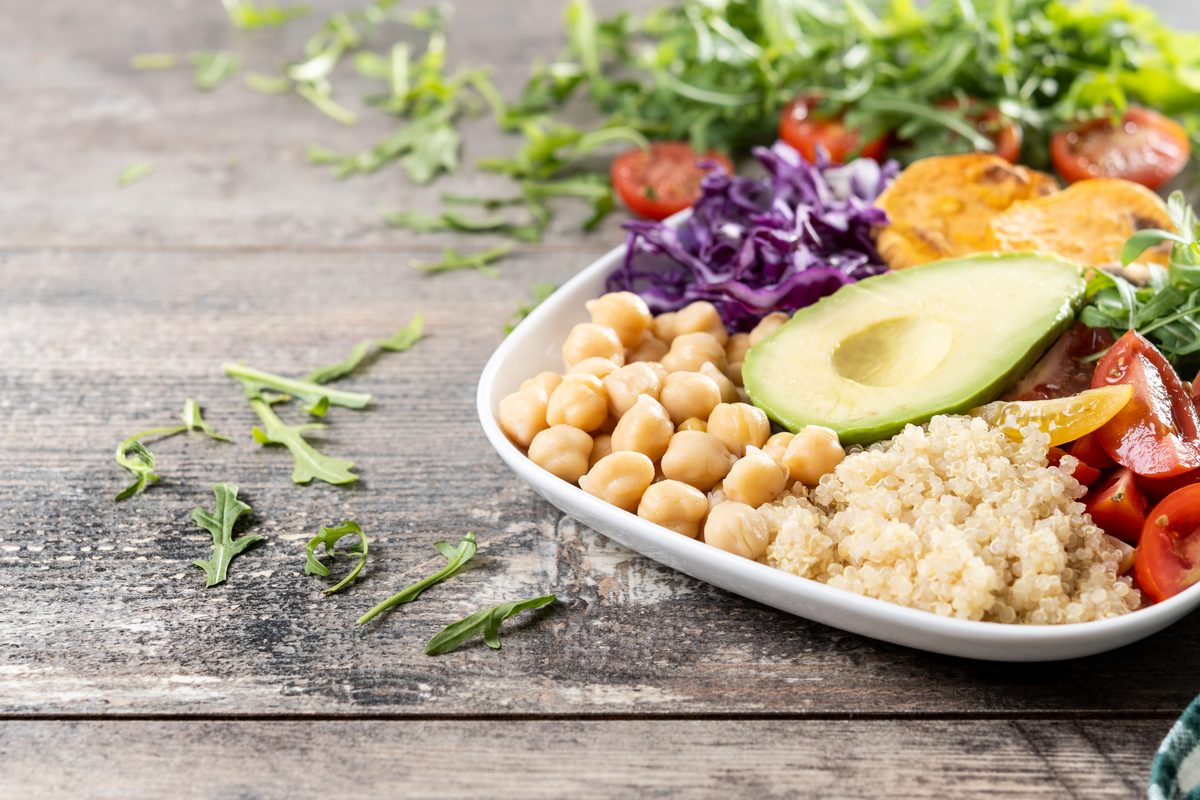
If you are hungry between meals, a well-chosen snack stops you arriving ravenous at the next one. A few simple combinations that bring together volume, fibre or protein:
- a piece of whole fruit and a small handful of almonds or walnuts (Santé publique France recommends a small handful of nuts a day);
- plain fromage blanc with raspberries;
- a hard-boiled egg and some raw vegetables;
- a bowl of vegetable soup in winter;
- spiced roasted chickpeas, made at home.
More ideas in our guide to healthy snacks.
Appetite-suppressing recipes
Fill up with an oat porridge with red berries, a skyr, fruit and nut bowl, a split pea soup with cumin, a lentil and spinach dahl or spiced roasted chickpeas. For a sweet bite, energy balls help out, in small quantities.
Myths about appetite suppressants
“All fibres curb hunger”
No. In the review by Clark and Slavin (2013), most of the fibre treatments tested in the short term reduced neither appetite nor intake. It is mainly certain viscous fibres and wholefoods that have proved their worth.
“A big salad is always a good appetite suppressant”
Only if it is low in calories. A salad loaded with cheese and dressing increased the meal’s intake by 8 to 17% in the study by Rolls (2004).
“Protein is enough to make you lose weight”
Its effect on satiety is real but modest, and the review by Leidy (2015) shows no drop in intake at the next meal. It helps you hold a deficit, it does not create one.
“Fruit juice is as good as a piece of fruit”
Santé publique France reminds us: juices are very sugary and low in fibre, one glass a day at most.
Precautions
- Glucomannan and fibre powders: always with plenty of water, never if you have swallowing difficulties.
- If you have a sensitive gut, some sources of fibre may be poorly tolerated: see our guide to the FODMAP diet.
- Constant hunger, intense thirst or unexplained weight loss call for a medical consultation.
- Appetite suppressants do not replace a full meal for children, teenagers, pregnant women or older people.
Frequently asked questions
What is the most filling food?
In the Holt satiety index (1995), boiled potato came top, with a score of 323% compared with white bread, at equal calories. Foods rich in water, fibre and protein followed.
Does drinking water before eating help you lose weight?
In the Dennis trial (2010), 500 ml of water before each meal, combined with a low-calorie diet, led to about 2 kg more weight lost over 12 weeks in adults aged 55 to 75.
How much fibre do you need a day?
Anses sets an adequate intake of 30 g of fibre a day for adults.
Is glucomannan effective?
It has an authorised European claim on weight loss, provided you take 3 g a day in three doses of 1 g, with 1 to 2 glasses of water before meals, as part of an energy-restricted diet. It must be taken with care because of the risk of choking.
Which snack should you choose to last until dinner?
A combination of volume and protein or fibre: a piece of fruit and a few almonds, plain fromage blanc, a hard-boiled egg with raw vegetables. The HAS generally recommends three meals and an optional snack.
This article is for information only and does not replace the advice of your doctor or a dietitian.
Our sources
- Holt SH, Miller JC, Petocz P, Farmakalidis E. A satiety index of common foods. Eur J Clin Nutr. 1995. PMID 7498104.
- Leidy HJ, Clifton PM, Astrup A et al. The role of protein in weight loss and maintenance. Am J Clin Nutr. 2015. PMID 25926512.
- McCrory MA, Hamaker BR, Lovejoy JC, Eichelsdoerfer PE. Pulse consumption, satiety, and weight management. Adv Nutr. 2010. PMID 22043448.
- Clark MJ, Slavin JL. The effect of fiber on satiety and food intake: a systematic review. J Am Coll Nutr. 2013. PMID 23885994.
- Flood JE, Rolls BJ. Soup preloads in a variety of forms reduce meal energy intake. Appetite. 2007. PMID 17574705.
- Rolls BJ, Roe LS, Meengs JS. Salad and satiety: energy density and portion size of a first-course salad affect energy intake at lunch. J Am Diet Assoc. 2004. PMID 15389416.
- Dennis EA, Dengo AL, Comber DL et al. Water consumption increases weight loss during a hypocaloric diet intervention in middle-aged and older adults. Obesity. 2010. PMID 19661958.
- Robinson E, Almiron-Roig E, Rutters F et al. A systematic review and meta-analysis examining the effect of eating rate on energy intake and hunger. Am J Clin Nutr. 2014. PMID 24847856.
- Anses. Update of the PNNS guidelines: revision of the food consumption guidelines (in French). Opinion and collective expert report. December 2016.
- Anses. Ciqual food composition table (in French). 2025.
- Anses. Risk assessment of weight-loss dietary practices (in French). Collective expert report. November 2010.
- Sumithran P, Prendergast LA, Delbridge E et al. Long-term persistence of hormonal adaptations to weight loss. N Engl J Med. 2011. PMID 22029981.
- Nedeltcheva AV, Kilkus JM, Imperial J et al. Insufficient sleep undermines dietary efforts to reduce adiposity. Ann Intern Med. 2010. PMID 20921542.
- European Commission. Regulation (EU) No 432/2012 establishing a list of permitted health claims made on foods (in French). 2012.
- Haute Autorité de santé. Overweight and obesity in adults: first-line medical management (in French). Supporting report, appendix 10. September 2011.
- Haute Autorité de santé. Care pathway guide: overweight and obesity in adults (in French). January 2023, updated in February 2024.
- Santé publique France. Recommendations on diet, physical activity and sedentary behaviour for adults (in French). 2019.