Group · Fish
Cod
Cod is a lean white fish much appreciated for its tender flesh, large pearly flakes and delicate taste. Caught in the cold waters of the North Atlantic, it is sold fresh, frozen, as fillets or thick loins, and it is also what becomes salt cod once salted and dried. Its reputation rests on a remarkable nutritional profile: with around 105 kcal and nearly 23.3 g of protein per 100 g, it offers very high-quality protein for only 0.76 g of fat and no carbohydrates. Versatile, easy to cook and light, cod has a firm place in a balanced diet, whether you want to vary your sources of protein or watch your weight.
Macronutrient breakdown
Nutrition table per 100 g
| Calories | 100 kcal |
| Kilojoules | 425 kJ |
| Protein | 23,3 g |
| Fat | 0,8 g |
Micronutrients per 100 g
All measured nutrients, ranked by share of the daily reference intake.
- Iodine121 µg81 %
- DHA0,18 g72 %
- Vitamin B121,75 µg70 %
- Selenium25,6 µg47 %
- EPA0,08 g32 %
- Phosphorus200 mg29 %
- Potassium327 mg16 %
- Vitamin B60,21 mg15 %
See the other 19 nutrients
- Vitamin D0,63 µg13 %
- Vitamin B32 mg13 %
- Total omega-30,26 g10 %
- Magnesium25,4 mg7 %
- Vitamin B911,4 µg6 %
- Zinc0,5 mg5 %
- Vitamin E0,6 mg5 %
- Vitamin B10,04 mg4 %
- Vitamin B20,05 mg4 %
- Vitamin B50,22 mg4 %
- Calcium14,4 mg2 %
- Copper0,02 mg2 %
- Iron0,2 mg1 %
- Vitamin C0,53 mg1 %
- Manganese0,01 mg1 %
- Vitamin A5,16 µg1 %
- Omega-6 LA0,01 g0 %
- Omega-3 ALA0 g0 %
- Vitamin K10,05 µg0 %
Anses Ciqual 2025. Source: Anses, 2025, Ciqual food composition table
Tips
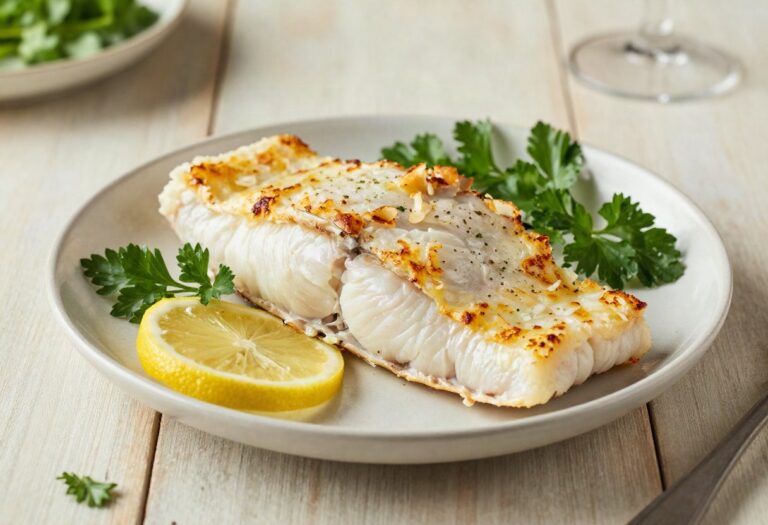
Cod suits many cooking methods. Choose gentle cooking that preserves its delicate flesh: steamed, baked in a parcel with lemon and herbs, poached in court-bouillon or pan-fried for a few minutes. Avoid deep-frying and thick batter or breadcrumbs, which needlessly add to the calories and fat of a naturally lean fish. To better understand the point of these methods, take a look at our article on gentle cooking to preserve nutrients and flavour.
In terms of nutritional values, cod shines for its richness in complete protein (about 23.3 g per 100 g) and its content of iodine, phosphorus, selenium and B vitamins, notably B12. Its glycaemic index is zero since it contains no carbohydrates, which makes it an ally for light plates. A portion of 120 to 150 g suits a meal, served with green vegetables and a source of starchy foods.
- Smart pairings: lemon, dill, parsley, fennel, tomato, courgette or quinoa.
- Storage: eat fresh cod within 24 to 48 hours, or go for frozen, which is very handy.
- When to eat it: ideal at lunch or dinner, light and filling.
For active people, cod is an excellent choice when cutting or lean bulking: its quality protein supports muscle recovery without excess calories. After a session, pair it with starchy foods to replenish glycogen. If you top up your diet with supplements, discover how to use protein powder, and our broader advice on fitness nutrition.
You can also ring the changes within the fish family by alternating with other lean species such as pollock or haddock, or by choosing oily fish rich in omega-3 to balance the week.
For weight control, plain cod is an asset: low calorie density, high satiety thanks to the protein, and no sugars. The thing to watch is mainly the preparation: creamy sauces, too much butter or frying push up the total. To compare its calories with other foods, consult our calorie table. Well cooked, cod combines nutritional benefits, lightness and flavour.