Group · Seafood
Periwinkle
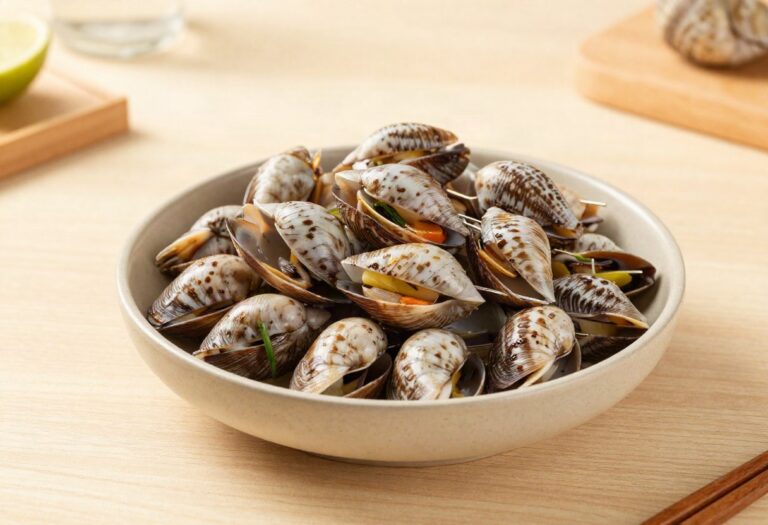
The periwinkle is a small marine shellfish of the gastropod family, recognisable by its spiral brown-black shell. Much prized on seafood platters, it is traditionally eaten cooked in flavoured seawater, then extracted from its shell with a pin. Deliciously briny, it is one of the seafood choices that are low in calories but remarkably rich in protein. At 109 kcal per 100 g, the periwinkle offers 16.3 g of protein, only 3.5 g of fat and a little carbohydrate. Enjoyed by seafood lovers and by athletes mindful of their intake, it fits perfectly into a varied, balanced diet, as a starter or a seafood nibble.
Macronutrient breakdown
Nutrition table per 100 g
| Calories | 109 kcal |
| Kilojoules | 458 kJ |
| Protein | 16,3 g |
| Carbohydrate | 3,1 g |
| Fat | 3,5 g |
Micronutrients per 100 g
All measured nutrients, ranked by share of the daily reference intake.
- Vitamin B1260,7 µg2428 %
- Iodine570 µg380 %
- Magnesium310 mg83 %
- Vitamin E2,18 mg18 %
- Vitamin B932,7 µg16 %
- Omega-3 ALA0,29 g15 %
- Total omega-30,33 g13 %
- DHA0,03 g12 %
See the other 8 nutrients
- Vitamin B31,3 mg8 %
- Omega-6 LA0,61 g6 %
- Vitamin B50,28 mg5 %
- Vitamin B20,06 mg4 %
- Vitamin K12,59 µg3 %
- Vitamin B10,03 mg3 %
- Vitamin A10,5 µg1 %
- Vitamin B60,01 mg1 %
Anses Ciqual 2025. Source: Anses, 2025, Ciqual food composition table
Tips
The periwinkle is most often enjoyed cold, after cooking, with home-made mayonnaise, lightly salted butter or a simple squeeze of lemon. To prepare it, plunge it into boiling salted water with a few aromatics (bay, thyme, pepper) for 5 to 8 minutes, then leave it to cool before extracting it with a pin. A reasonable portion is around 80 to 100 g of meat, which is already a good protein intake.
In terms of nutrition facts, the periwinkle appeals with its protein density (16.3 g per 100 g) and its low fat content. It naturally provides marine minerals such as iron, magnesium, zinc and iodine, as well as B vitamins. Its glycaemic index is very low and it contains no fibre. These characteristics make it an interesting food as part of a balanced diet or weight management, as long as you watch the sauces that go with it (mayonnaise, rich in fats, quickly raises the calorie total).
For variety, you can put together a platter combining the periwinkle with other seafood such as prawns, the whelk or cooked mussels. These shellfish share a similar profile: low in calories, rich in protein and trace elements.
For active people, the periwinkle is an excellent source of lean protein, useful for muscle recovery and maintaining lean mass. You can include it in a post-workout meal with a portion of starchy foods to replenish your glycogen stores. To go further on how to split your macronutrients, see our guidance on fitness nutrition.
Points to watch: always buy very fresh periwinkles (intact shell, briny smell rather than ammonia) and eat them quickly after cooking. Their sodium content can be high depending on the preparation: go easy on the salt and choose light seasonings. To compare their energy intake with other seafood, see the food calorie table. Eaten in moderation and without too much sauce, periwinkles remain a tasty, light seafood snack.