Group · Vegetables
Celeriac
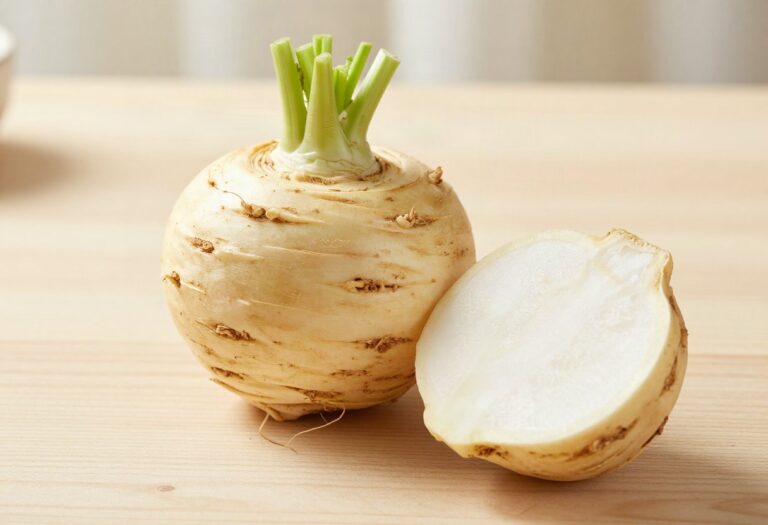
Celeriac is that large root vegetable with rough, beige skin and firm white flesh, not to be confused with stick celery. Prized for its delicate, slightly aniseed and nutty flavour, it belongs to the large family of vegetables and can be cooked as well as eaten raw. At just 36.5 kcal per 100 g, it combines low energy density, fibre and an interesting mineral content. Versatile, it turns up in remoulade, mash, gratin, soup or oven chips. Its nutrition facts make it a great choice for anyone looking to vary their winter vegetables while keeping an eye on their plate.
Macronutrient breakdown
Nutrition table per 100 g
| Calories | 37 kcal |
| Kilojoules | 153 kJ |
| Protein | 1,3 g |
| Carbohydrate | 4,6 g |
| Fat | 0,9 g |
| Fibre | 2,6 g |
Micronutrients per 100 g
All measured nutrients, ranked by share of the daily reference intake.
- Potassium306 mg15 %
- Manganese0,27 mg14 %
- Copper0,12 mg12 %
- Phosphorus58 mg8 %
- Vitamin B50,41 mg7 %
- Calcium52,4 mg7 %
- Vitamin B30,92 mg6 %
- Vitamin B60,07 mg5 %
- Vitamin B9dietary folate equivalents67,4 µg
See the other 5 nutrients
- Magnesium15,1 mg4 %
- Vitamin C2,7 mg3 %
- Zinc0,24 mg2 %
- Iron0,32 mg2 %
- Vitamin A2,08 µg0 %
Anses Ciqual 2025. Source: Anses, 2025, Ciqual food composition table
Tips
Choose celeriac that is firm, heavy and free of soft spots. Once peeled, its flesh quickly turns brown in the air: sprinkle it with a little lemon juice to keep it white. Allow a portion of around 100 to 150 g per person as a side. Keep it for several weeks in the fridge, in the vegetable drawer, wrapped in a cloth.
How to eat celeriac?
- Raw: grated in a remoulade, simply seasoned with mustard and yoghurt to lighten the traditional sauce.
- Cooked: mashed with potato, in a comforting soup, roasted in the oven in cubes or as chips for a tasty, low-calorie alternative.
- Combined with carrot, parsnip or turnip for an assortment of winter root vegetables.
Nutrition facts and benefits. With 4.6 g of carbohydrate, 1.3 g of protein and only 0.86 g of fat per 100 g, celeriac stays light. Its fibre (2.6 g) contributes to fullness and digestive comfort. It provides potassium, phosphorus and vitamin C, especially when eaten raw. Its pronounced flavour allows you to cut back on salt in preparations. To best preserve its nutrients, favour gentle cooking by steaming rather than prolonged cooking in water.
For active people. Its low energy density and volume make it a good filling vegetable during a cutting or maintenance phase. Combine it with a source of protein (fish, poultry, eggs) and a portion of starchy foods for a complete recovery meal. Its richness in water and potassium also contributes to rehydration after exercise.
Weight control. Celeriac is a slimming asset as long as you control the sauces and added fats: a remoulade drowned in mayonnaise or an overly creamy gratin pushes up the calorie count. Go for light seasonings and cooking without fat. To place this vegetable among your daily choices, consult our food calorie table and discover more ideas in the vegetable family. Varied, economical and a cold-season food, celeriac deserves a regular place in a balanced diet.