Group · Starchy foods
Rye flour
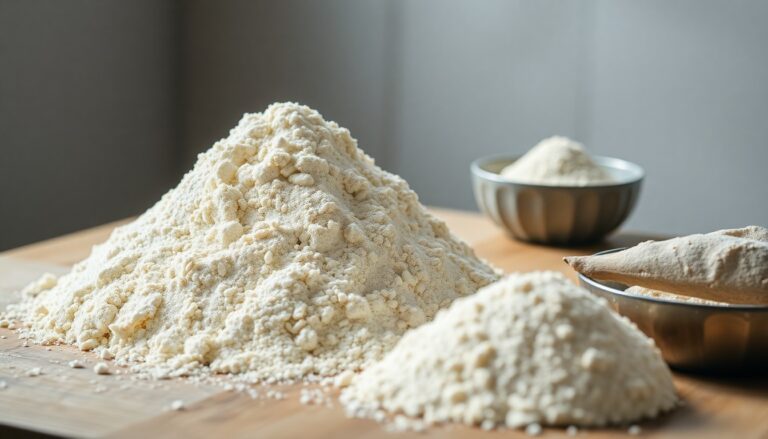
Rye flour is made by milling rye grains, a hardy cereal that has been grown for centuries in cold regions and on poor soils. Recognisable by its grey colour and slightly tangy flavour, it comes in several types depending on the extraction rate (T85, T130, T170), from lightest to most wholegrain. It is the key ingredient in rye bread and in the famous dark Nordic bread. With around 354 kcal and nearly 8 g of fibre per 100 g, it naturally belongs to the starchy foods family. Rich in complex carbohydrates, minerals and fibre, rye flour adds nutritional density to a balanced, varied diet.
Macronutrient breakdown
Nutrition table per 100 g
| Calories | 345 kcal |
| Kilojoules | 1460 kJ |
| Protein | 10,5 g |
| Carbohydrate | 68,7 g |
| Fat | 1,4 g |
| Fibre | 8 g |
Micronutrients per 100 g
All measured nutrients, ranked by share of the daily reference intake.
- Manganese1,16 mg58 %
- Vitamin B10,33 mg30 %
- Copper0,21 mg21 %
- Phosphorus130 mg19 %
- Vitamin B60,23 mg16 %
- Zinc1,33 mg13 %
- Potassium224 mg11 %
- Vitamin B50,67 mg11 %
See the other 7 nutrients
- Magnesium32 mg9 %
- Vitamin K15,9 µg8 %
- Vitamin E0,83 mg7 %
- Iron0,91 mg7 %
- Vitamin B20,09 mg6 %
- Vitamin B30,8 mg5 %
- Calcium13 mg2 %
Anses Ciqual 2025. Source: Anses, 2025, Ciqual food composition table
Tips
Rye flour is mainly used for bread-making, but it also has a place in rustic baking and in gingerbread doughs. Because it contains little gluten suitable for bread-making, it is often blended with wheat flour to get a lighter crumb. For a bread with real character, aim for 30 to 50% rye in your mix. Natural sourdough suits it particularly well and brings out its tangy aromas.
Nutritionally, rye flour stands out for its high fibre content (8 g per 100 g), which contributes to fullness and digestive comfort. It also provides complex carbohydrates (68.7 g), plant protein (10.5 g), little fat (1.33 g), as well as magnesium, potassium, iron and B vitamins. Its glycaemic index is lower than that of refined white flours, especially for wholegrain versions such as T130 or T170.
- Portions: allow 40 to 60 g of flour per slice of homemade bread, depending on size.
- Pairings: sunflower seeds, walnuts, raisins or a little buckwheat flour for variety.
- Storage: in an airtight container, away from damp and light.
For active people, a rye bread is a good source of slow-release carbohydrates. One or two slices at breakfast or as a snack a few hours before exercise help build lasting energy reserves. After training, pair this bread with a source of protein (egg, fromage frais, lean ham) to support recovery. You can build on your routine with more ideas in our protein snack recipes.
As for weight control, rye flour is a fairly calorific starchy food in its raw state: it is the final amount of bread and the toppings that make the difference. Its fibre content does, however, help you feel fuller, which can limit snacking. If you enjoy hardy cereals, also explore whole rye grains or the rest of the starchy foods family to vary your intake. Finally, note that rye contains gluten: if you are sensitive to it, see our guide to understanding gluten intolerance.