Group · Seafood
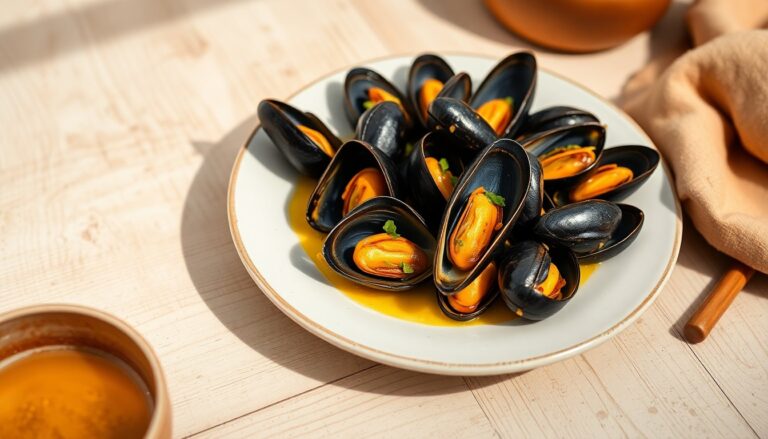
Cooked mussel
The cooked mussel is a must-have shellfish at the fishmonger’s, prized for its tender flesh and iodine-rich taste. Whether prepared as moules marinière, in cream, with curry or simply steamed, it cooks in a few minutes and suits a convivial meal as well as everyday eating. Nutritionally, it stands out for a good protein content (about 17.2 g per 100 g), for only 108 kcal and 2.09 g of fat. Rich in minerals and naturally lean, the cooked mussel easily fits into a balanced, varied diet. It appeals as much to food lovers as to those watching their calorie intake.
Macronutrient breakdown
Nutrition table per 100 g
| Calories | 108 kcal |
| Kilojoules | 457 kJ |
| Protein | 17,2 g |
| Carbohydrate | 5,2 g |
| Fat | 2,1 g |
Micronutrients per 100 g
All measured nutrients, ranked by share of the daily reference intake.
- Vitamin B1217,6 µg704 %
- EPA0,35 g140 %
- Selenium55,7 µg101 %
- Iodine106 µg71 %
- DHA0,16 g64 %
- Iron3,99 mg29 %
- Zinc2,85 mg29 %
- Phosphorus179 mg26 %
See the other 15 nutrients
- Vitamin B948 µg24 %
- Vitamin E2,68 mg22 %
- Total omega-30,52 g21 %
- Vitamin B20,29 mg21 %
- Magnesium66,6 mg18 %
- Copper0,11 mg11 %
- Manganese0,19 mg10 %
- Potassium166 mg8 %
- Calcium59,4 mg7 %
- Vitamin C5,87 mg7 %
- Vitamin B31,16 mg7 %
- Vitamin B50,28 mg5 %
- Vitamin B60,04 mg3 %
- Omega-3 ALA0,01 g1 %
- Omega-6 LA0,02 g0 %
Anses Ciqual 2025. Source: Anses, 2025, Ciqual food composition table
Tips
To get the full benefits of the cooked mussel, rely on light cooking methods. Steaming or the classic marinière (shallot, white wine, parsley) best preserve its flesh and limit the use of added fat. Beware of recipes that are too rich in cream, butter or side dishes of chips, which push the calories well beyond the 108 kcal of the food on its own. A reasonable portion is around 200 to 300 g of cooked flesh, a light, complete meal.
- Varieties and seasonality: bouchot, rope-grown or Spanish mussels, with the peak season running from summer to early autumn.
- Storage: eat mussels very fresh, and throw away any that stay open before cooking or stay closed after.
- Pairings: lemon, garlic, tomato, saffron or steamed vegetables bring out their flavour without weighing down the plate.
In terms of nutrition facts, the cooked mussel is an excellent source of good-quality protein, with about 17.2 g per 100 g, comparable to many lean meats. It also provides interesting minerals such as iron, zinc, selenium and iodine, as well as vitamin B12. Its 5.12 g of carbohydrate come from the shellfish’s natural glycogen. With very little fat and no fibre, it remains a food of moderate calorie density, which makes it an ally for anyone watching their weight as part of a balanced diet approach.
For active people, the cooked mussel is an ideal source of lean protein after exercise, promoting muscle recovery without excess fat. You can include it in a post-training dinner, served with a portion of wholegrain starchy foods to replenish glycogen. Its iron and mineral content also supports the increased needs of demanding fitness nutrition. Remember to stay well hydrated, as seafood is naturally rich in sodium.
If you like to vary your iodine-rich sources, explore other treasures from the same family such as cooked clams or oysters, which are just as low in fat. You will find all the shellfish and crustaceans on the page dedicated to seafood. By favouring gentle cooking and plant-based accompaniments, the cooked mussel remains a tasty pleasure that is perfectly compatible with healthy, well-managed eating.